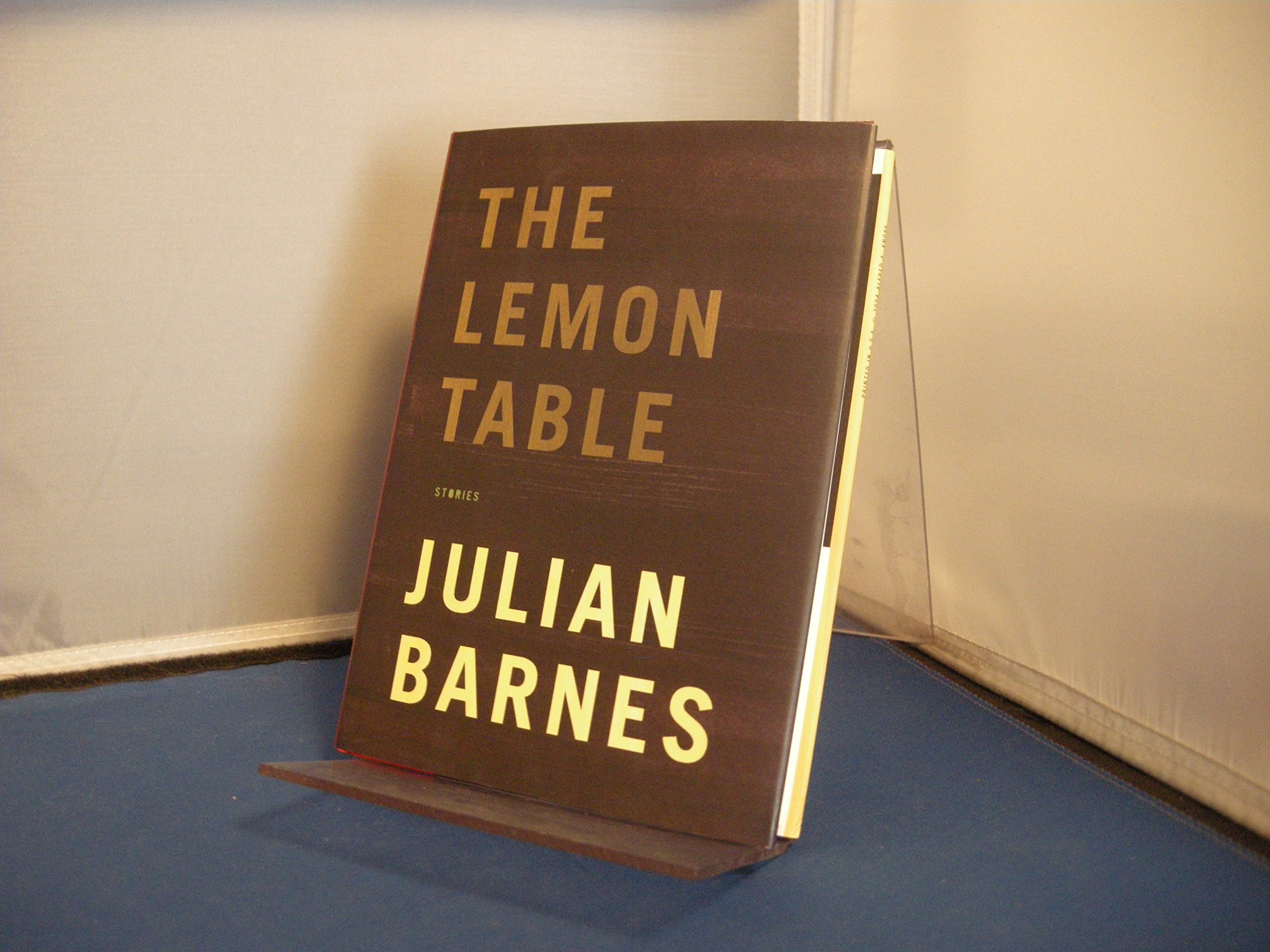



Master prose stylist Julian Barnes presents a collection of stories whose characters are growing old and facing the end of their lives -- some with bitterness, some with resignation and others with raging defiance. “Life is just a premature reaction to death,” was what Viv’s husband used to say. Once her lover and friend, he is now Viv’s semi-helpless charge, who is daily sinking ever deeper into dementia. In “Appetite,” Viv has found a way to reach her husband: by reading aloud snippets of recipe books until he calls out indelible -- and sometimes unfortunate -- scenes locked away in his brain. In “The Things You Know,” two elderly friends enjoy their monthly breakfast meetings that neither would ever think of missing. Of course, all they really have in common is a fondness for flat suede shoes and a propensity for thinking spiteful, unspoken thoughts about one another’s dead husbands. “The Fruit Cage” is narrated by a middle-aged man whose seemingly orderly upbringing is harrowingly undone when he discovers that his parents’ old age is not necessarily a time of serenity but actually an age of aroused, perhaps violent, passions. In these stories, Julian Barnes displays the erudition, wit and uncanny insight into the human mind that mark him as one of today’s great writers, one whose intellect and humour never obscure a genuine affection for his characters. In a suite of 11 impeccable short stories as intricate and polished as lacquered Chinese boxes, Barnes examines the peculiarities of age: the baffling amalgam of memories sharp and vague, the recognition that one has clung to fantasies to cushion the rough ride of existence, the strength derived from finally accepting one's self versus the sorrow of watching one's allure and energy fade. Crisp pacing, keen dialogue, and sudden reversals render Barnes' stories playlike, while he finds just the right object, habit, or myth to embody the aging process and allude to death's encroachment. In nineteenth-century Sweden, a man woos a woman by telling her the legend about a young copper miner whose perfectly preserved body was found 49 years after his death. A Russian composer, as famous in his later years for his silence as he once was for his music, remembers that for the Chinese, "the lemon is the symbol of death." And a woman in an old-folks' home writes piquant letters to a writer named Julian Barnes. What Barnes' virtuoso dramas all slyly suggest is that in the final analysis, the stories we tell ourselves about our lives carry more weight than mere facts. Donna Seaman Copyright © American Library Association. All rights reserved Reviews of Julian Barnes's The Lemon Table "[Julian Barnes is] one of the most gifted contemporary shapers of prose, possessed of a remarkable limberness of form and voice, and an unconstrained literary imagination." --Ruth Franklin, The New Republic "[A] brave, well-crafted book . . . Barnes describes the realities of aging with precision and a knack for matching narrative device to psychological reality."--Lee Aitken, People "Throughout the book there is a sense of a master at work, a writer in absolute control of his material, able to pack a short story with a range of perceptions and insights that would put many full-length novels to shame by comparison. Unsentimental yet full of all manner of sentiment--sweet, sour, bitter, wistful, ruminative, comic, elegiac-- The Lemon Table is an uncommonly satisfying book . . . Barnes' consummate artistry, wit and wisdom have made it a joy to read." --Martin Rubin, San Francisco Chronicle "Filled with emotional resonance and hard-won wisdom, The Lemon Table is a virtuoso performance of remarkable clarity and insight." --Jane Ciabattari, Los Angeles Times Book Review "The stories in The Lemon Table are quite old-fashioned--in the best sense of the word. They remind one of the deceptive simplicity of the stories of Chekhov or that prodigy of the absurd, Nikolai Gogol. With their underlying classicism, their commitment to truth and beauty, Barnes's stories also harken back to a pre-existential time in which hope was still, in a tragic sort of way, possible." --Jodi Daynard, Boston Globe "Barnes can telescope the whole world through a single lens . . . Each story unfolds with masterly speed, diving quickly to the heart of the matter." --John Freeman, Louisville Courier-Journal "'Were you as young as you felt, or as old as you looked?' This is the conundrum at the heart of The Lemon Table, [with] assorted pensioners, catty widows, randy old army majors, and noise-sensitive concertgoers forcefully exercising their right not to go gently into that good night."--Mark Rozzo, Vogue "Beautifully wrought elegies for lost youth, lost promises and lost loves [that] attest to Mr. Barnes's growing depth as a writer, his newly embraced ability to create stories that are as affecting as they are cunning, as emotionally resonant as they are prettily fashioned."--Michiko K