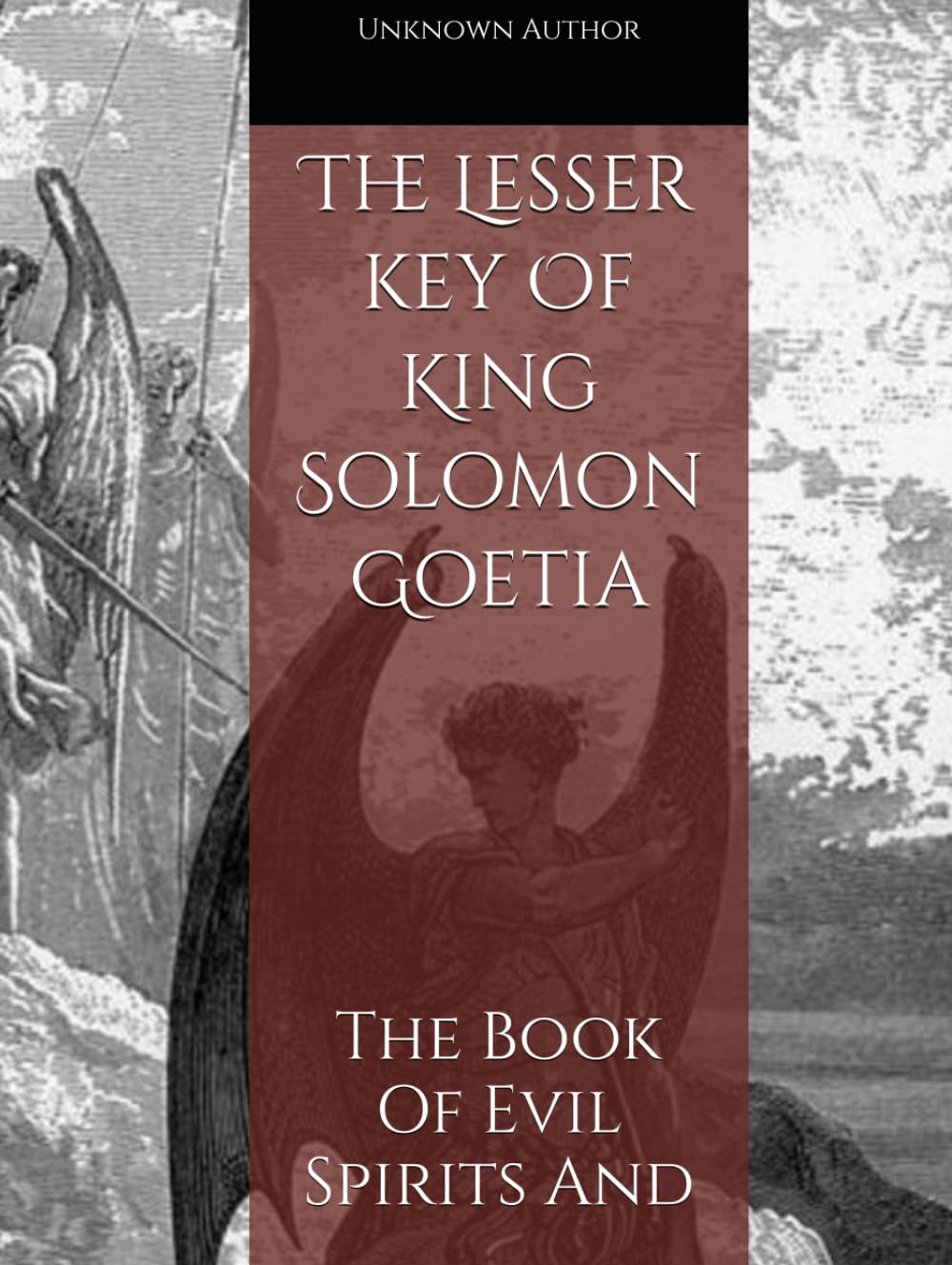
The Lesser key Of King Solomon Goetia: The Book Of Evil Spirits And (Codex Collection)
$16.00
by Unknown Author



Here’s a description of The Lesser Key of Solomon: Goetia : Title : The Lesser Key of Solomon: Goetia Author : Anonymous (Traditionally attributed to King Solomon) Language : Originally in Latin, with later translations in English and other languages First Published : 17th century (compiled from earlier traditions) Description : The Lesser Key of Solomon: Goetia is a seminal grimoire in Western occultism, offering a detailed guide to the summoning, binding, and commanding of 72 spirits or demons said to have been conjured and controlled by the biblical King Solomon. The text describes these spirits’ appearances, powers, and ranks within a complex spiritual hierarchy, as well as the sigils or seals needed to summon them. The Goetia provides practitioners with step-by-step instructions for ceremonial magic, emphasizing the importance of protective rituals, magical circles, and divine invocations to ensure safety and control during spirit evocation. It merges medieval Christian demonology with older mystical traditions, presenting a unique fusion of myth, ritual, and spiritual psychology. Key Features : Demonology : Detailed descriptions of 72 spirits, including their attributes, abilities, and ranks (e.g., dukes, marquises, presidents, kings). - Sigils : Each spirit has a unique sigil, which must be inscribed during rituals for summoning and commanding. - Ritual Tools : Instructions for creating magical tools, such as circles, wands, and protective symbols. - Divine Invocation : Emphasis on invoking the power of God or angels to maintain control over the summoned entities. Significance : The Goetia is part of the larger Lemegeton (The Lesser Key of Solomon), a five-part grimoire detailing various forms of magical practice. It is particularly notable for its focus on demonology and spirit evocation, influencing modern ceremonial magic and occult traditions. Figures such as Aleister Crowley and S.L. MacGregor Mathers helped popularize the Goetia through their translations and interpretations. Legacy : The Goetia remains a cornerstone of Western esotericism, revered by practitioners and studied by academics as a profound insight into early modern magical thought and practice. Would you like additional information about its structure, specific spirits, or practical use