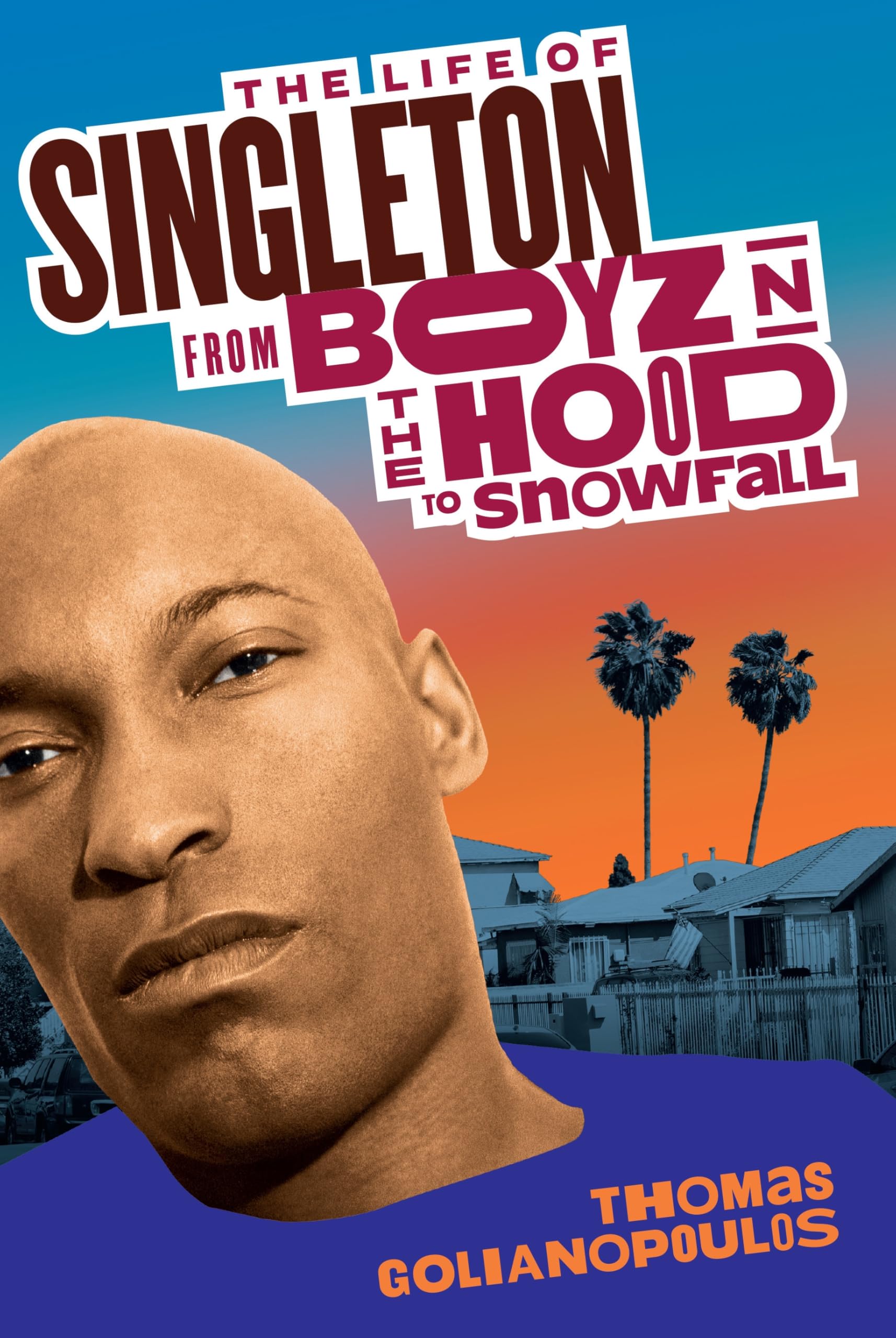



Featuring nearly 400 original interviews with close friends, family members, and colleagues, The Life of Singleton is the definitive account of prolific filmmaker John Singleton’s life and times. John Singleton became a living legend at just twenty-four when he earned Academy Award nominations for Best Director and Best Original Screenplay for Boyz N the Hood , the sleeper hit of 1991 and one of the decade’s most important films. Over the next thirty years, he amassed a Hall of Fame career featuring more classic films, number one hits, and one of the top-rated series on cable television. Throughout his career, Singleton was committed to bringing the raw and authentic stories of Black America to the big screen, and inspired generations of filmmakers in the process. Driven by diligent reporting, and featuring astute storytelling, sharp analysis, and fascinating anecdotes from a long list of sources, The Life of Singleton details the life and death of Hollywood’s first self-proclaimed hip-hop director. From Singleton’s time as a driven young film student at USC to his last days on the Costa Rica set of Snowfall , Thomas Golianopoulos takes readers behind the scenes of the filmmaker’s work, family, relationships, and controversies, and unwraps the complex man behind it all. The Life of Singleton is perfect for readers of hip-hop memoirs and biographies like The Marathon Don’t Stop , The Autobiography of Gucci Mane , and Dilla Time , and film histories like Alright, Alright, Alright and Leave the Gun, Take the Cannoli . Thomas Golianopoulos is a writer and editor whose work has appeared in The New York Times, BuzzFeed, Playboy, The Ringer, and others. His investigative feature writing includes pieces on a federal sex slavery case, the mysterious prison murder of a Hollywood actor, and the definitive story on Kobe Bryant’s rap career. Born and raised in Astoria, Queens, Thomas now lives in the Bronx with his wife and children. On September 27, 1984, seventeen-year-old Robbie Stringer, nicknamed Monster, was shot in the chest in an alley near 101st and Vermont in South Central Los Angeles by the same Rollin’ 90s Neighborhood Crips he’d been in a shoot-out with about a year earlier. Somehow, Monster made it back home alive. He cried for his mom, and when he saw her, he lifted his shirt to reveal the wound. Paramedics were called, but he was dead before they arrived. News traveled fast. Monster was a 107th Street Hoover Crip. Members of the gang loaded into a 1984 gold Cutlass to find who had killed him. Sixteen-year-old John Singleton never called him Monster. He knew him as Robbie. And as soon as word got to him at home, Singleton left the house to find the rest of the Hoovers. It didn’t take long. They were sitting in an alley. Waiting. Not hiding. Singleton, painfully thin with thick-lensed glasses, approached the driver. He carried the gun he’d stolen from his father. Kevin Orange, known as Big Twin, turned toward him. “Go home, John,” he said. “Now.” “Robbie got shot?” Singleton asked. Big Twin hesitated, then he decided Singleton needed to know. “Robbie’s dead.” Though just a year apart, Singleton viewed Robbie like a big brother. He had status in the streets that made him seem older than his birth certificate claimed. Robbie built his reputation by breaking into people’s homes. Around 1982, he started selling cocaine. He was the neighborhood bully to some kids—and a protector to others. Like Singleton. Singleton, his fists balled and teeth clenched and fighting tears, tried opening the door. “Let me in.” Orange shook his head. “This is not what you do,” he said. “This is what we do.” And he rode off in search of Robbie’s killers. John Singleton never forgot that moment. What would have happened if they’d let him in? Would he have used his father’s .357 Magnum? Would he have been shot? Why wouldn’t they let him go with them? And what did it all mean? Singleton still talked about it nearly a decade later. “Remember Robbie Stringer?” he’d ask his best friends, Michael “Fatbacc” Winters and Jimmy Ray. Robbie’s death came on the heels of the summer of 1984. Crack had exploded. “Jam on It” by Newcleus was pumping out of every boom box. Carl Lewis and Mary Lou Retton won gold at the Summer Olympics and Lionel Richie sang “All Night Long” during the closing ceremonies of the global get-together that made the people of South Central feel uninvited in their own city. Singleton spent that summer at the movies. Over three months he saw Breakin’, Sixteen Candles, Firestarter, Indiana Jones and the Temple of Doom, Star Trek III: The Search for Spock, Beat Street, Ghostbusters, Gremlins, Top Secret!, The Karate Kid, Bachelor Party, and Conan the Destroyer . He saw The Last Starfighter three times. The Never Ending Story. Revenge of the Nerds . Red Dawn, Dreamscape . He saw Purple Rain at least three times, not counting the film’s premiere at Mann’s Chinese Theatre, which he attende