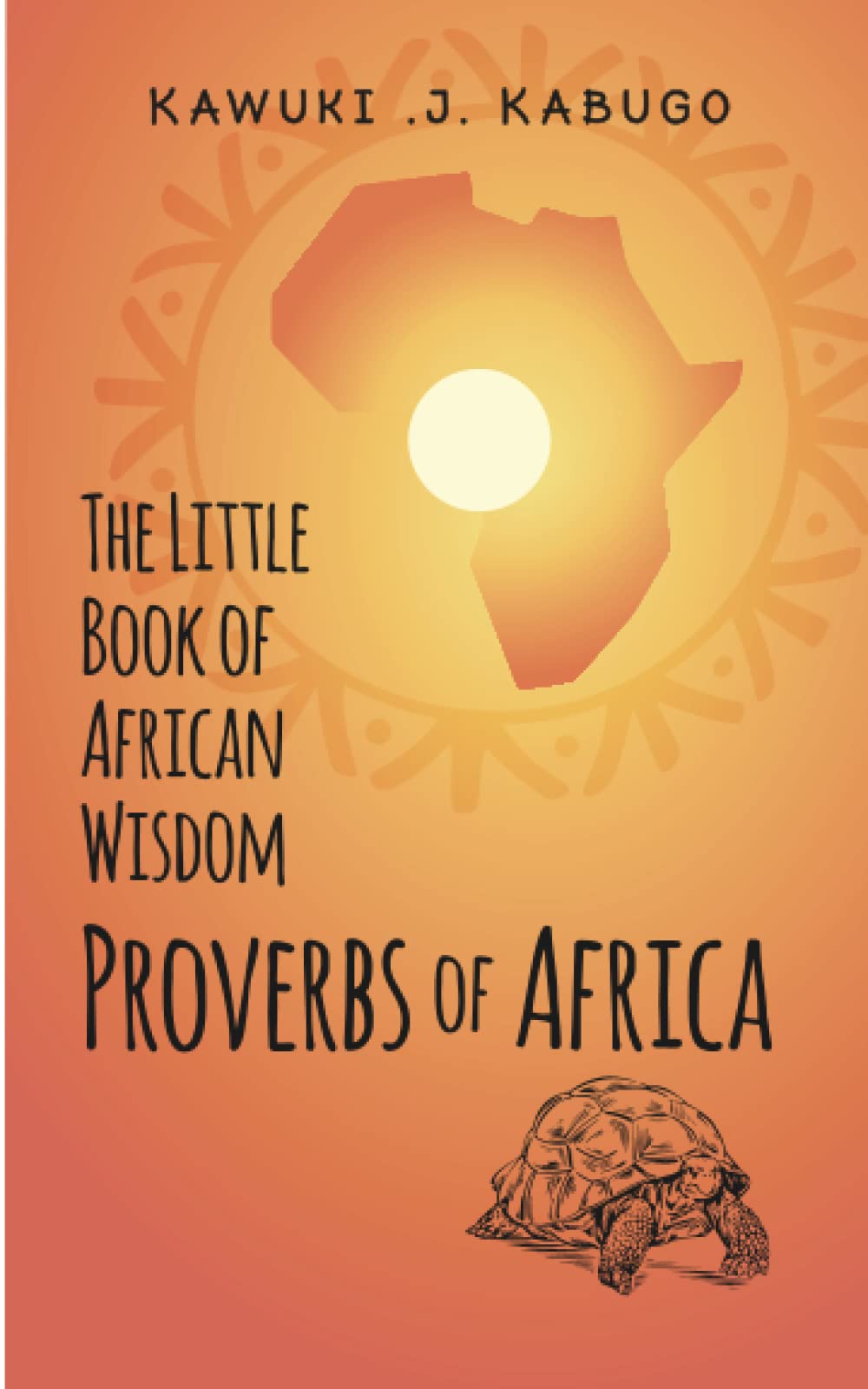
The Little Book of African Wisdom - Proverbs of Africa: Our ancestors’ speak
$11.00
by Kawuki J Kabugo



African proverbs are often characterized by their use of metaphor and symbolism. These figures of speech are employed to convey complex ideas in a simple and accessible manner. For instance, the Akan proverb, "What you help a child to love, he will learn to love," uses the metaphor of planting to emphasize the importance of instilling positive values in children. Similarly, the Yoruba proverb, "A person who sells eggs should not start a fight," uses the metaphor of eggs to warn against unnecessary risk-taking. Proverbs in Africa are also used to address social issues and promote social cohesion. For example, the Swahili proverb, "Sticks in a bundle are unbreakable," emphasizes the importance of unity in achieving a common goal. This proverb is often used to encourage cooperation and teamwork in communities. Similarly, the Zulu proverb, "If you want to go fast, go alone. If you want to go far, go together," emphasizes the importance of collaboration and collective action in achieving long-term success. In African cultures, proverbs are also used to impart moral values and ethics. For instance, the Shona proverb, "Kuvhunduka kwayedza kugara nekwavaranda," which translates to "A bad disposition spoils the house and those who live in it," emphasizes the importance of good character and behavior. Similarly, the Igbo proverb, "A bad deed may fatten the doer, but it will surely bring him to the market-place," warns against the consequences of immoral behavior.