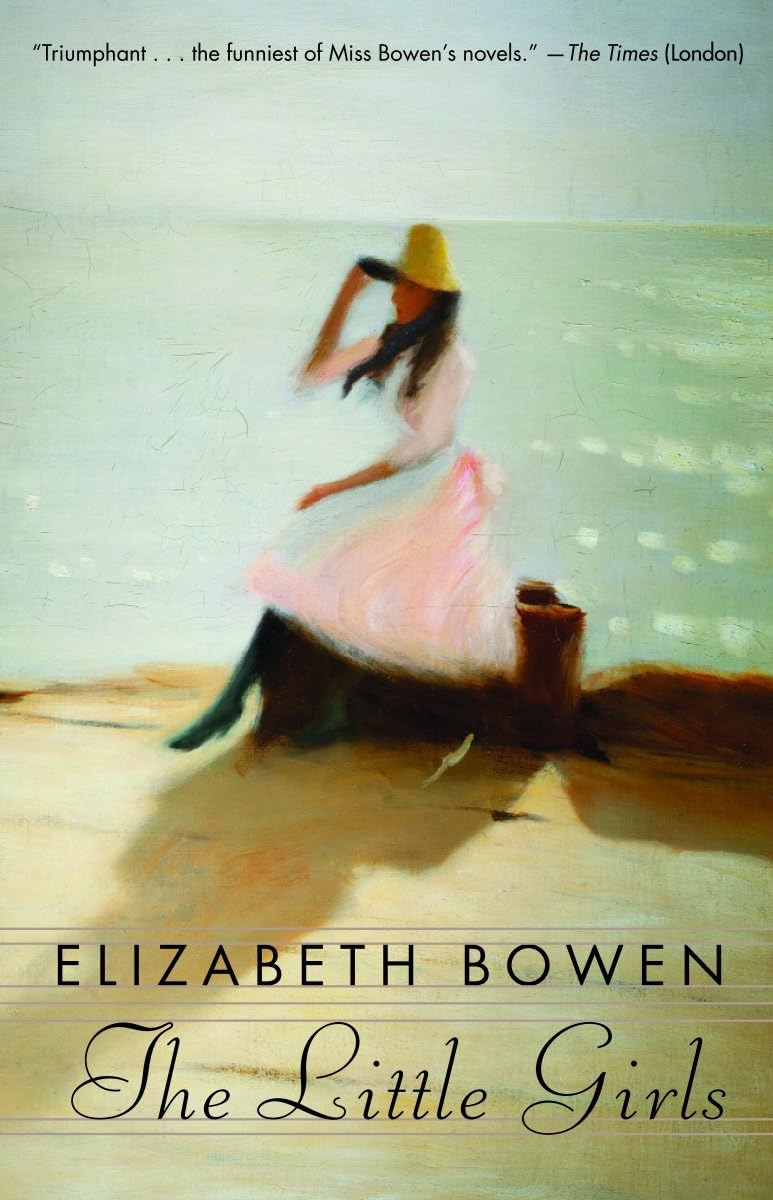



In 1914, three eleven-year-old girls buried a box in a thicket on the coast of England, shortly before World War I sent their lives on divergent paths. Nearly fifty years later, a series of mysteriously-worded classified ads brings the women reluctantly together again. Dinah has grown from a chubby, bossy girl to a beautiful, eccentric widow. The clever, reticent Clare has blossomed into an imperious entrepreneur of independent means. And Sheila—who was once the pretty princess of her small universe—has weathered disappointed aspirations to become a chic and glossily correct housewife. As these radically different women confront one another and their shared secrets, the hard-won complacencies of their present selves are irrevocably shattered. In a novel as subtle and compelling as a mystery, Elizabeth Bowen explores the buried revelations—and the dangers—that attend the summoning up of childhood and the long-concealed scars of the past. “Triumphant . . . the funniest of Miss Bowen’s novels.” — The Times (London) “This story is poetic in its awareness, its stimulus, its beauty of writing; and as full of clues, hints and half-revealed secrets as any thriller.” — The Scotsman (Edinburgh) “Bowen so thoroughly knows the world she is writing about that she contrives to appear to convey it to us whole. Her fictional insight is made solid by sound psychological insight.” – The New York Times In 1914, three eleven-year-old girls buried a box in a thicket on the coast of England, shortly before World War I sent their lives on divergent paths. Nearly fifty years later, a series of mysteriously-worded classified ads brings the women reluctantly together again. Dinah has grown from a chubby, bossy girl to a beautiful, eccentric widow. The clever, reticent Clare has blossomed into an imperious entrepreneur of independent means. And Sheila who was once the pretty princess of her small universe has weathered disappointed aspirations to become a chic and glossily correct housewife. As these radically different women confront one another and their shared secrets, the hard-won complacencies of their present selves are irrevocably shattered. In a novel as subtle and compelling as a mystery, Elizabeth Bowen explores the buried revelations and the dangers that attend the summoning up of childhood and the long-concealed scars of the past. In 1914, three eleven-year-old girls buried a box in a thicket on the coast of England, shortly before World War I sent their lives on divergent paths. Nearly fifty years later, a series of mysteriously-worded classified ads brings the women reluctantly together again. Dinah has grown from a chubby, bossy girl to a beautiful, eccentric widow. The clever, reticent Clare has blossomed into an imperious entrepreneur of independent means. And Sheila--who was once the pretty princess of her small universe--has weathered disappointed aspirations to become a chic and glossily correct housewife. As these radically different women confront one another and their shared secrets, the hard-won complacencies of their present selves are irrevocably shattered. In a novel as subtle and compelling as a mystery, Elizabeth Bowen explores the buried revelations--and the dangers--that attend the summoning up of childhood and the long-concealed scars of the past. Elizabeth Bowen was born in Dublin in 1899, the only child of an Irish lawyer and landowner. Her book Bowen's Court (1942) is the history of her family and their house, in County Cork. Throughout her life, she divided her time between London and Bowen's Court, which she inherited. She wrote many acclaimed novels and short story collections, was awarded the CBE in 1948, and was made a Companion of Literature by the Royal Society of Literature in 1965. She died in 1973. 1 A MAN came down the steps cut in the rock. By nature agile, he made the descent with unusual caution, placing each foot first tentatively then extra firmly. He did well to--the steps, inexpertly hewn at some unknown time, were no two alike, and were this evening slippery after rain; moreover, he carried, balanced against his midriff, a lidless white cardboard box toppling with a miscellany of objects. He arrived on to the floor of a sort of bear pit; that was, a sunken circular court resembling those in which, in old-fashioned zoos, bears keep house and are displayed. This was, if anything, on the large and deep side; it lacked a pole in the middle and had no railing, being overhung round the top by beards of creeper and scrambling and sagging roses. Dahlias bloomed at the head of the steps. Across the uneven rock floor, facing the steps, was either a shallow cave or a deep recess--or possibly, unadorned grotto?--now fronted by looped-back tarpaulin curtains. Within were trestles, across which boards had been placed; and a woman, intent on what she was doing to the point of trance, could be seen in backview, moving her hands about among the objects crowding the rough table. A j