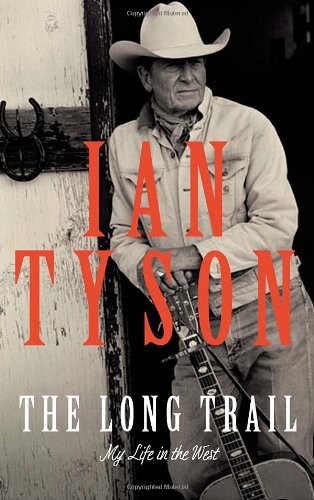



A Canadian icon on his longstanding love of the West and his life in "one of the last true cowboy countries on either side of the border." "I live on a ranch about six miles east of the town of Longview and the old Cowboy Trail in the foothills of the Rockies. On a perfect day, like today, I can't imagine being anywhere else in the world. Of course, I'm not going to say there aren't those other days when you think, 'What am I doing here?' It's beautiful country and it can be brutally tough as well." —Ian Tyson Ian Tyson's journey to the West began in the unlikely city of Victoria, BC, where he rode his dad's horses on the weekends and met cowboys in the pages of Will James's books, and eventually followed that cowboy dream to rodeo competition. Laid up after breaking a leg, he learned the guitar, and drifted east, becoming a key songwriter and performer in the folk revival movement. But the West always beckoned, and when his marriage to his partner and collaborator Sylvia broke up and the music scene threatened to grind him down, he retreated to a ranch and work with cutting horses. Soon, he'd bought a ranch in Alberta and found a new voice as the renowned Western Revival singer-songwriter and horseman he is today. This book is Ian's reflection on that journey... NATIONAL BESTSELLER “Tyson has had a long, fulfilling and interesting life. . . . He has become a tireless advocate for the protection of the western environment.” — The Globe and Mail “As Canadian living legends go, Ian Tyson rides tall in the saddle. [He] . . . spins an engaging tale.” — Winnipeg Free Press “Written with the same plainspoken elegance as [Tyson’s] most famous records. . . . Cool is something that comes effortlessly to Tyson.” — National Post IAN TYSON has long been one of North America's most respected singer-songwriters. A pioneer who began his career in the folk boom of the '60s, he was one of the first Canadians to break into the American popular music market. In the years that followed, he hosted his own TV shows and recorded some of the best folk and western albums ever made. Tyson is a recipient of the Order of Canada, and has received multiple Juno and Canadian Country Music awards. He tours constantly across Canada and throughout the United States, and continues to live and work on his ranch in the foothills of Alberta's Rocky Mountains. CHAPTER 1 Sunrise It’s darker than three feet down a Holstein. Six a.m., Alberta daylight savings. Waking from a dream of Cabo San Lucas to a March north wind and five below. Everyone with half a brain and a Visa card has gotten out. Only us drones left to feed the livestock, so I make the coffee double strength and prepare to get at ’er. Fifteen minutes stumbling around on frozen manure should do it. So begins the day. Used to be a rancher wouldn’t divulge the size of his operation, nor the numbers of his herd. It’s a longstanding tradition in cow country that’s based on making as little information available to the tax people as possible. Suffice it to say, my outfit is a modest spread near the southern Alberta town of Longview, just east of the Rocky Mountain foothills. During the ranch’s heyday in the 1990s, I ran between twenty and thirty horses. They were mostly mares, which meant there were lots of babies each year. That was back when my ex-wife Twylla and my daughter Adelita were still here. But they left a few years back, and these days it’s just me on the ranch — and only five horses to feed. There’s Bud, my cutting horse, a solid professional cowhorse, all business all the time. Then there’s Pokey, a bay mare, with all her feminine wiles, who loves to be the centre of attention. Every morning they’re lined up for their grain. I feed my gentle grey mare and her half-broke daughter. The mare ran under the name Lika Pop back in her racetrack days and won her maiden at 350 yards. She’s eighteen now and crippled with a bad knee, but she’s been a good colt producer. Her daughter Doris is a big, pushy adolescent who’s never been properly schooled because I don’t have the time to do it. Finally there’s a new colt, a trim, good-moving two-year-old. He’s a blank canvas. As for my two big longhorns, Kramer is laid back and Billy is more snuffy. While I pour their crushed barley into the rubber feed tub, their great horns sway slowly around my head in the darkness. I’m damn careful because I never know what Billy’s going to do. I bought Kramer and seven other yearling bulls in the mid-1990s from the late Mitford Beard, who ran one of the last American open-range outfits (no fences) on the Utah-Colorado line. Billy came a few years later, from rancher Bill Cross. Billy and Kramer are my last two steers, and when it’s warm enough, they’ll wander out of their lot onto the prairie like a couple of old outlaws. Longhorns are like pets for ranchers, reminders of a bygone era when the trail herders drove cattle across the unfenced West. They’re almost conver