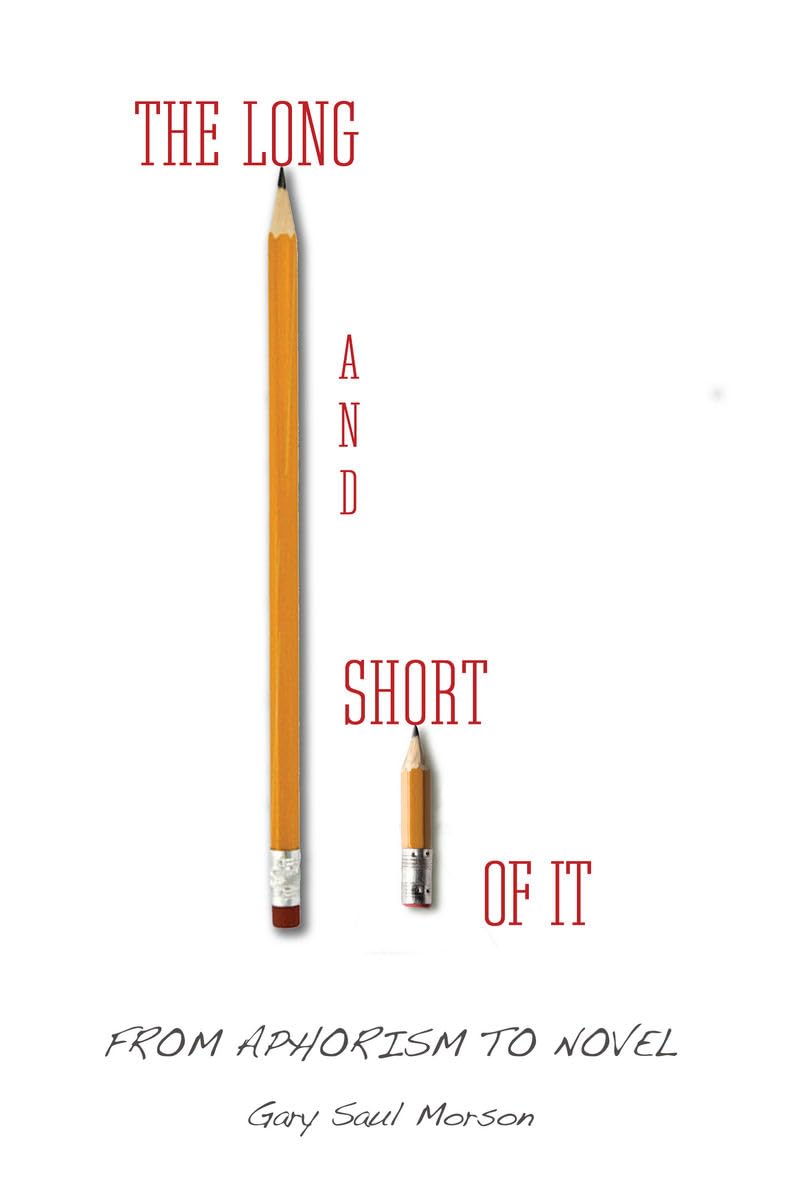



Brevity may be the soul of wit, but it is also much more. In this exploration of the shortest literary works—wise sayings, proverbs, witticisms, sardonic observations about human nature, pithy evocations of mystery, terse statements regarding ultimate questions—Gary Saul Morson argues passionately for the importance of these short genres not only to scholars but also to general readers. We are fascinated by how brief works evoke a powerful sense of life in a few words, which is why we browse quotation anthologies and love to repeat our favorites. Arguing that all short genres are short in their own way, Morson explores the unique form of brevity that each of them develops. Apothegms (Heraclitus, Lao Tzu, Wittgenstein) describe the universe as ultimately unknowable, offering not answers but ever deeper questions. Dicta (Spinoza, Marx, Freud) create the sense that unsolvable enigmas have at last been resolved. Sayings from sages and sacred texts assure us that goodness is rewarded, while sardonic maxims (Ecclesiastes, Nietzsche, George Eliot) uncover the self-deceptions behind such comforting illusions. Just as witticisms display the power of mind, "witlessisms" (William Spooner, Dan Quayle, the persona assumed by Mark Twain) astonish with their spectacular stupidity. Nothing seems further from these short works than novels and epics, but the shortest genres often set the tone for longer ones, which, in turn, contain brilliant examples of short forms. Morson shows that short genres contribute important insights into the history of literature and philosophical thought. Once we grasp the role of aphorisms in Herodotus, Samuel Johnson, Dostoevsky, and even Tolstoy, we see their masterpieces in an entirely new light. All of us are familiar with a handful of famous short sayings, maxims, or witty remarks, ranging from biblical psalms to Descartes’ “I think, therefore I am,” that inspire us to action or lead us to reflection. In this intriguing survey of world literature’s great short genres, which he refers to as a “banquet of delicious morsels,” Morson treats the reader to an engaging, cerebral exposition that judiciously balances literary analysis and philosophical exploration. Morson’s account contrasts genres such as apothegms, which lead to “ever deeper mysteries,” and the dicta of such writers as Marx and Descartes that seem to provide answers to the world’s great riddles; displays the witticism of Wilde and the witlessisms of Dan Quayle; and explores the sardonic maxim that aims to discredit faith in human reason as the “product of vanity.” As Morson makes abundantly clear, these short genres challenge readers to seek happiness and personal fulfillment not in any uniform truth but in the recognition and celebration of the complexities of everyday life. Packed with literary references and possessing a keen insight into the human condition, Morson’s work will find a broad readership beyond academic circles. --Brian Odom "A book remarkable for its originality, breadth, insight, and engaging style . . . Succeeds not just in making readers think more clearly about the nature of the short genres and how they relate to each other, but also in showing how they can inform and even help structure longer works."―Barry Scherr, Slavic & East European Journal "Among living American Scholars of Russian literature, Gary Saul Morson has earned a reputation as one of the most thoughtful and productive among us. . . Morson's book is fun to read. It is thought-provoking and illuminating but delights over and over again with its sparkling specimens, culled from the whole literary heritage of man-kind, chiefly western, but with a few Asian gems from Confucius and Lao Tzu thrown in. . . Morson writes well, vividly, and without jargon. . . I thoroughly enjoyed this book and have been enlightened by it."―Hugh McLean, Slavic Review "Morson's delightful study, which aims to classify and examine [aphorisms], is both a work of serious scholarship and a feast itself . . . The Long and Short of It leaves readers illuminated and humbled, amused and enlightened and with their sense of literature's richness―its ironies and foibles, its mysteries and truths―enhanced."―Fernanda Moore, Commentary "This shrewdly analytic, generously appreciative inventory of a dozen microgenres breaks lots of new ground. Morson not only discriminates dictum from witticism, maxim from summons and thought, but also shows how aphorists in a wealth of cultures have invoked generic tradition and infighting to score points. He furthermore illuminates the role played by aphorisms, and the outlooks they epitomize, in the narrative shaping of works from Oedipus and Job to Middlemarch and Boswell's Johnson ."―Herbert Tucker, University of Virginia "Gary Saul Morson has created a passionate, imaginative book, full of energy and wisdom. The Long and Short of It is an exciting, horizon-opening essay on literary short forms that provide an interface betwee