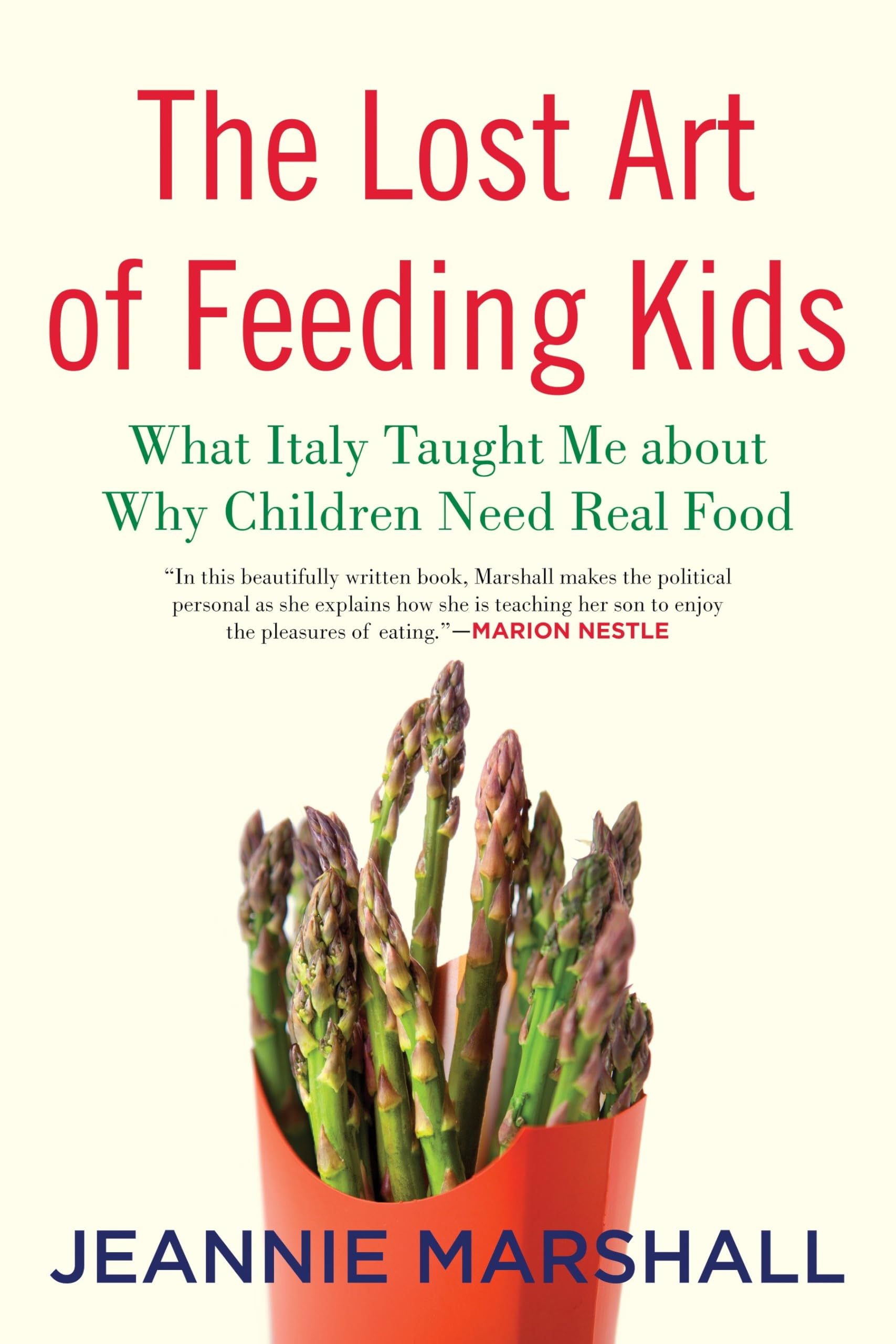
The Lost Art of Feeding Kids: What Italy Taught Me about Why Children Need Real Food
$50.78
by Jeannie Marshall



A lively story of raising a child to enjoy real food in a processed world, and the importance of maintaining healthy food cultures Why is it so easy to find sugary cereals and dinosaur-shaped chicken nuggets in a grocery store, but so hard to shop for nutritious, simple food for our children? If you’ve ever wondered this, you’re not alone. But it might surprise you to learn that this isn’t just an American problem. Packaged snacks and junk foods are displacing natural, home-cooked meals throughout the world—even in Italy, a place we tend to associate with a healthy Mediterranean diet. Italian children traditionally sat at the table with the adults and ate everything from anchovies to artichokes. Parents passed a love of seasonal, regional foods down to their children, and this generational appreciation of good food turned Italy into the world culinary capital we’ve come to know today. When Jeannie Marshall moved from Canada to Rome, she found the healthy food culture she expected. However, she was also amazed to find processed foods aggressively advertised and junk food on every corner. While determined to raise her son on a traditional Italian diet, Marshall sets out to discover how even a food tradition as entrenched as Italy’s can be greatly eroded or even lost in a single generation. She takes readers on a journey through the processed-food and marketing industries that are re-manufacturing our children’s diets, while also celebrating the pleasures of real food as she walks us through Roman street markets, gathering local ingredients from farmers and butchers. At once an exploration of the US food industry’s global reach and a story of finding the best way to feed her child, The Lost Art of Feeding Kids examines not only the role that big food companies play in forming children’s tastes, and the impact that has on their health, but also how parents and communities can push back to create a culture that puts our kids’ health and happiness ahead of the interests of the food industry. In this hybrid book—part memoir, part treatise against the spread of bad Western eating habits—journalist and mom Marshall makes a compelling case for why families everywhere should return to the old-fashioned Italian approach to food. Marshall, who moved from Canada to Italy, attends conferences, including the World Summit on Food Security, and takes her son, Nico, to markets filled with fresh cherries. She laments the way Italian kids, traditionally raised on locally grown chickpeas and cannellini beans instead of Cheerios, are falling victim to U.S. corporate marketing campaigns. McDonald’s launched its McItaly burger in 2010, and a waiter asks Nico, who had been happily drinking water, if he wanted Coke. Marshall thanks her husband, who urged her to stop complaining and start writing. “Without his insight, I would have spent my energy ranting over the dinner table instead of redirecting it onto the page.” Marshall isn’t breaking new ground here. Michael Pollan and others have made many of her eat-less-processed-food points already, but her home-cooked, fresh-is-best argument certainly bears repeating. --Karen Springen “Marshall makes a compelling case for why families everywhere should return to the old-fashioned Italian approach to food.” — Booklist “Marshall’s clear, direct book ably captures the frustrations of trying to find the healthiest path and inspiring kids to do the same.” — Kirkus Reviews “[Marshall's] point that parents need to think about the future when feeding their kids is an important one.” — Publishers Weekly “Marshall...writes passionately about the dangers posed by processed foods—not just to our children’s health but to our way of life, our human attachment to the 'ordinary happiness' of meals cooked at home from real foods.” — Boston Globe “Engaging . . . admirably well-researched . . . a well-timed eye-opener.” —Chris Nuttal-Smith, The Globe and Mail “ The Lost Art of Feeding Kids is about teaching kids how to appreciate real food but also about how globalization is changing the way the world eats. In this beautifully written book about what needs to be done to preserve food culture in Italy and elsewhere, Marshall makes the political personal as she explains how she is teaching her son to enjoy the pleasures of eating food prepared, cooked, and lovingly shared by friends and family.” —Marion Nestle, Paulette Goddard Professor of Nutrition, Food Studies, and Public Health at New York University and author of Food Politics and What to Eat “The book is a marvelous read because the story is so deceptively simple: one family’s experience of Italian food (with luscious, lingering descriptions of fresh produce and oh-so-satisfying meals). But this is much more than a personal story (fascinating as it is). Marshall also discusses food marketing, nutrition policy, and the food industry—using examples from around the world. Her personal story is thus placed in