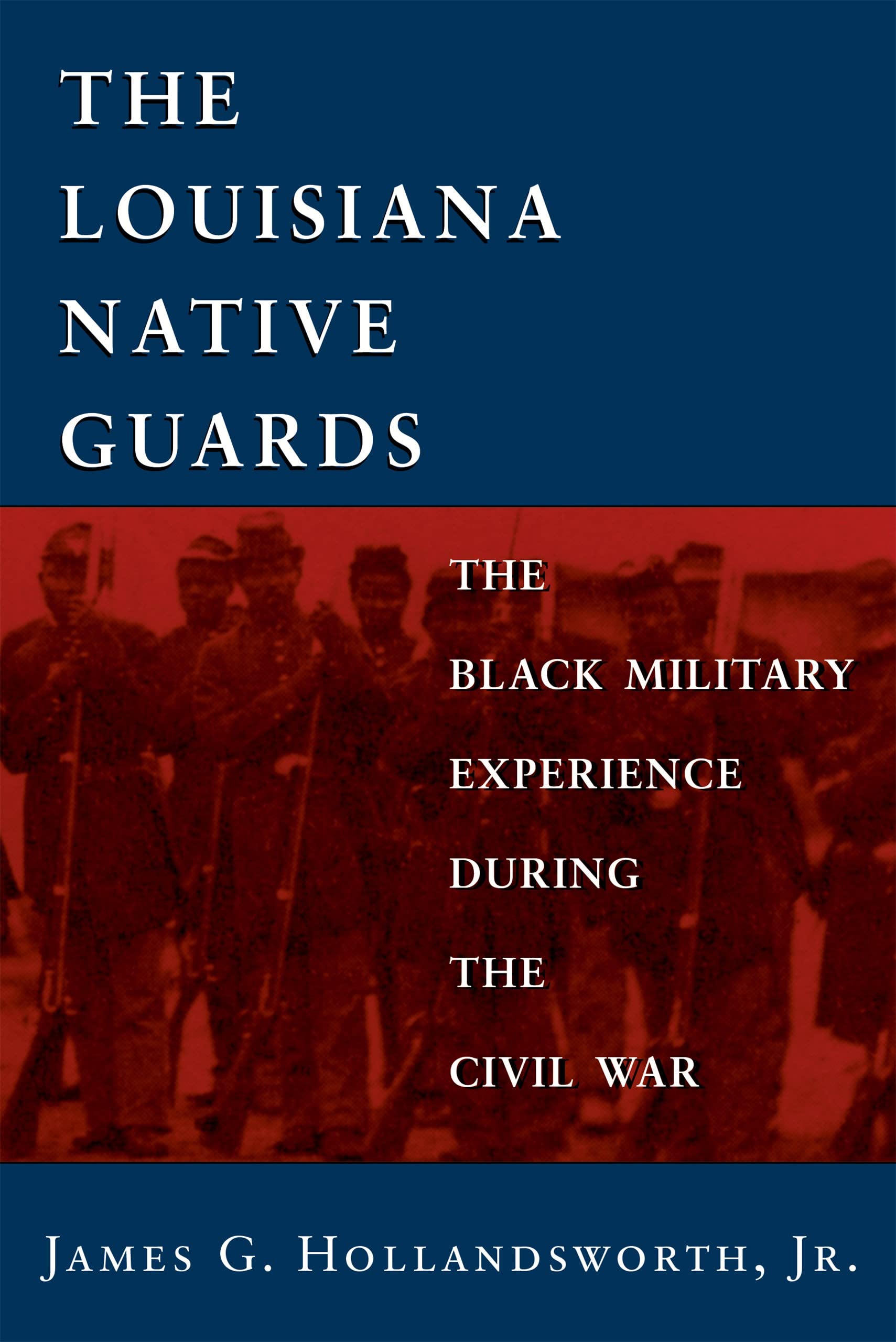
The Louisiana Native Guards: The Black Military Experience During the Civil War
$14.59
by James G. Hollandsworth Jr



Early in the Civil War, Louisiana's Confederate government sanctioned a militia unit of black troops, the Louisiana Native Guards. Intended as a response to demands from members of New Orleans' substantial free black population that they be permitted to participate in the defense of their state, the unit was used by Confederate authorities for public display and propaganda purposes but was not allowed to fight. After the fall of New Orleans, General Benjamin F. Butler brought the Native Guards into Federal military service and increased their numbers with runaway slaves. He intended to use the troops for guard duty and heavy labor. His successor, Nathaniel P. Banks, did not trust the black Native Guard officers, and as he replaced them with white commanders, the mistreatment and misuse of the black troops steadily increased. The first large-scale deployment of the Native Guards occurred in May, 1863, during the Union siege of Port Hudson, Louisiana, when two of their regiments were ordered to storm an impregnable hilltop position. Although the soldiers fought valiantly, the charge was driven back with extensive losses. The white officers and the northern press praised the tenacity and fighting ability of the black troops, but they were still not accepted on the same terms as their white counterparts. After the war, Native Guard veterans took up the struggle for civil rights―in particular, voting rights―for Louisiana's black population. The Louisiana Native Guards is the first account to consider that struggle. By documenting their endeavors through Reconstruction, James G. Hollandsworth places the Native Guards' military service in the broader context of a civil rights movement that predates more recent efforts by a hundred years. This remarkable work presents a vivid picture of men eager to prove their courage and ability to a world determined to exploit and demean them. Early in the Civil War, Louisiana's Confederate government sanctioned a militia unit of black troops, the Louisiana Native Guards. Intended as a response to demands from members of New Orleans' substantial free black population that they be permitted to participate in the defense of their state, the unit was used by Confederate authorities for public display and propaganda purposes but was not allowed to fight. After the fall of New Orleans, General Benjamin F. Butler brought the Native Guards into Federal military service and increased their numbers with runaway slaves. He intended to use the troops for guard duty and heavy labor. His successor, Nathaniel P. Banks, did not trust the black Native Guard officers, and as he replaced them with white commanders, the mistreatment and misuse of the black troops steadily increased. The first large-scale deployment of the Native Guards occurred in May, 1863, during the Union siege of Port Hudson, Louisiana, when two of their regiments were ordered to storm an impregnable hilltop position. Although the soldiers fought valiantly, the charge was driven back with extensive losses. The white officers and the northern press praised the tenacity and fighting ability of the black troops, but they were still not accepted on the same terms as their white counterparts. After the war, Native Guard veterans took up the struggle for civil rights - in particular, voting rights - for Louisiana's black population. The Louisiana Native Guards is the first account to consider that struggle. By documenting their endeavors through Reconstruction, James G. Hollandsworth places the Native Guards' military service in the broader context of a civil rights movement thatpredates more recent efforts by a hundred years. This remarkable work presents a vivid picture of men eager to prove their courage and ability to a world determined to exploit and demean them. As one of the Native Guard officers wrote his mother from Port Hudson in April, 1864, "Nobody really desires our success(, ) and it's uphill work". James G. Hollandsworth, Jr. , associate provost and lecturer in history at the University of Southern Mississippi, is the author of Pretense of Glory: The Life of General Nathaniel P. Banks and An Absolute Massacre: The New Orleans Race Riot of July 30, 1866 . Used Book in Good Condition