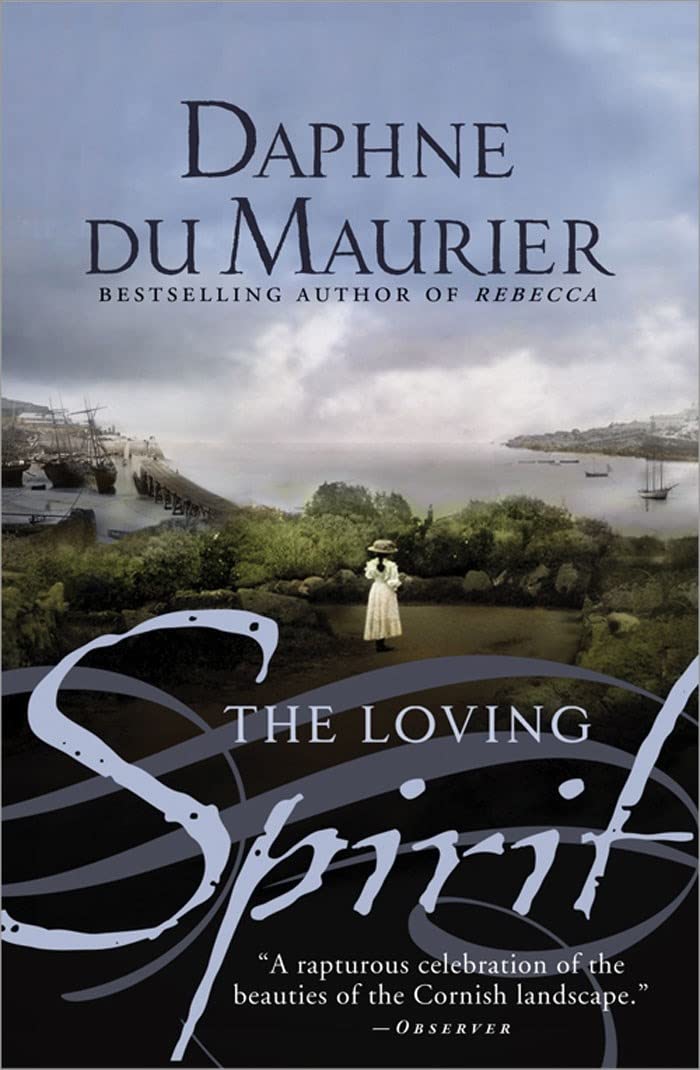
The Loving Spirit: Atmospheric Historical Fiction Set on Cornwall's Wild Coast
$18.99
by Daphne Du Maurier



From the wild heart of Cornwall comes a family saga of longing, legacy, and the fierce bonds that endure beyond a lifetime. Janet Coombe's wild spirit yearns for the sea and for freedom, yet her devotion to family shapes the destiny of her descendants―her memory lingering in every shadow along the Cornish coast. Across decades, through triumph and tragedy, the Coombe family is forever changed by Janet's courage and the mysterious ties that bind them to their land and each other. Daphne du Maurier's acclaimed debut delivers everything fans of historical fiction crave: lush, lyrical prose, unforgettable characters, and the haunting, windswept beauty of Cornwall. Includes a bonus Reading Group Guide, perfect for book clubs and discussion. Praise for The Loving Spirit : "Daphne du Maurier has no equal." - Sunday Telegraph "[du Maurier] tells a story because it's a good story, because it has something of beauty in it, and therefore of truth. She pictures life itself rather than all the dark and torturous currents that twist below its surface… Miss du Maurier's book is a grand one." - Chicago Tribune Daphne du Maurier's 1938 novel Rebecca made her one of the most successful writers of her time. Alfred Hitchcock's adaptation of the book won the Best Picture Oscar in 1940. He later used her material for The Birds . In 1969, du Maurier was created a Dame of the British Empire. Daphne du Maurier was born in London in 1907, the second daughter of a famous stage actor and actress. Her first novel was published in 1931, but it was her 1938 novel Rebecca which made her one of the most successful writers of her time. Alfred Hitchcock's adaptation of the book won the Best Picture Oscar in 1940, and he used her material again for his classic The Birds. In 1969, Du Maurier was created a Dame of the British Empire. At the age of 81, Du Maurier died at home in her beloved Cornwall, the region that had been the setting for many of her books. J anet Coombe stood on the hill above Plyn, looking down upon the harbour. Although the sun was already high in the heavens, the little town was still wrapped in an early morning mist. It clung to Plyn like a thin pale blanket, lending to the place a faint whisper of unreality as if the whole had been blessed by the touch of ghostly fingers. The tide was ebbing, the quiet waters escaped silently from the harbour and became one with the sea, unruffled and undisturbed. No straggling cloud, no hollow wind broke the calm beauty of the still white sky. For one instant a gull hovered in the air, stretching his wide wings to the sun, then cried suddenly and dived, losing itself in the mist below. It seemed to Janet that this hillside was her own world, a small planet of strange clarity and understanding; where all troublous thoughts and queer wonderings of the heart became soothed and at rest. The white mist buried the cares and doubts of daily life, and with them all vexatious duties and the dull ways of natural folk. Here on the hilltop was no mist, no place of shadows, but the warm comfort of the noon-day sun. There was a freedom here belonging not to Plyn, a freedom that was part of the air and the sea; like the glad tossing of the leaves in autumn, and the shy fluttering wings of a bird. In Plyn it was needful to run at another's bidding, and from morn till night there were the cares and necessities of household work―helping here, helping there, encouraging those around you with a kindly word, and sinful it was to expect one in return. And now she was to become a woman, and step on to the threshold of a new life, so the preacher had told her. Maybe it would change her, and sorrow would come her way and joy also for that matter, but if she held an everlasting faith in God who is the Father of us all, in the end she would know peace and the sight of Heaven itself. It was best to follow these righteous words though it seemed that the road to Heaven was a hard long road, and there were many who fell by the way and perished for their sins. The preacher spoke truth indeed, but with never a word of the lovable things that clung about the heart. God alone is worthy of great love. Here on the hill the solemn sheep slept alongside of one another in the chill nights, the mother protected her young ones from the stealthy fox who steals in the shadow of the hedge―even the tall trees drew together in the evening for comfort's sake. Yet none of these things know the love for God, said the preacher. It might happen that he did not know the truth of every bird, beast and flower, and that they too were immortal as well as human kind. Janet knelt beside the stream, and touched a pale forgotten primrose that grew wistfully near the water's edge. A blackbird called from the branch above her head, and flew away, scattering the white blossom on her hair. The flaming gorse bushes breathed in the sun, filling the air with a rich sweet scent, a medley of honey and fresh dew. It was Janet Coombe's wedding day.