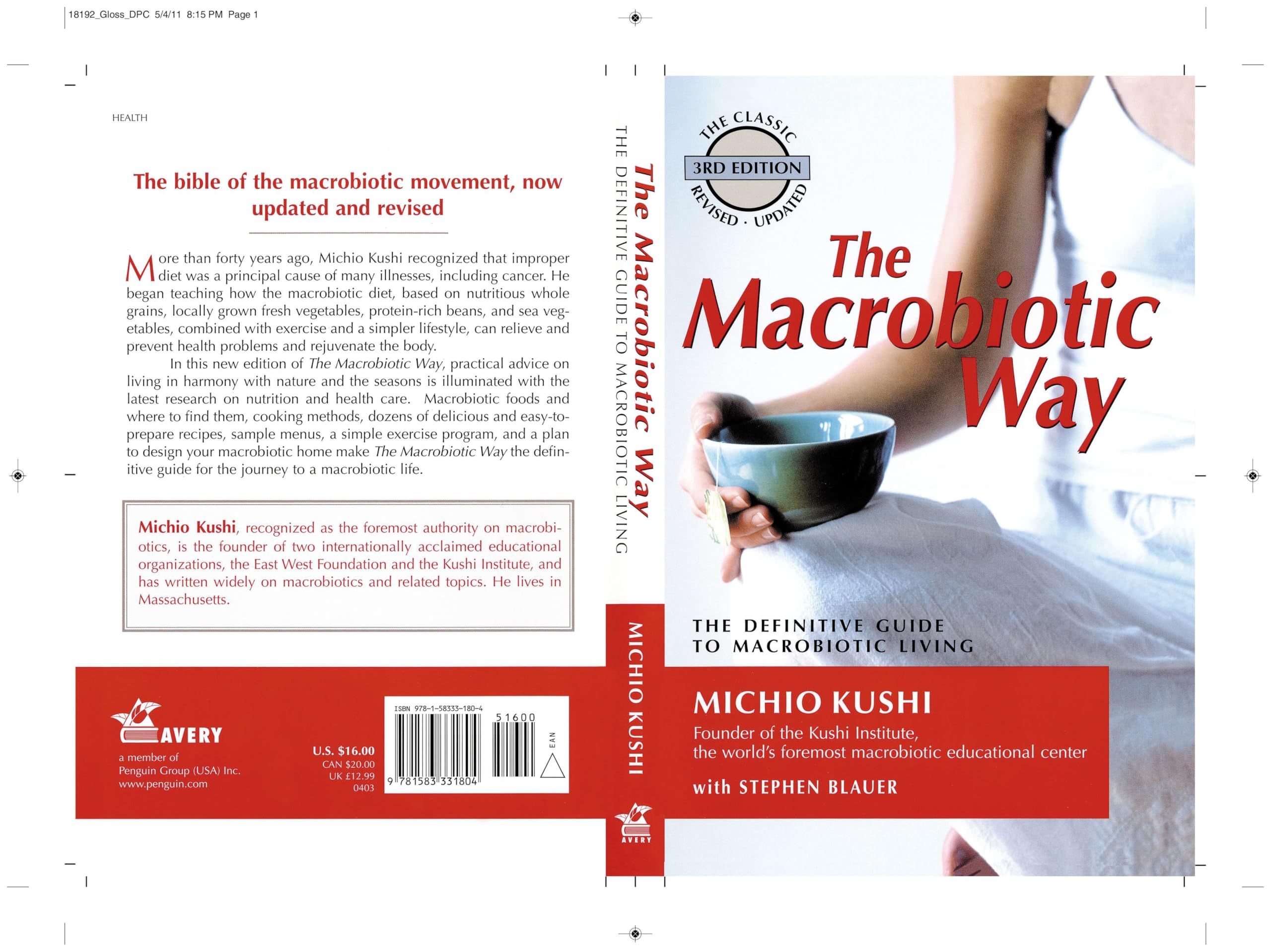



The third edition of the "bible" of the macrobiotic movement. Originally published in 1985, The Macrobiotic Way is a classic in its field. It is the definitive guide to macrobiotics, an approach to diet and lifestyle that promotes both inner peace and harmony with others and the environment through plant-based whole foods. Now updated, it covers not only the central dietary principles, nutrition, and foods but also cooking techniques, essentials for a macrobiotic kitchen, menus and recipes, along with exercise, life philosophy, home and lifestyle, and the role of macrobiotics in natural healing. Wendy Esko has been teaching macrobiotics since 1976 and works for Eden Foods Inc., the largest distributor of natural and macrobiotic foods in North America. THE MACROBIOTIC WAY OTHER AVERY BOOKS ABOUT MACROBIOTICS American Macrobiotic Cuisine MEREDITH MCCARTY Changing Seasons Macrobiotic Cookbook AVELINE KUSHI AND WENDY ESKO The Macrobiotic Approach to Cancer MICHIO KUSHI WITH EDWARD ESKO The Macrobiotic Cancer Prevention Cookbook AVELINE KUSHI WITH WENDY ESKO Macrobiotic Community Cookbook ANDREA BLISS-LERMAN Making the Transition to a Macrobiotic Diet CAROLYN HEIDENRY THE MACROBIOTIC WAY Preface The earliest recorded use of the term macrobiotics is found in the writings of Hippocrates, the father of Western Medicine. In his essay “Airs, Waters, and Places,” Hippocrates introduced the word to describe people who were healthy and long-lived. Translated from the Greek, macro means “large” or “great,” and bios signifies “life.” Herodotus, Aristotle, Galen, and other classical writers used the term macrobiotics to describe a lifestyle, including a simple balanced diet that promoted health and longevity. In the late eighteenth century, the German physician and philosopher Christopher W. Hufeland renewed interest in the term. His influential book on diet and health was entitled Macrobiotics, or The Art of Prolonging Life. Nearly a century later, the term macrobiotics experienced another revival, this time originating in Japan. Two educators, Sagen Ishizuka, M.D., and Yukikazu Sakurazawa, cured themselves of serious illnesses by adopting a simple diet of brown rice, miso soup, sea vegetables, and other traditional foods. They spent many years studying and integrating traditional Oriental medicine and Eastern philosophy with Judeo-Christian teachings and holistic perspectives in modern science and medicine. Sakurazawa went to Paris in the 1920s. Later, he adopted the name George Ohsawa and applied the term macrobiotics to his teachings. From the time of his illness until his death at the age of seventy-four, Ohsawa devoted himself to defining macrobiotics as it applies to modern living. He did much to spread information about the macrobiotic lifestyle, visiting more than thirty countries, giving more than 7,000 lectures, and publishing more than three hundred books. Ohsawa had many students, among them Michio Kushi, the author of this book. Kushi was born in 1926 and graduated from Tokyo University with a degree in international law before coming to the United States in 1949. While completing further studies at Columbia University in New York, he also began teaching the macrobiotic approach to diet and health as the areas to achieve world peace. Kushi enjoyed sharing his knowledge of macrobiotics and natural health with others so much that he made it his life’s work. When Kushi began teaching macrobiotics, he met many people who were eager to learn, but were unaccustomed to eating simple whole foods. He saw that there was a need to adapt the macrobiotic diet to modern tastes while retaining its integrity. Over the years, Kushi has traveled extensively, lecturing and teaching the macrobiotic way to groups around the world. Macrobiotics advocates the use of traditional foods such as whole grains, beans, and locally grown vegetables as the primary sources of food energy and nutrition. In addition, the diet includes nutritious soyfoods, which have been used in Asia for hundreds of years, and mineral-rich foods from the ocean—sea vegetables and certain types of fish. In the macrobiotic diet, moderate amounts of white-meat fish and shellfish are often substituted for the red meat and poultry that are common elements of the typical Western diet. Sea salt and natural grain sweeteners such as rice syrup and barley malt replace the refined salt and sugar that currently play a major role in modern fare. When Michio Kushi first accepted the challenge of helping people shift to a more healthful way of eating and living, he had trouble finding many of the wholesome foods that he recommended. So, with his late wife, Aveline, he started a natural foods business to fill the need. Later to be called Erewhon Foods, this small enterprise developed into a $17 million business specializing in macrobiotic and natural foods. After acquiring the nearly 100-year-old U.S. Mills, the company adopted U.S. Mills as its name, and Erewhon