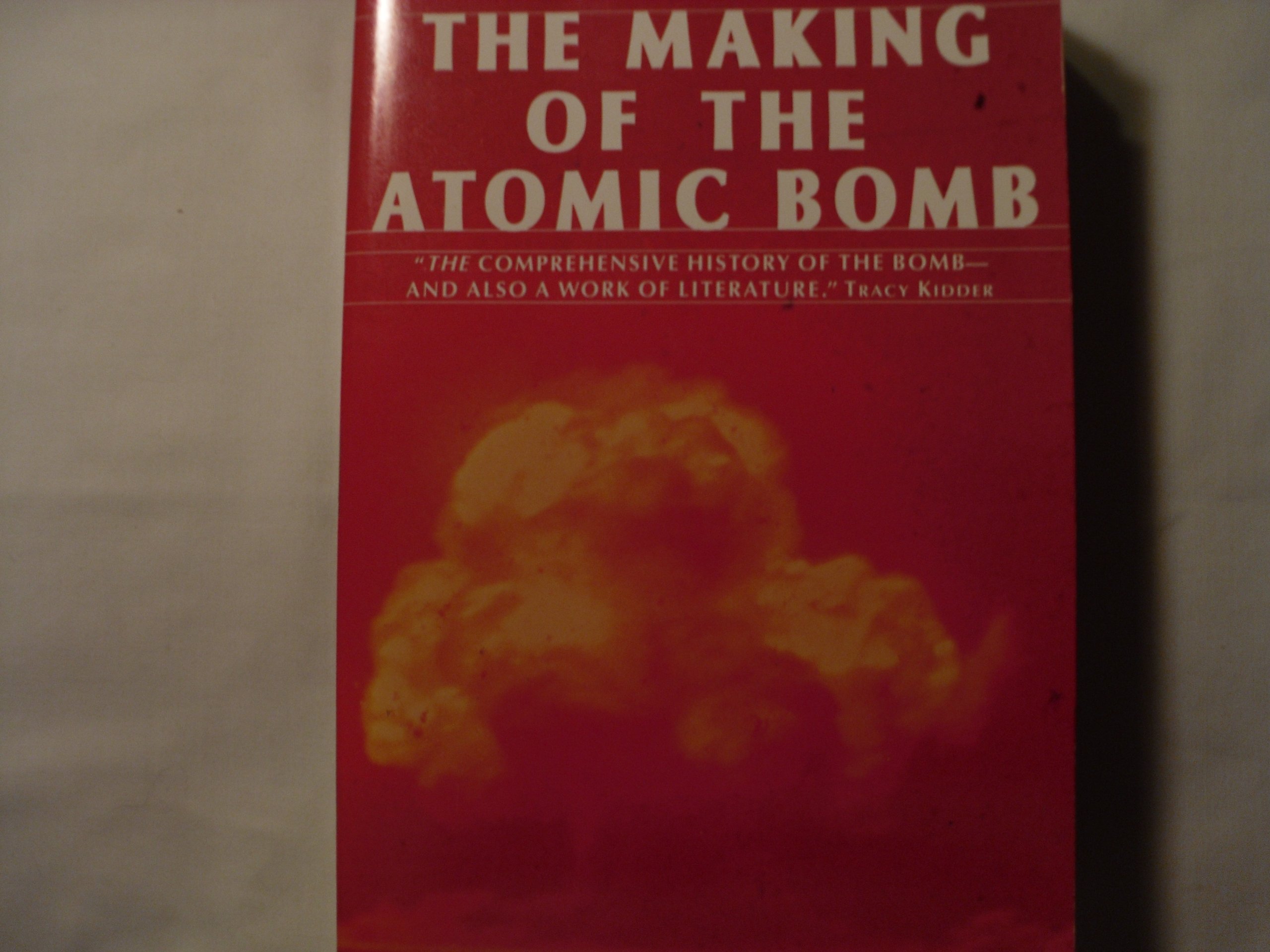



With a new Introduction by the author, the twenty-fifth anniversary edition of the Pulitzer Prize-winning epic about how the atomic bomb came to be. In rich, human, political, and scientific detail, here is the complete story of the nuclear bomb. Few great discoveries have evolved so swiftlyor have been so misunderstood. From the theoretical discussions of nuclear energy to the bright glare of Trinity there was a span of hardly more than twenty-five years. What began merely as an interesting speculative problem in physics grew into the Manhattan Project, and then into the Bomb with frightening rapidity, while scientists known only to their peersSzilard, Teller, Oppenheimer, Bohr, Meitner, Fermi, Lawrence, and von Neumannstepped from their ivory towers into the limelight. Richard Rhodes takes us on that journey step-by-step, minute by minute, and gives us the definitive story of mans most awesome discovery and invention. The Making of the Atomic Bomb is at once a narrative tour de force and a document as powerful as its subject. If the first 270 pages of this book had been published separately, they would have made up a lively, insightful, beautifully written history of theoretical physics and the men and women who plumbed the mysteries of the atom. Along with the following 600 pages, they become a sweeping epic, filled with terror and pity, of the ultimate scientific quest: the development of the ultimate weapon. Rhodes is a peerless explainer of difficult concepts; he is even better at chronicling the personalities who made the discoveries that led to the Bomb. Niels Bohr dominates the first half of the book as J. Robert Oppenheimer does the second; both men were gifted philosophers of science as well as brilliant physicists. The central irony of this book, which won a National Book Critics Circle Award, is that the greatest minds of the century contributed to the greatest destructive force in history. Richard Rhodes is a widely published author. His articles have appeared in numerous national magazines. He graduated from Yale University and has received fellowships from the Ford Foundation, the National Endowment for the Arts, the John Simon Guggenheim Memorial Foundation, and the Alfred P. Sloan Foundation. Chapter 1 Moonshine In London, where Southampton Row passes Russell Square, across from the British Museum in Bloomsbury, Leo Szilard waited irritably one gray Depression morning for the stoplight to change. A trace of rain had fallen during the night; Tuesday, September 12, 1933, dawned cool, humid and dull. Drizzling rain would begin again in early afternoon. When Szilard told the story later he never mentioned his destination that morning. He may have had none; he often walked to think. In any case another destination intervened. The stoplight changed to green. Szilard stepped off the curb. As he crossed the street time cracked open before him and he saw a way to the future, death into the world and all our woe, the shape of things to come. Leo Szilard, the Hungarian theoretical physicist, born of Jewish heritage in Budapest on February 11, 1898, was thirty-five years old in 1933. At five feet, six inches he was not tall even for the day. Nor was he yet the "short fat man," round-faced and potbellied, "his eyes shining with intelligence and wit" and "as generous with his ideas as a Maori chief with his wives," that the French biologist Jacques Monod met in a later year. Midway between trim youth and portly middle age, Szilard had thick, curly, dark hair and an animated face with full lips, flat cheekbones and dark brown eyes. In photographs he still chose to look soulful. He had reason. His deepest ambition, more profound even than his commitment to science, was somehow to save the world. The Shape of Things to Come was H. G. Wells' new novel, just published, reviewed with avuncular warmth in The Times on September 1. "Mr. Wells' newest 'dream of the future' is its own brilliant justification," The Times praised, obscurely. The visionary English novelist was one among Szilard's network of influential acquaintances, a network he assembled by plating his articulate intelligence with the purest brass. In 1928, in Berlin, where he was a Privatdozent at the University of Berlin and a confidant and partner in practical invention of Albert Einstein, Szilard had read Wells' tract The Open Conspiracy. The Open Conspiracy was to be a public collusion of science-minded industrialists and financiers to establish a world republic. Thus to save the world. Szilard appropriated Wells' term and used it off and on for the rest of his life. More to the point, he traveled to London in 1929 to meet Wells and bid for the Central European rights to his books. Given Szilard's ambition he would certainly have discussed much more than publishing rights. But the meeting prompted no immediate further connection. He had not yet encountered the most appealing orphan among Wells' Dickensian crowd