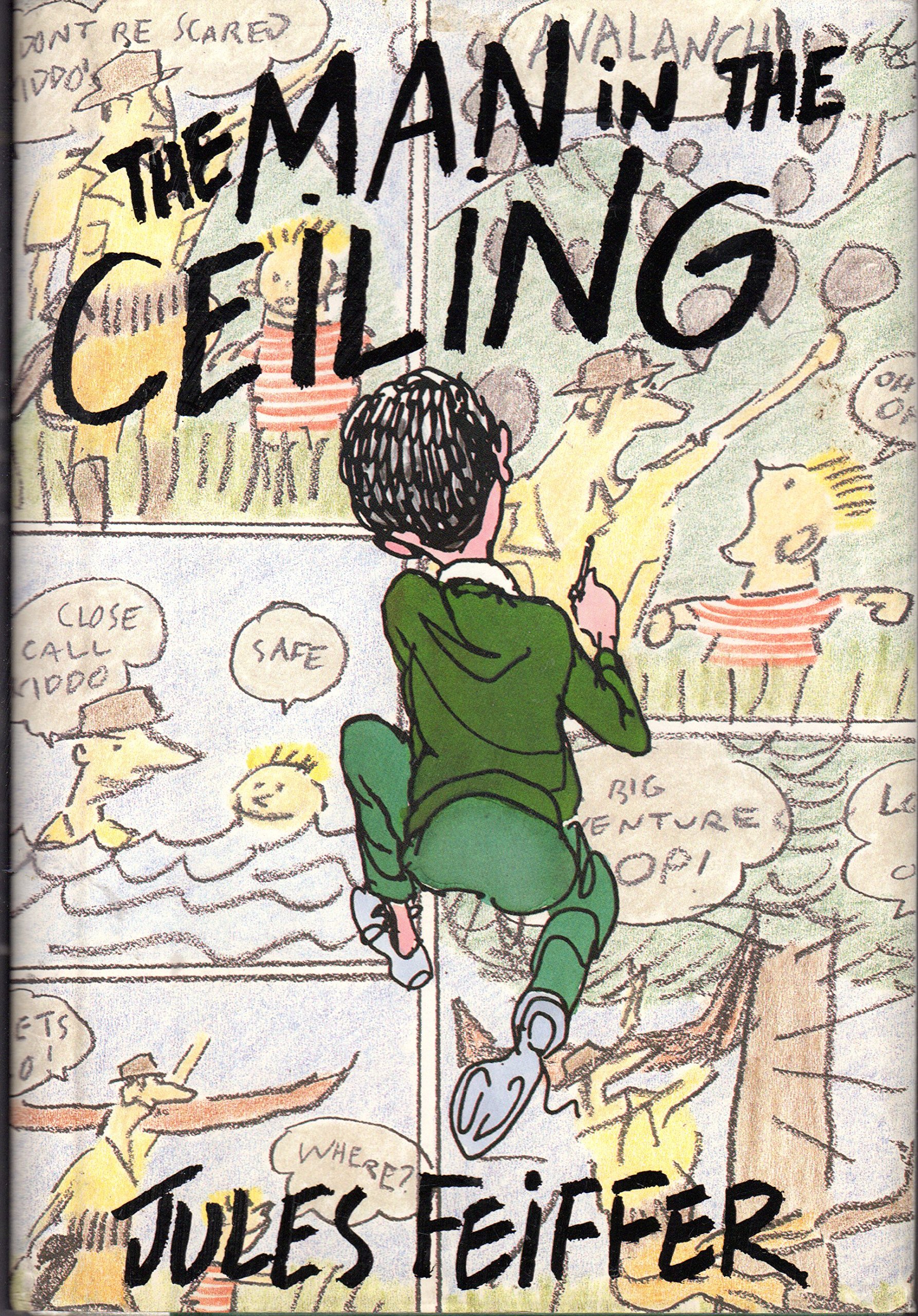



Now planned as a Broadway musical from the Tony Award-winning producer of “Hamilton” and “Rent”! From the Pulitzer Prize-winning cartoonist, playwright, screenwriter, and illustrator of The Phantom Tollbooth, Jules Feiffer, comes a witty story about following your dreams. Jimmy is bad at sports and not much better at school, but he sure can draw terrific cartoons. And his dream, like that of his Uncle Lester who writes flop Broadway musicals, is to be recognized for what he loves doing most. “Wickedly funny… reminiscent of Roald Dahl's edgy lampoons." — ALA Booklist (starred review) “A witty story that combines a comfortably oldfangled tone with up-to-the-minute characterizations and a playful use of graphics.” —Publishers Weekly (starred review) Grade 4-6-A disappointment to his father, a daydreamer in the classroom, and a failure on the ball field, Jimmy Jibbett decides that, at 10, he is a flop as a boy. He finds comfort, however, in his talent for drawing and in his conviction that he will one day be a great cartoonist. But even this dream is threatened when the most popular boy in school decides that he and Jimmy should collaborate on a strip. His uncle's counsel that "failure is the ugly duckling" is full of cheerful promise, but sadly suspect, since Lester's career as a composer is distinguished by what Jimmy's father delights in calling "floperoos." And, indeed, when Lester's one success turns spurious, he bitterly rejects his own advice and gives up. Ultimately it is Jimmy who turns their respective ugly duckling failures into swans of success. Meanwhile in his first book for youngsters, Feiffer has created his own swan. His theme may be as old as Horatio Alger's "strive and succeed" credo, but he manages to give it fresh life and relevance through his terrifically engaging protagonist and his memorable family. Not surprisingly, the Pultizer Prize-winner's splendidly energetic line drawings capture his characters' angst, anger, and exuberance while his renditions of Jimmy's own action-hero cartoons are right-on in their sense of emerging talent and preadolescent temper. Jimmy's drawings may be informed by innocence but Feiffer's book about this boy's trials and triumphs is wonderfully wise. Michael Cart, formerly at Beverly Hills Public Library Copyright 1994 Reed Business Information, Inc. Gr. 5-7. Jimmy Jibbett just wants some respect--a commodity hard to come by in a household with an overworked father, a self-absorbed mother, an older sister with an irrational temper, and a younger sister greedy for attention. To compensate for his sense of social and athletic failure ("It is nearly impossible to be a successful boy in America if you can't play ball"), Jimmy devotes himself to cartooning and creates a series of superheroes who he hopes will win him the critical acclaim and respect he craves. To curry favor of the school demigod, Charlie Beemer, Jimmy agrees to provide drawings for Beemer's violent Bullethead comic concept; but in so doing, Jimmy compromises his art and finds his ability blocked. This creative impasse is finally broken by Uncle Lester, family black sheep and authority on failure, who assures Jimmy that failure is "the ugly duckling" that will turn into a beautiful swan. Much of the humor is reminiscent of Roald Dahl's edgy lampoons, without the mayhem, and Feiffer's deft depiction of moments of family dysfunction are wickedly funny. His rough-drawn, signature cartoon illustrations are charged with an energy that matches the briskly paced text. Sharp, brash observations of the rocky road to artistic success form a strong secondary theme that extends the novel's audience well beyond the middle grades. Elizabeth Bush In his first children's book, a noted cartoonist and playwright wisely essays what he's always done best--a satirical, somewhat jaundiced take on the contemporary human condition, exemplified here by aspiring cartoonist Jimmy Jibbett and his family. The result isn't strong on plot, though there's enough to carry the reader along: seeking his artistic identity, Jimmy ponders the differences between his uptight businessman dad and fashion designer mom; tries an uncomfortable collaboration with a charismatic older boy (still a preteen) who turns out to be a clod; gets moral support from a flamboyant older sister whose one fault is her truly terrible temper; and, most significantly, observes Uncle Lester, after years of effort, take a play to Broadway to universal applause--except from the critics. The play closes; Lester desponds; Jimmy not only comes up with his very own cartoon superhero (see title) but, with the perseverance Lester prescribed, learns to draw hands--a success that lifts Lester out of his doldrums. Lester's story threatens to take over, though it's germane to Jimmy's and seen from his point of view; best here, though, are the incisive takes on characters and relationships--and Feiffer's splendidly vital depictions of them, in a fiendishly agi