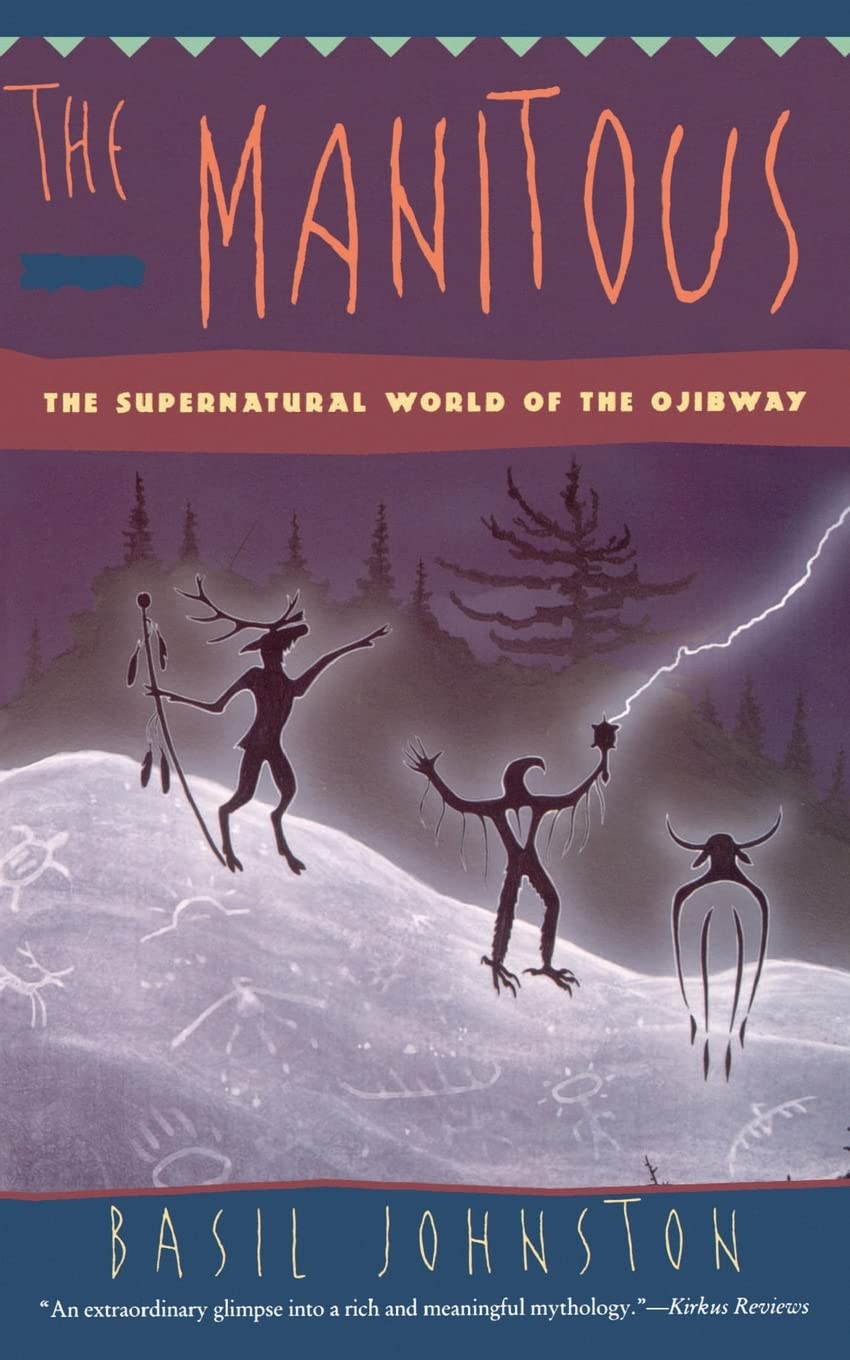
The Manitous: Supernatural World of the Ojibway, The – Spellbinding Creation Legends and Origin Stories from Ancient Oral Traditions
$11.20
by Basil Johnston



These are the stories of the manitous--the spirits who inhabit the supernatural world of the Ojibway (the Native American tribe of the Great Lakes and central Canada region). Harvested by an eminent expert from an ancient oral tradition, these sacred stories introduce wily tricksters, fearsome giants, timorous tree spirits, seductive maidens, and wise grandmothers. Here, a coward masquerading as a hero becomes one; a powerful warrior is riled and routed by a younger sibling with a gift for dancing and disguises; and the ever-hungry evil weendigos--evil manitous--haunt the land. In spellbinding and hypnotic fashion, the creation and flood legends are told, and the origin stories of corn, spruce, and tobacco are revealed. Comic, erotic, dramatic, and tragic, these engrossing tales are a window into the heart of an ancient culture, an important contribution to Native American literature, and a fascinating source of spiritual guidance for the many followers of New Age mysticism. "An extraordinary glimpse into a rich and meaningful mythology.""--Kirkus Reviews" Manitous are mysteries and spirits - the essences - that infuse and safeguard plants and animals, including humans, in all aspects of life. The tales of the manitous are simple in narration and complex in spirit, rich with incident and detail, and attempt to explain the mysterious ways of the natural world. Here are wily tricksters, timorous tree spirits, wise grandmothers, seductive maidens, and the ever-hungry evil manitous, fearsome giants known as Weendigoes. Here is a half-man, half-manitou legend of Ojibway lore who represents the wonders and shortcomings of all humankind and who becomes a hero by masquerading as one; a powerful warrior who is riled and routed by a younger sibling with a fight for dancing and disguises; a man who seems obsessed with the trivial but learns to understand the spiritual; and The Prophecy - which is told but disbelieved - telling of the changes in the native world to come. By turns comic, erotic, dramatic, and tragic, these engrossing stories - most of which have never before been recorded - provide a window into an ancient culture, and hold great meaning for modern readers. These are the stories of the manitous--the spirits who inhabit the supernatural world of the Ojibway (the Native American tribe of the Great Lakes and central Canada region). Harvested by an eminent expert from an ancient oral tradition, these sacred stories introduce wily tricksters, fearsome giants, timorous tree spirits, seductive maidens, and wise grandmothers. Here, a coward masquerading as a hero becomes one; a powerful warrior is riled and routed by a younger sibling with a gift for dancing and disguises; and the ever-hungry evil weendigos--evil manitous--haunt the land. In spellbinding and hypnotic fashion, the creation and flood legends are told, and the origin stories of corn, spruce, and tobacco are revealed. Comic, erotic, dramatic, and tragic, these engrossing tales are a window into the heart of an ancient culture, an important contribution to Native American literature, and a fascinating source of spiritual guidance for the many followers of New Age mysticism. Basil Johnston is an ethnologist and the author of 11 books. He lives in Ontario, Canada. The Manitous The Spiritual World of the Ojibway By Johnston, Basil H. Perennial Copyright © 2004 Basil Johnston All right reserved. ISBN: 0060927356 Kitchi-Manitou The Great Mystery When the North American Indians saw the Western European wayfarers and missionaries erect crosses, they were scandalized by an act they regarded as profane. For them, the erection of wooden memorials, called totemic staffs ( dodaem-wautik ), was conducted only as part of a funeral ceremony. These monuments were symbols of death, reminders of the afterlife and the afterworld, and tokens of the survivors' love and respect for the departed. Hence, for the strangers and their missionaries to implant a monument of death on an occasion other than a funeral and in a place other than a burial ground was a mockery of the dead. The wayfarers' and missionaries' misconceptions about Anishinaubae life were drawn from their observations of aboriginal ceremonies and language. One such major misconception was related to the Anishinaubae notion of God. The chief cause of the misunderstanding was the term manitou, which from the beginning was interpreted to mean only spirit. Naturally, this narrow interpretation of the term distorted the essential truth of what the Anishinaubae people meant. The inference that followed was to be expected--that the aboriginal mind was incapable of conceiving or expressing any but the simplest of the abstract. Thereafter, whenever an aboriginal person uttered the word manitou, Western Europeans thought it meant spirit. When a medicine person uttered the term manitouwun to refer to some curative or healing property in a tree or plant, they took it to mean spirit. Wh