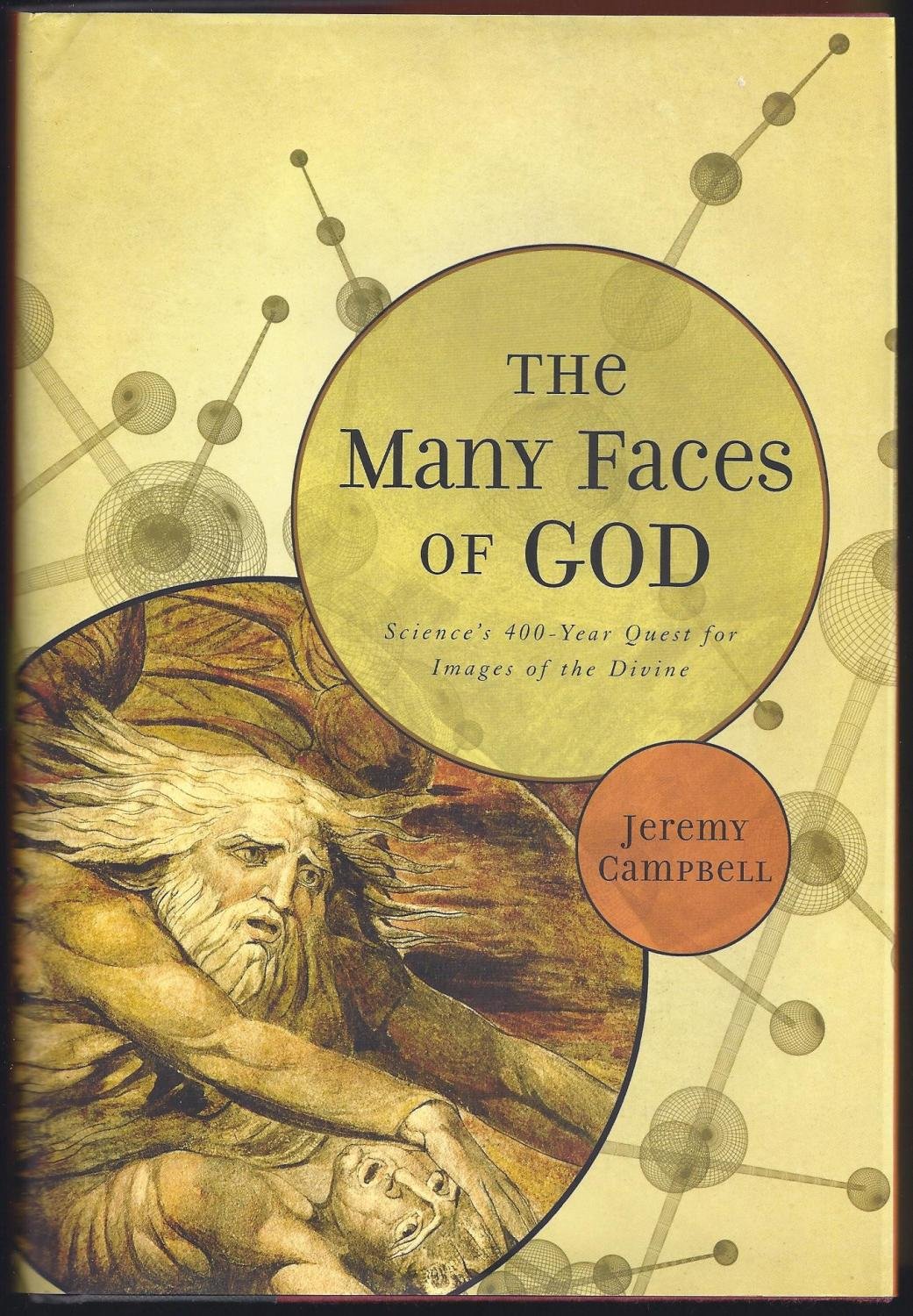
The Many Faces of God: Science's 400-Year Quest for Images of the Divine
$26.95
by Jeremy Campbell



How science has changed our perceptions of God―from the age of Newton to the era of quantum mechanics. A grand work of philosophy and history, The Many Faces of God shows how our religious conceptions have been shaped by advances in technology and science. Beginning his narrative in the 1600s and concluding with the fervor of the millennium, Jeremy Campbell shows how Isaac Newton and his generation altered the medieval definition of God from one interpreted through divine messengers to an all-knowing, autocratic God who watched over the scientific wonders of the universe. Arguing that religions harbor a secret fear that science may one day explain God away, Campbell masterfully shows how twentieth-century technology and theology have become intertwined, often to the detriment of both disciplines. Illuminating the writings of such intellectual luminaries as Calvin, Luther, Einstein, and Niels Bohr, all the way up to John Updike, The Many Faces of God is a sweeping history of religious and scientific thought in the Western world. *Starred Review* Readers who recognize Newton and Bohr as pathbreaking scientists may be surprised to learn what they--and other laboratory mavens--have asserted about God. In a provocative and much-needed investigation, Campbell illuminates the ways in which science has recast the meaning of religious faith. Readers see how science first emerged in the seventeenth century as a new mediator between God and his people, so testing traditional religious authorities. Some of those authorities shared the fears of the Catholic inquisitors who tried to suppress the radical new science of a moving earth. Others joined rationalist Protestants who so fully embraced the Newtonian formulas that scriptural accounts of the world soon seemed unnecessary. Nor have newer scientific theories--the big bang, chaos theory, quantum mechanics--lessened the difficulties for those seeking an intellectually informed faith. Campbell recognizes that the strange indeterminacies of modern physics open metaphysical possibilities long closed by Newton's rigid mathematics. But even as he challenges today's theologians to match the daring of their scientific colleagues, Campbell urges them to keep their distance. For although new scientific paradoxes may foster a deeper awareness of cosmic ironies, theologians still must confront the oldest of mysteries with abiding nonscientific attributes--integrity and hope. An essential acquisition. Bryce Christensen Copyright © American Library Association. All rights reserved Jeremy Campbell is the author of The Liar’s Tale , Winston Churchill’s Afternoon Nap , and The Grammatical Man . He is the Washington correspondent for the Evening Standard and lives in Washington, DC.