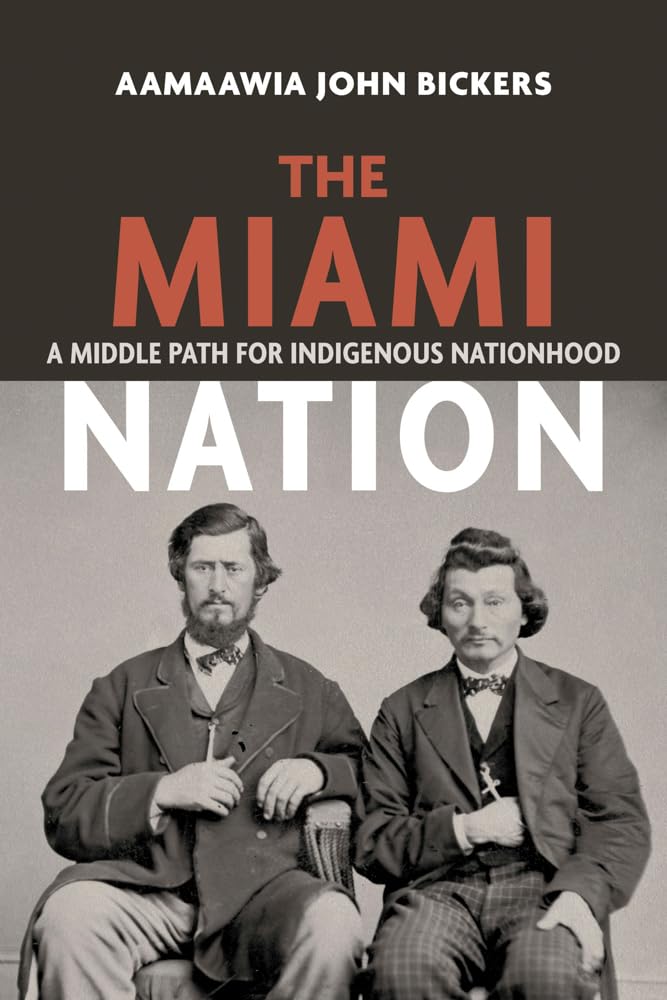



As the United States sought to expand its territorial holdings at the start of the nineteenth century into what is now Ohio and Indiana, the Indigenous Myaamia (Miami) peoples of the Wabash River Valley came together to form a united front to protect their lands and their people. The Miami National Council was designed by its founders to allow the Myaamia people and their leaders to engage with the federal government and American culture on their own terms. The Miami Nation tells the fascinating history of both politics and people. Skillfully weaving together oral narratives, archival research, existing published histories, and his own family's recollections and stories, Aamaawia John Bickers illustrates the broader strategies and forces that affected how the Miami Nation responded to American imperial expansion, illuminating the challenges, achievements, and occasional missteps along the way. Bickers begins with the formation of the Miami National Council in the early nineteenth century, following their political development through two forced removals, the American Civil War, allotment and the Dawes Act, and finally the ratification of the constitution of the Miami Tribe of Oklahoma in 1939. But throughout these experiences, the Miami Nation maintained its cultural identity and continued to sustain their community. As the first academic history of the Myaamia people written by a tribal member, The Miami Nation centers Myaamia voices as it contemplates issues of Indigenous power, settler colonialism, and how a community can charter its own path through history. "This is perhaps the most important academic book to appear on the history of the Myaamia people. . . By grounding this study in the history of Myaamia people, rather than place, Bickers has dramatically altered both the ways in which people will view Myaamia history moving forward, as well as the histories of all Indigenous peoples in the southern Great Lakes."―James Buss, author of Winning the West with Words: Language and Conquest in the Lower Great Lakes "Bickers seeks to explain how and why his Myaamia ancestors made the decisions they did and how their descendants in each generation managed the consequences of those decisions in an ever-changing environment of American expansion and intrusion. . . At every stage of American intrusion the Myaamia people and their leaders knew they had to adapt to survive. The key question then was how to adapt in a way that maintained their culture and community. Because of this change over time the twenty-first century Miami Tribe of Oklahoma might not look completely familiar to Myaamia people of the early nineteenth century. But the communal, cultural, and political threads that both remain and are restored speak to the maintenance of the Myaamia community over the centuries."―John Bowes, author of Land Too Good for Indians: Northern Indian Removal Aamaawia John Bickers is Assistant Professor of History at Case Western Reserve University, where he teaches courses in Native American and Early American history.