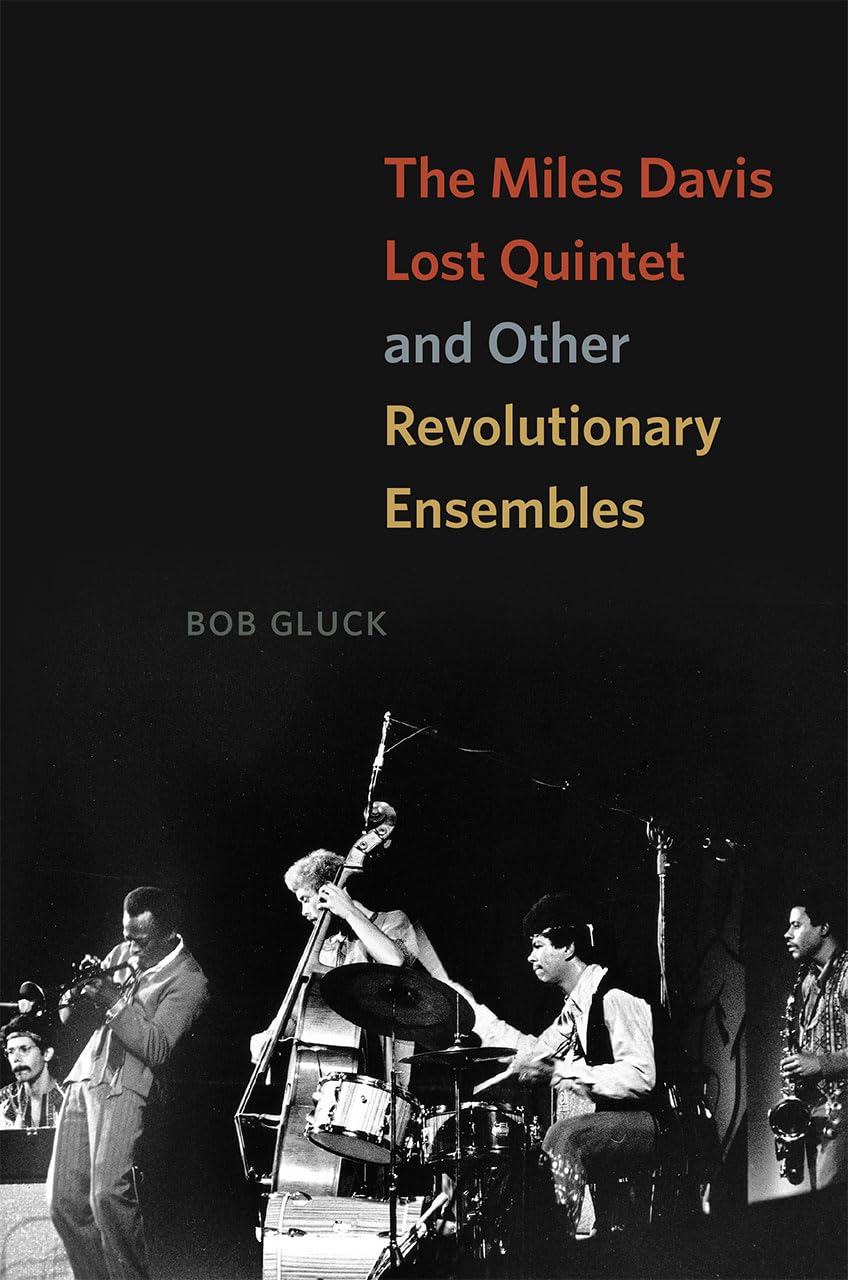



Miles Davis’s Bitches Brew is one of the most iconic albums in American music, the preeminent landmark and fertile seedbed of jazz-fusion. Fans have been fortunate in the past few years to gain access to Davis’s live recordings from this time, when he was working with an ensemble that has come to be known as the Lost Quintet. In this book, jazz historian and musician Bob Gluck explores the performances of this revolutionary group—Davis’s first electric band—to illuminate the thinking of one of our rarest geniuses and, by extension, the extraordinary transition in American music that he and his fellow players ushered in. Gluck listens deeply to the uneasy tension between this group’s driving rhythmic groove and the sonic and structural openness, surprise, and experimentation they were always pushing toward. There he hears—and outlines—a fascinating web of musical interconnection that brings Davis’s funk-inflected sensibilities into conversation with the avant-garde worlds that players like Ornette Coleman and John Coltrane were developing. Going on to analyze the little-known experimental groups Circle and the Revolutionary Ensemble, Gluck traces deep resonances across a commercial gap between the celebrity Miles Davis and his less famous but profoundly innovative peers. The result is a deeply attuned look at a pivotal moment when once-disparate worlds of American music came together in explosively creative combinations. “Locates the music of his electric epoch within a historic continuum of exploratory jazz. ‘Electric Miles’ is the version who plugged in to the zeitgeist, traded his suits for hipster finery, and opened up his music to distortion and groove-based repetition, either transcending or dramatically repudiating (depending on your perspective) his roots in acoustic jazz.” ― Atlantic “Gluck’s own expertise as a composer and musician work hand-in-hand with his natural inquisitiveness to uncover the inner creative method in a band that was literally reinventing their music on a gig-by-gig basis. In the process, Gluck perhaps reveals more about Davis’s techniques than previously understood. . . . In his examination of lesser-known groups like the Revolutionary Ensemble, Gluck illustrates both the Davis influence and the tenacious individualism of artists from the trumpeter’s sphere who were determined to follow their own best instincts. Though Gluck is an academician, his writing is accessible even at its most detailed. His insights are solidly supported by historical fact, quotes, and his firm grasp of the subject. As a result, The Miles Davis Lost Quintet and Other Revolutionary Ensembles plays out as a compelling narrative of artistic ambitions and human nature.” ― All About Jazz “[Gluck] sees Davis as being in conversation with the free jazz of Ornette Coleman and John Coltrane, while creating a music—jazz rock—with much broader commercial appeal. The ‘musical economy’ is what separates The Lost Quintet from groups on the commercial margins like Circle and The Revolutionary Ensemble—to which Gluck devotes separate chapters. . . . His thesis is intriguing, and the book provides much of the material for addressing it. . . . He does show how The Lost Quintet was an important band in its own right, not just a transition to better known ensembles. The Miles Davis Lost Quintet and Other Revolutionary Ensembles raises tantalizing questions about a career that continues to fascinate.” ― The Wire “One of the best things about this book is Gluck’s ability to connect all the dots: the relations between players and movements, between seemingly disparate musicians and the collective music they created, between what is seemingly lost and what deserves further examination. Gluck makes the case that often what should be most valued is also what is most hidden.” ― New York City Jazz Record “The scholarship here is excellent. Documenting musical changes is difficult, and Gluck has to rely on a great deal of bootlegged material and also does a forensic recreation of some of Davis’s ‘Live’ albums—that were actually heavily produced—to understand what he and his quintet were working at. Gluck has scoured interviews—and done his own—to get a sense of the biographical and social issues at play. But unlike many other—most other—all other?—cultural criticism being put out today, he never reduces the art—the music-—to psychology and sociology. He understands the aesthetics, the music, as a thing unto itself, and tries hard to explain it. . . . Davis’s position as a famous bandleader allowed his musicians to experiment while still getting gigs, still producing albums. Circle and the Revolutionary Ensemble were in very different situations. . . . Gluck’s research and insight really pays off. . . . The research he did was small-scale and exacting, sketching networks of influence and explaining the development of a musical form that is too easily dismissed. And he left me wanting mo