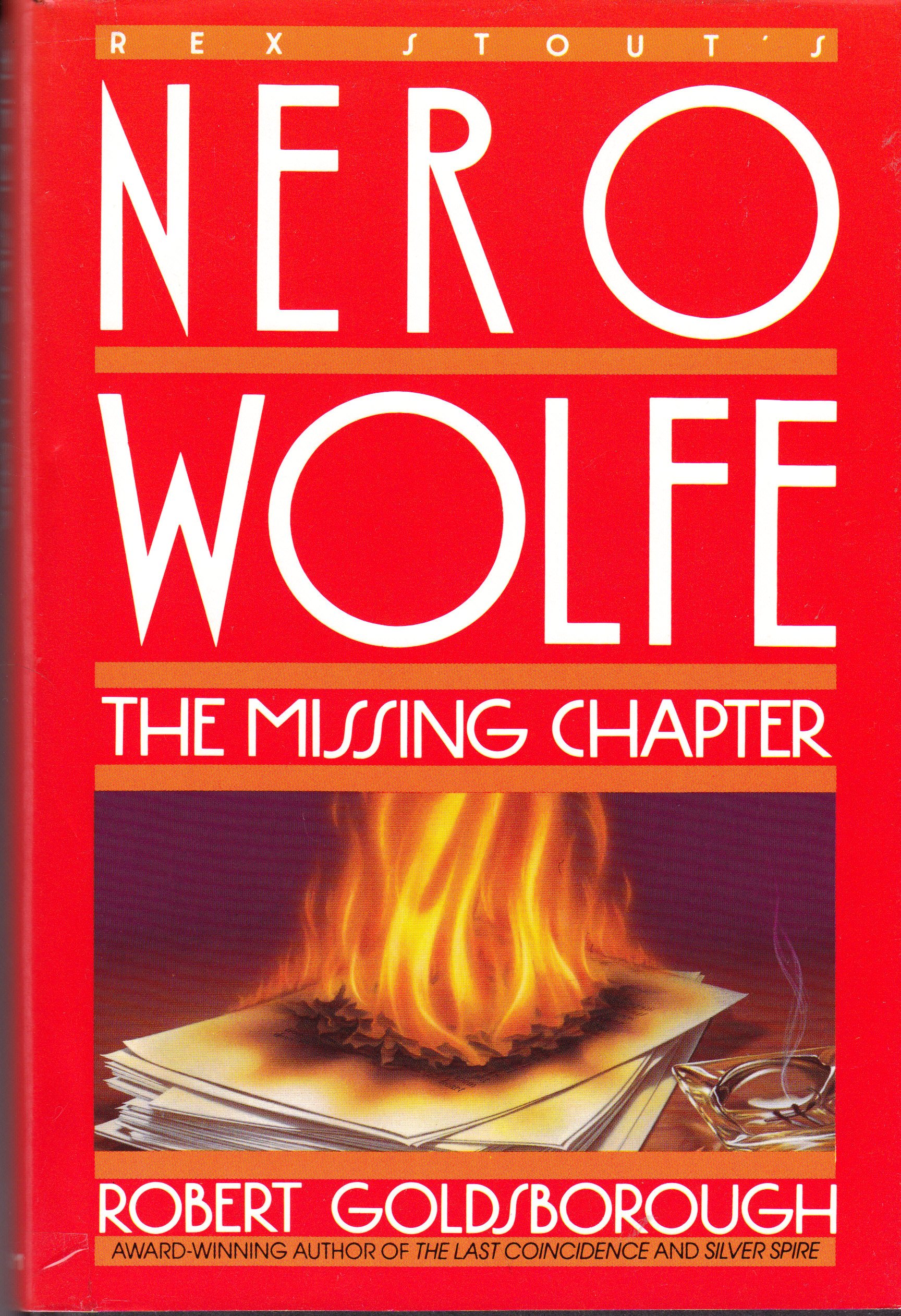



Robert Goldsborough returns with his seventh stunning Nero Wolfe novel. Follow along into Wolfe's famed West Thirty-fifth Street brownstone, where the corpulent orchid-tending genius devours meals, books, and murderers with a passion - and where this time he gets the chance to send a writer's killer to the pen. Charles Childress, the author tapped to continue the beloved Sergeant Barnstable detective stories when the originator died, may not have been the most gifted writer in the world, but he did have his talents...Contentious, combative, and exceedingly vengeful, Childress had an unsurpassed way of making enemies. Which is why, when the police write off his death as suicide, his publisher, Horace Vinson, comes to Nero Wolfe. Vinson knows all too well that in the cutthroat world of publishing, the competition can be murder. Wolfe, however; is not so easily convinced...or distracted from his more genteel pursuits. After all, the evidence does conform to the official version of the killing: The gun found at the crime scene not only belonged to the victim but bore only his fingerprints. Perhaps Childress finally contrived a successful climax...as the author of his own death. But Archie Goodwin, Wolfe's ever-faithful friend and partner; points out that Vinson's fee would keep the big man in beer and bouillabaisse for some time to come. That is a reality Nero Wolfe can't refuse, and soon Archie is posing questions that turn up a whole cast of character assassins, including Childress's ex-editor and agent, his most scathing critic, and his icily beautiful, ambitious fiancee - each of whom would have taken great pleasure in writing the final chapter in the life of Charles Childress. And then, in a plot twist any auteur would envy, Archie gets wind of the involvement of a mysterious kissing cousin from Childress's past. Could this be a case of a small-town girl come to right an old wrong? It's a conundrum so novel even the reluctant Nero Wolfe can't resist...as extortion, deceit, and jealousy come together in a perfect potboiler of revenge - and murder. Goldsborough's seventh Nero Wolfe novel is both a very clever mystery and a sort of insider's joke on the whole idea of one author continuing a mystery series after the original author dies. Charles Childress was the author chosen to continue the Orville Barnstable mystery series after the originator died. When Childress is found dead in his Greenwich Village apartment, the police say suicide. His publisher and editor, Horace Vinson, disagrees and hires his Hugeness, Nero Wolfe, to investigate. Among the suspects questioned by leg man Archie Goodwin are a fired agent, an angry editor, and a snippy critic. Goldsborough, as the "continuator" of Rex Stout's Wolfe series, delights in poking fun at the continuation phenomenon--the readers who delight in pointing out small errors of trivial detail in the continuator's work; the cacophony of critical voices, some hailing Childress as a worthy successor, some denouncing him as a greedy vulture; the editors who tinker needlessly; the publishers who exploit Childress in order to boost sales of the dead author's reprints. The publishing details ring true, and--as always--Goldsborough does a masterly job with the Wolfe legacy. Here's a continuator with no reason to kill himself or to be killed. Wes Lukowsky Good news for everybody who's railed against Goldsborough's pallid Nero Wolfe pastiches (Silver Spire, 1992, etc.): this time Wolfe is investigating the death of a continuator of a venerable detective series. The posthumous air is thick with accusations: just before his death, Charles Childress had fired his agent, Franklin Ott, and had his editor, Keith Billings, canned; Childress's fiance, Debra Mitchell, and cozy fellow-writer Patricia Royce accuse each other of murder; and as Archie Goodwin learns on an amusing trip to Childress's ancestral home in Mercer, Indiana, he was involved with another woman who had reason to kill him too. With such obvious motives and such banal suspects, there's no need for any more strenuous detective work than usual; the high point of this installment may be watching the elevator in the old brownstone getting replaced. Formulaic plotting aside, this is as good as Goldsborough gets. The missing chapter, though, matters less than the missing author: Rex Stout. -- Copyright ©1993, Kirkus Associates, LP. All rights reserved.