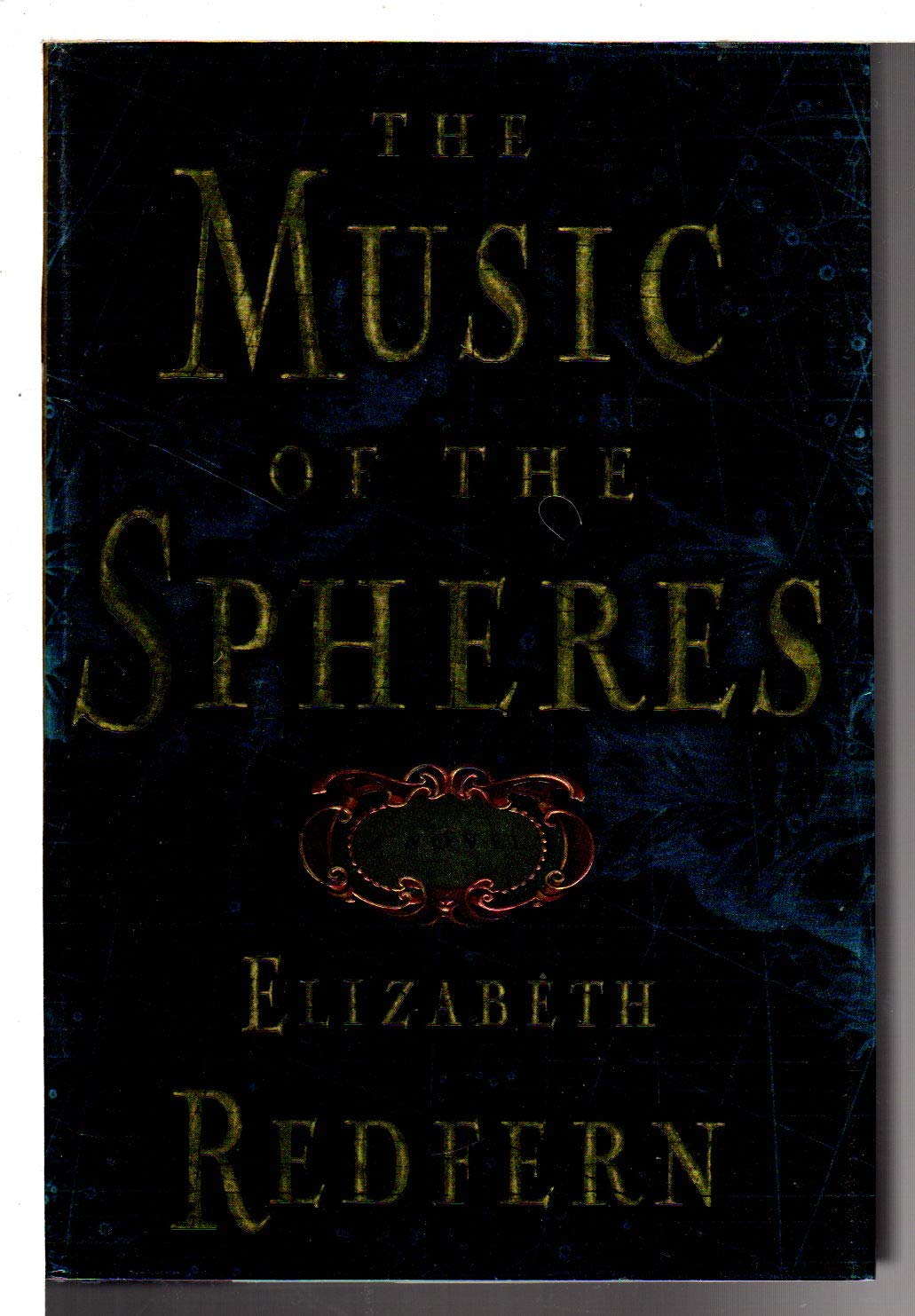



To the ranks of Caleb Carr, Iain Pears, and Umberto Eco comes a stunning new voice in historical fiction. "Intricately plotted, beautifully paced, The Music of the Spheres is an elegant historical novel rich in detail, at times Dickensian in its description of London. Elizabeth Redfern has made an exciting debut."-Martha Grimes In the London of 1795, intrigue and death walk the dark streets. England is at war with its neighbor and nemesis, France, and espionage is rampant. It is the job of Jonathan Absey at the Home Office to catch these spies, but his mind is elsewhere, his dreams haunted by the still unsolved murder of his fifteen-year-old daughter in these same streets. Desperately pursuing both investigations, he stumbles across a strange society of astronomers called the Company of Titius who are on a furious search of their own: to discover a long-lost star in the wide black sky. Soon, as he digs into their arcane world, their quest begins to merge with his own, and Absey finds himself discovering more than he had ever imagined-not only about spies and murderers but also about celestial numbers and the making of codes; about passions as unnatural as they are obsessive; and about the bonds of family . . . and the lengths we will go to preserve them. With The Music of the Spheres , Elizabeth Redfern emerges as an evocative and elegant writer of startling power, her gifts for characterization, atmosphere, narrative, and rich moral drama marking her as a new star in her own right. Redfern's first novel is a tale of murder and intrigue set in 1795 London. Jonathan Absey is a clerk at the Home Office whose job is to search out spies in the war with France. Instead, he spends much of his time trying to discover who murdered his daughter, a red-haired prostitute. In his quest for justice, he enlists the reluctant help of half-brother Alexander. An amateur astronomer, Alexander ingratiates himself with an unusual group of French migr s who are searching the skies for an elusive new planet they call Selene. Secret agents, murdered prostitutes, and the love of science all combine in an enjoyable if slow-paced story. Redfern has a deep understanding of this historical period and uses contemporary epigraphs to good effect. Strongly recommended for large public libraries or where there is an interest in historical mysteries. Laurel Bliss, Yale Univ. Lib. Copyright 2001 Reed Business Information, Inc. By the waning years of the eighteenth century, the French had removed the heads of their king and queen, and all Europe was plunged into war and confusion as a new order struggled to establish itself. Across the channel, the English government feared French aggression; in particular, His Majesty's government was gravely concerned about the network of French spies operating in London, gathering intelligence beneficial to the forces of the new French Republic. Consequently, the Home Office conducted a campaign of counterespionage, infiltrating the spy cells in hopes of arming itself with information about the possibility of invasion by the French army. In Redfern's historically immaculate first novel, it is as if John le Carre has gone Age of Enlightenment on us; while in the novel's second story line about a brutal serial murderer, it is as if Silence of the Lambs has been reset in the Napoleonic era. This new British writer distinguishes herself quite well as she seamlessly incorporates the diverse elements of historical fiction, romance novels, and spy thrillers. The reader eagerly follows the exploits of Jonathan Avery, an agent of the Home Office charged with uncovering and incapacitating the French spies in the British capital. In addition to his job, Avery has a personal obsession: finding the murderer of his teenage daughter. This dual investigation leads Avery in deliciously circuitous fashion to a group of expatriate astronomers calling themselves the Company Titius. How Redfern fits the stargazers into the espionage plot is quite inventive. With a $100,000 ad budget and a 75,000 first printing, this is one first novel that won't suffer for lack of publicity. Brad Hooper Copyright © American Library Association. All rights reserved The Music of the Spheres demands an attentive ear, even as its multiple harmonies enchant and satisfy the senses -- Kirkus [starred review], May 15, 2001 Elizabeth Redfern is a teacher and musician in Derbyshire, England. The Music of the Spheres, Chapter I I Algol is the name of the winking demon star, Medusa of the skies; fair but deadly to look on, even for one who is already dying. Ah, the bright stars of the night. Almost they obliterate the clear white pain. A thousand stars shining in the ether; but no dazzling newcomer. And so little time left, so little time... Yet still two-faced Medusa laughs from behind the clouds, demanding homage. Homage, Medusa, or a sword, a blade sharper than death itself. The wind stirs. Night clouds obscure the universe. A l