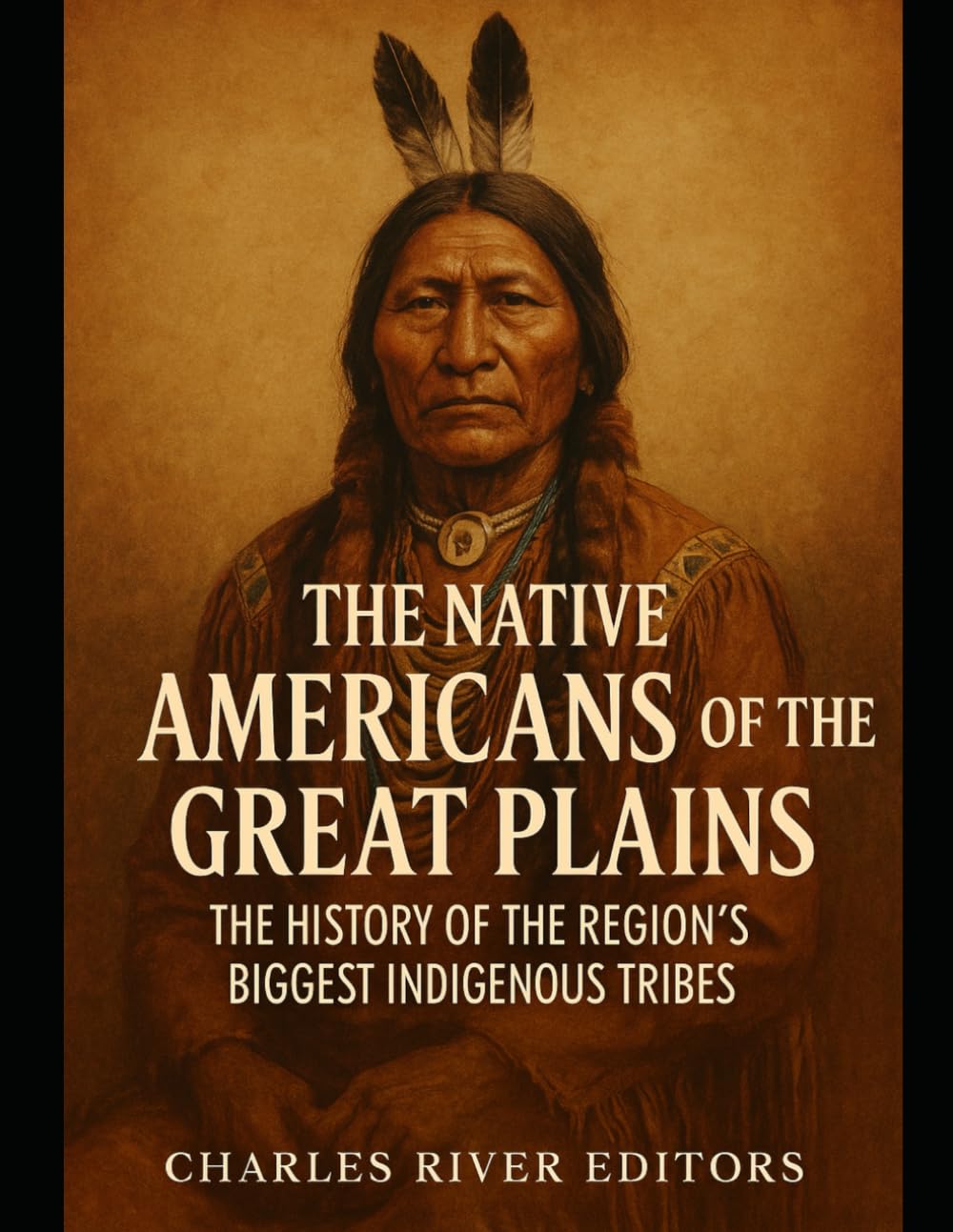
The Native Americans of the Great Plains: The History of the Region’s Biggest Indigenous Tribes
$16.99
by Charles River Editors



From the “Trail of Tears” to Wounded Knee and Little Bighorn, the narrative of American history is incomplete without the inclusion of the Native Americans that lived on the continent before European settlers arrived in the 16th and 17th centuries. Since the first contact between natives and settlers, tribes like the Sioux, Cherokee, and Navajo have both fascinated and perplexed outsiders with their history, language, and culture. Despite being one of the most erstwhile foes the U.S. government faced during the Indian Wars, the Sioux and their most famous leaders were grudgingly admired and eventually immortalized by the very people they fought. Sitting Bull and Crazy Horse remain household names due to their leadership of the Sioux at the fateful Battle of the Little Bighorn, where the native warriors wiped out much of George Custer’s 7th Cavalry and inflicted the worst defeat of the Indian Wars upon the U.S. Army. Red Cloud remains a symbol of both defiance and conciliation, resisting the Americans during Red Cloud’s War but also transitioning into a more peaceful life for decades on reservation. Given the various conflicts between the Americans and indigenous groups, it’s no surprise that the Shawnee continue to be closely associated with their most famous leader, Tecumseh, the most famous Native American of the early 19th century. While leading the Shawnee, he attempted to peacefully establish a Native American nation east of the Mississippi River in the wake of the American Revolution. While Native Americans, especially in the “old Northwest” (present-day land west of the Appalachian Mountains and east of the Mississippi River), understood and recognized their own, long established territories and those of other tribes, these boundaries and territories were ignored and unappreciated by the incoming settlers. Together with his brother Tenskwatawa, Tecumseh was in the process of forming a wide-ranging, Native American confederacy that they hoped would stem the westward flow of Anglo-American settlers and essentially establish a “nation” of Native Americans that would be recognized and accepted by the advancing European-American settlers. Tecumseh and the Shawnee would be at the heart of the fighting in the present-day Midwest during the War of 1812. One of the most famous Native American tribes on the Great Plains is the Cheyenne, and their fame may be surpassed only by their influence on American history. Having split off from other groups around the 16th-17th centuries, the Cheyenne shifted from a sedentary agricultural society to the kind of nomadic g.roup many envision when thinking of groups on the Plains. But it was land disputes and conflicts with white settlers and the Cheyenne that set in motion the chain of events that led to the most famous battle among Native Americans and the American government: the Battle of the Little Bighorn. The Arapaho was a group so renowned among neighboring Native Americans that it’s believed their name came from a Pawnee word for “trader. Like other notable Plains tribes, the Arapaho split off from other groups around the 16th-17th centuries and shifted from a sedentary agricultural society to the kind of nomadic group many envision when thinking of groups on the Plains. That nomadic lifestyle brought them into contact with the Sioux and Cheyenne, both of whom became allies as white settlers pushed west and led to conflicts. Unlike other Plains peoples and tribes scattered throughout North America, the Chippewa fared relatively well after contact was established with European and American settlers. They had been enemies of the Iroquois before and during European colonization of North America, and then engaged in different political alliances with the French and British as their interests dictated. Eventually, they engaged in violent conflicts over land with the growing United States as well.