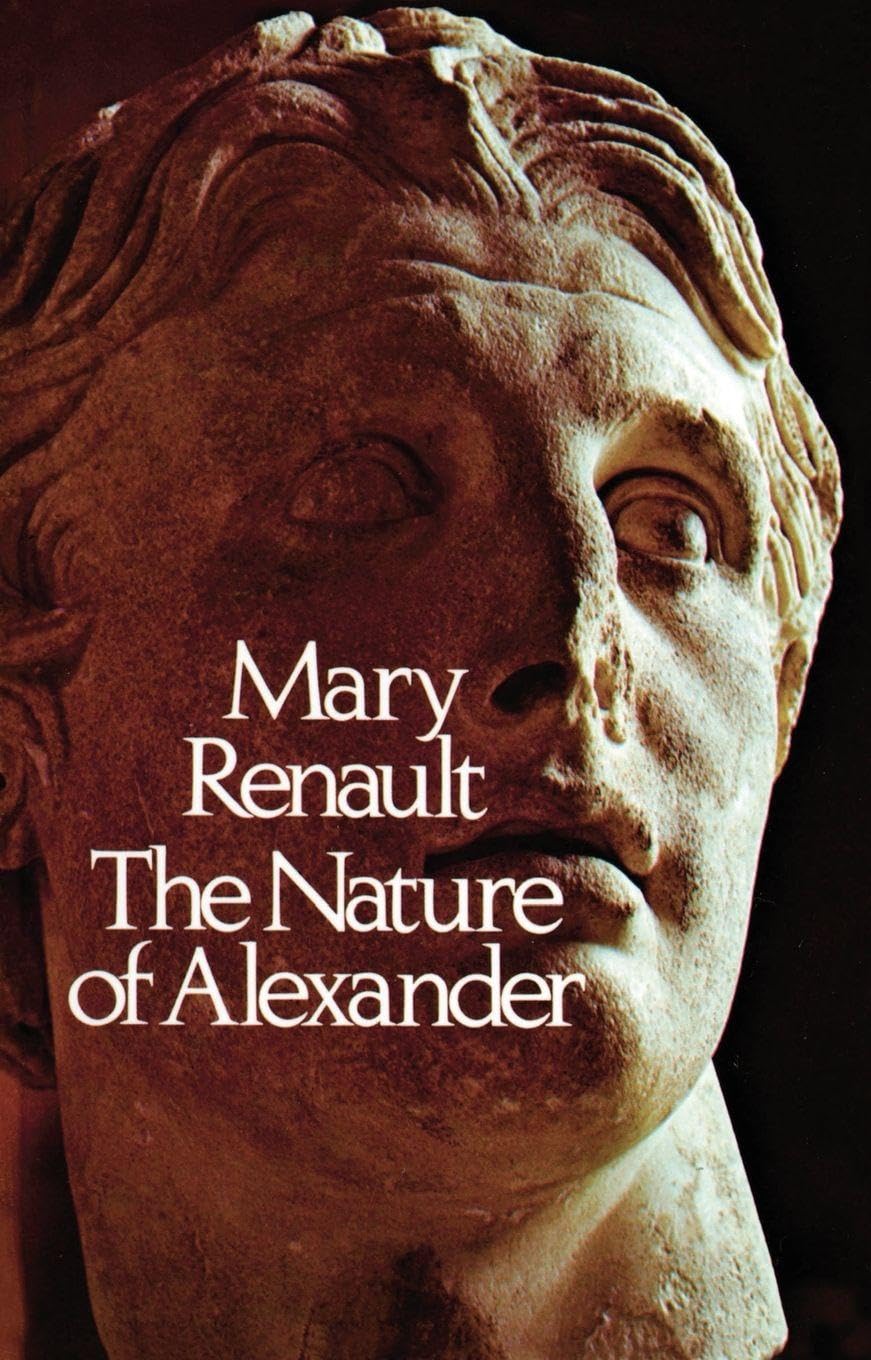



The acclaimed biography of Alexander the Great by Mary Renault, the author of Fire from Heaven and The Persian Boy, two best-selling novels about Alexander. "Mary Renault is a magician . . . This is more than a biography, it is a psychological rendering of a man." —The Chicago Daily News "The many Mary Renault fans should find this as absorbing and worthwhile as her novels." —The Houston Post "Intriguing and valuable." —The New York Times "The perfect companion to he Alexander novels." —The Wall Street Journal "A splendid achievement in nonfiction . . . altogether a grand performance." —The Cleveland Plain Dealer The acclaimed biography of Alexander the Great. MARY RENAULT has written over a dozen novels, has had her work adapted for radio, stage, and screeen, and has been the subject of documentaries and biographies. She is as widely known for her forthright treatment of gay relationships as she is her historical restructions of ancient Greece. She was born in London and educated at Oxford. She then trained as a nurse, where she met her lifelong partner Julie Mullard. After during World War II, she and Mullard settled in South Africa and traveled considerably in Africa and Greece. It was at this time that she began writing her historical novels, including The King Must Die, The Last of the Wine, and The Persian Boy . The biography The Nature of Alexander is one of her only non-fiction books. She died in Cape Town in 1983. from IMAGES On a hot June day in Babylon, in 323 BC, Alexander died. Wailing spread through the city; his body-squires wandered about in tears; the Persians shaved their heads in mourning; the temples quenched their fires. His generals plunged into a dazed and chaotic power struggle. In one of its episodes they fought about his bier, where he may have been alive in a terminal coma, for the freshness and lifelike colour of his corpse, left some time untended, were much wondered at. At length the embalmers came, approaching him with awe; and “after praying that it might be right and lawful for mortals to handle the body of a god” began their work. Roxane’s child was still unborn. If he named his successor on his deathbed, no one admitted to having heard. There was no established heir whose own prestige would be invested in the splendour of his obsequies; for decades, Greece and Asia would be riddled with intrigue and shaken with tramp of armies, as his generals tore off their portions of his empire. Yet steadily for two years, as war elephants moved ponderously in the train of war leaders changing sides, gold and gems by the talents’ worth poured into the workshop where Greek master craftsmen were perfecting a funeral car worthy of its burden. It was accepted like a law of nature that the catafalque must be unsurpassed in memory, history or legend. The coffin was of beaten told, the body within it embedded in precious spices. Over it was spread a pall of gold-embroidered purple on which was displayed Alexander’s panoply of arms. Upon all this was erected a golden temple. Gold Ionic columns, twined with acanthus, supported a vaulted roof of gold scales set with jewels, topped with a scintillating gold olive wreath which flashed in the sun like lightning. At each of its corners stood a golden Victory holding out a trophy. The gold cornice below it was embossed with ibex heads from which hung gold rings supporting a bright, multi-colored garland. Its ends were tasseled, and from the tassels hung large bells with clear and carrying voices. Under the cornice hung a painted frieze. Its front panel showed Alexander in a state chariot, “a very splendid scepter in his hands,” attended by Macedonian and Persian bodyguards. Another had a procession of Indian war elephants; a third, cavalry in battle order; the last a fleet of ships. The open spaces between the columns were filled in with golden net, screening the draped sarcophagus from sun and rain, but not from the viewers’ eyes. It had an entrance, guarded by golden lions. The axles of the gilded wheels ended in lion heads whose teeth held spears. Something had been devised to protect their burden from shock. The edifice was drawn by sixty-four mules, pulling on four yoke poles in teams of four; each mule had a gilded crown, a gold bell hanging at either cheek, and a collar set with gems. Diodorus, who apparently took this description from an eyewitness’s, says it was more magnificent when seen than when described. Alexander himself had always buried his dead with splendour. Funerals in his day were more gifts of honor than displays of mourning. “Because of its wide fame it drew together many spectators; for from every city it came to, the people came out to meet it, and followed beside it when it went away, never wearied of their pleasure in the sight.” Week after week, month after month, at the pace of its labouring mules, preceded by roadmakers and pausing while they smoothed its passage, fifteen, te