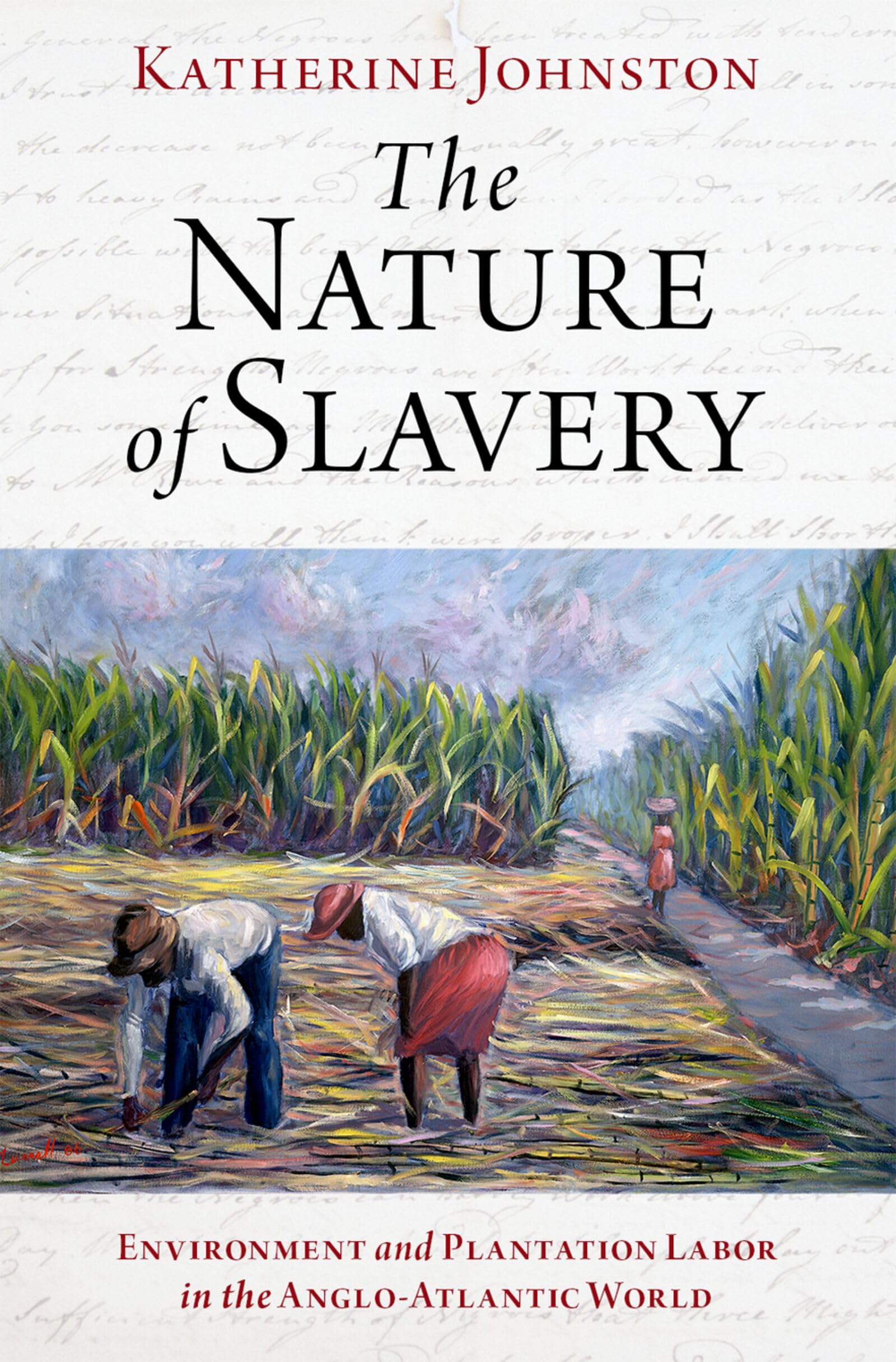
The Nature of Slavery: Environment and Plantation Labor in the Anglo-Atlantic World
$38.99
by Katherine Johnston



In the late eighteenth century, planters in the Caribbean and the American South insisted that only Black people could labor on plantations, arguing that Africans, unlike Europeans, had bodies particularly suited to cultivate crops in hot climates. Historians have mainly taken planters at their word, assuming that they observed differences in health between Black and white bodies and that these differences underpinned the maintenance of an enslaved Black plantation labor force. In The Nature of Slavery , Katherine Johnston disrupts this longstanding claim about biological racial difference. Drawing on extensive personal correspondence, colonial records, and a wealth of other sources, she reveals that planters observed no health differences between Black and white people. They made their claims about people's ability to labor in spite of their experiences, not because of them. For planters and physicians, local environments, much more than skin color, affected bodily health. Moreover, they thought that all bodies--African, European, and creole--responded similarly to various environmental conditions on plantations. Yet when slavery and their economic livelihoods were at stake, slaveholders and slave traders promoted a climatic dichotomy, in which Africans' and Europeans' bodies differed significantly from one another. By putting the health of enslaved laborers at significant risk, planters' actions made environmental racism a central part of Atlantic slavery. White plantation owners contributed to historical myths about enslaved bodies that permeated the public imagination and became accepted as natural. In doing so, The Nature of Slavery contends, they helped to construct and circulate a pervasive and groundless theory of race across the Atlantic world. "White settlers justified slave labor in hot climates with the idea that only Black bodies could endure it. Katherine Johnston exposes this racist myth for what it was: a lie that made plantation America into a place of relentless brutality. The Nature of Slavery faces this hard truth without flinching, showing how Europeans undermined reason and science in their quest for commodity profits." -- S. Max Edelson, author of Plantation Enterprise in Colonial South Carolina "Katherine Johnston's The Nature of Slavery is a superb contribution to a growing literature on the history of race, medicine, environments, and slavery. Carefully researched and thoughtfully argued, the book unsettles basic assumptions about the origins of ideas about 'biological' race. It will be a must-read for years to come." -- Suman Seth, author of Difference and Disease: Medicine, Race, and Locality in the Eighteenth-Century British Empire "Consulting the public pro-slavery record, Johnston tracks the growth of a climatic defense of southern US and Caribbean slavery from the late eighteenth-century onward. The real breakthrough though comes from Johnston's digging into private plantation letters, diplomatic correspondence, and medical manuals to show that slaveholders never believed that Africans were better suited to labor in hot climates. Planters' awareness of the vulnerability of all non-native bodies to the American tropics, and hence of the similarity of Black and white embodiment, Johnston demonstrates, has long been obscured by later historiography's reliance on pro-slavery climate thinking. A remarkable account of the Anglo-American roots of environmental racism relevant to scholars of plantation history, racial science, as well as medical and environmental history." -- Susan Scott Parrish, University of Michigan "Johnston has mined the literary output of the Caribbean slave plantation system, and its South Carolina/Georgia diaspora, to produce an impressive and unique examination of the British colonizing mentality. She shows with an abundance of examples why the moniker, 'made in Britain' is a precise descriptor of chattel slavery." -- Sir Hilary Beckles, The University of the West Indies " The Nature of Slavery explodes the myth that slavery made sense because Black people can labor in humid heat better than white people can. Johnston traces this big lie of environmental inequity, showing how the private writings of planters in the eighteenth-century Caribbean contradicted their public insistence that people from Africa were by nature suited for tropical enslavement. This book shows how racial theorists built the ideological foundations for human enslavement through long-lasting, deeply pernicious ideas about health that reverberated through Black advocacy in the nineteenth century United States and continue to affect medical care in our present day." -- Conevery Bolton Valencius, author of The Health of the Country "This meticulously researched book draws on a wealth of archival materials spanning three centuries to cast a fresh eye on the history of African slavery in the English Caribbean and the American South... The Nature of Slavery stands in a lon