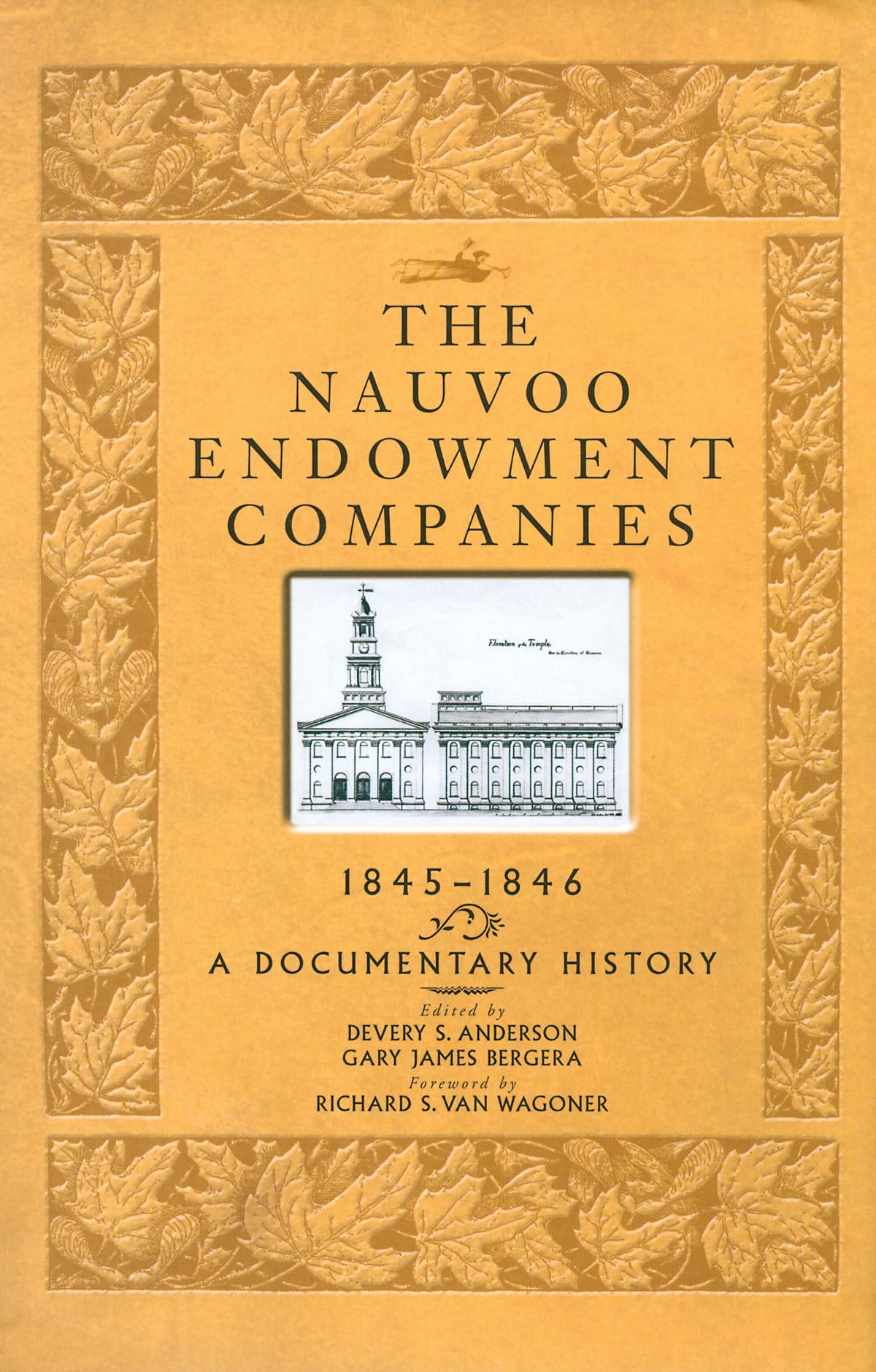
The Nauvoo Endowment Companies, 1845-1846: A Documentary History
$25.00
by Devery Scott Anderson



For the two months the Nauvoo temple was in operation (December 1845-February 1846), scribes carefully documented all activities and events taking place inside, including lectures on the endowment ceremony drama and sealing rituals. Their narratives begin with the lighting of fires and hauling of water each morning at 3:00 a.m. (many ordinance workers slept overnight in the temple) to late-night celebratory dancing (“We danced unto the Lord,” Brigham Young explained) and Sunday sermons delivered to the recently endowed. Historians, biographers, and genealogists will find the names and dates of the initiates and documentation of sealings (including polygamous unions) to be of significance. Others will turn to the narrative portions of the records, including first-person accounts and minutes of meetings. For instance, as women cleaned the ceremonial robes for the next day’s endowment “companies” (or sessions), church officials would read from John C. Fremont’s published journal, anticipating their imminent exodus from Nauvoo for the Great Basin. The sources extracted in this companion volume to Joseph Smith’s Quorum of the Anointed and The Development of LDS Temple Worship, include original temple ledger books and summaries of data compiled by early church scribes, including the “Book of Anointings”; “Book of Adoptions”; “Book of Proxey [sic]”; “General Record of the Seventies, Book B”; and William Clayton’s diary kept for Heber C. Kimball; as well as diary entries from Thomas Bullock, William Hyde, George Laub, Newel Knight, Franklin D. Richards, Abraham Owen Smoot, Erastus Snow, Hosea Stout, and others; and the autobiographies of Harrison Burgess, Rhoda Ann Fullmer, Joseph Holbrook, Joseph Hovey, Norton Jacob, Noah Packard, George Albert Smith, John Spiers, Nancy Ann Wilson, and others. The Nauvoo Endowment Companies, 1845-1846 is a compilation of the original, scribed documentation of all activities and events that took place inside the Nauvoo temple of the Latter-day Saints (Mormons) the two months in which it was in operation, December 1845-February 1846. Since it is a primary source, it is of paramount insight to historians, particularly those studying the role of women in Christianity in general and Mormonism in particular, as the Mormon beliefs concerning female subservience and male dominance ("Adam, being full of integrity and not disposed to follow the woman nor listen to her, was permitted to receive … the priesthood") is clearly spelled out. The role of the church that purported obedience to the law of the land yet demanded converts to swear vengeance against the murderers of Joseph and Hyrum Smith, the trials of its often persecuted followers, and the descriptions of ceremonies and events including live dancing in the temple offer a glimpse into daily Mormon life over a hundred and fifty years ago. Genealogists will find the documentation of sealings, including polygamous unions, particularly valuable. A superb, in-depth reference, though the fine interpreation of often dry records and methodical documents is almost entirely left up to the reader. --Midwest Book Review, John Burroughs from the jacket flap: As scribes dutifully noted the peace, harmony, and order prevailing in the Nauvoo temple during the closing months of 1845 and early months of 1846, the panic in their reports regarding the savage murders of Latter-day Saints in outlying areas and subsequent retaliation by church members was equally palpable. Guards were stationed at virtually every temple door, inside and out, to prevent attacks. Marshals periodically searched the temple interior for church leaders accused of counterfeiting. The odors of scented oil and fresh paint mixed with the sweat and smells of a frontier boomtown. Such were the contradictions of this stressful time for Latter-day Saints. As the faithful covenanted within the temple to obey the laws of the land, church authorities evaded arrest by using body-doubles and other ruses to circumvent local law enforcement. Initiates pledged fidelity to their lawfully wedded spouses, then–sometimes within minutes–were sealed for time and eternity to additional wives. While the temple ceremony encouraged reverence and decorum, Brigham Young complained that church members sometimes peeked through partitions to observe others being endowed; and when evening came, Young himself led in dancing to live music in the Celestial Room. Vowing to live Christian lives, temple endowees were nonetheless asked to swear vengeance against the murderers of Joseph and Hyrum Smith. Women were elevated to the status of queens and priestesses but were told to remember their place as subservient helpmeets to their husbands. In Sunday sermons, Brigham Young explained that the purpose of temple rites was to teach men the important lesson of the Garden of Eden, that “Adam, being full of integrity and not disposed to follow the woman nor listen to her, was permitted to receive the … priesthood.” Ap