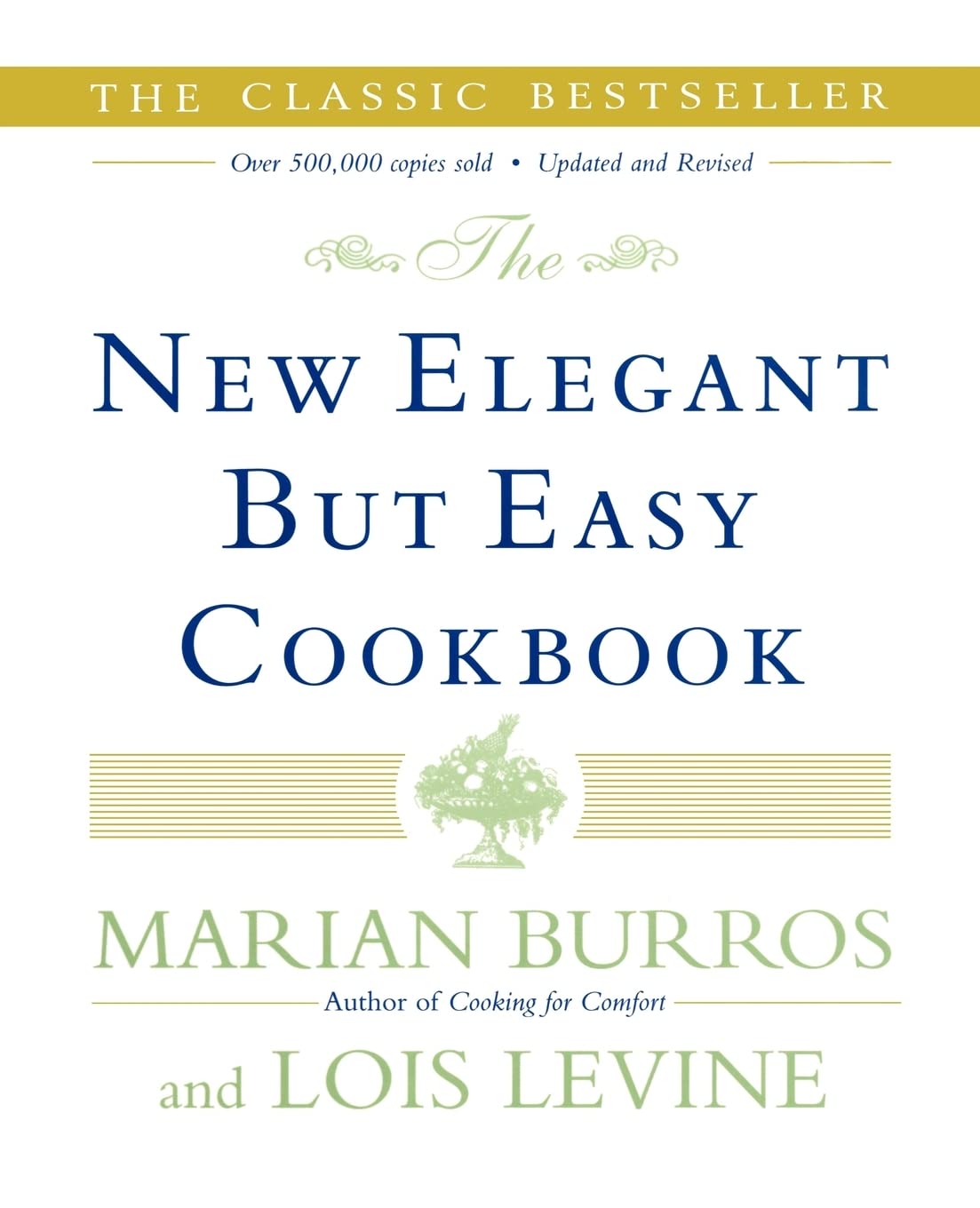



A completely revised and updated edition of the cookbook that set the standard for entertaining, featuring new recipes and old favorites with all the great taste, convenience, and ease of preparation that has made it the entertaining bible for more than 500,000 cooks. We all know that stirring risotto in the kitchen while your guests are gossiping in the living room is no fun. That's why the recipes in The New Elegant but Easy Cookbook can be prepared in advance and refrigerated or frozen until your party. While sharing all-new recipes for delectable dishes like Chicken Breasts Stuffed with Goat Cheese, Mediterranean Couscous Salad, Michele's Corn Pudding, or an astonishing Prepare-Ahead Chocolate Soufflé, Burros and Levine have also included fifty favorites from the original cookbook, like Sherley's Parmesan Puffs, Baked Imperial Chicken, Green and Gold Squash, and Lois's Original Plum Torte (the most requested recipe ever reprinted in The New York Times ). To make your life even easier, the book has an ingredients list with mail-order sources and lists of recipes for specific needs and occasions. Best of all, there are ten foolproof menus, from an Old-Fashioned Casual Dinner for 6 to a Brunch for 16 to a Cocktail Party for 24, each with a shopping list and a two-week "countdown game plan" that will take the fear out of entertaining for even the first-time host. Alice Waters, chef-owner Chez Panisse Café and Restaurant and author of Chez Panisse Vegetables These unintimidating delicious recipes can be accomplished with a minimum of effort, allowing us time to enjoy the important ritual of eating together with family and friends. Marion Cunningham author of The Fannie Farmer Cookbook Marian Burros and Lois Levine have put together a wonderful collection of recipes that give entertaining home cooks a great variety of appealing and delicious dishes for any occasion. Marian Burros is the bestselling author of twelve previous books, including Cooking for Comfort, 20-Minute Menus, and Eating Well Is the Best Revenge. A columnist and writer for The New York Times since 1981, she lives in New York City and outside Washington, D.C. Introduction In 1995 I was on a countrywide tour with my new cookbook, Eating Well Is the Best Revenge. Often, while I was autographing the new book, copies of Elegant but Easy, dog-eared, food-stained, and occasionally in such bad shape that the pages were held together with a rubber band, would be handed to me to be autographed, too. The conversation with the owner generally ran something like this: Book owner: I just love your Elegant but Easy. I cook from it all the time. Me: Do you still use it? B.O.: (sheepishly) Well...(and then brightening) I make some things but I've changed them a lot. We don't eat the way we used to. Hardly anyone does. Cooking a single onion in H cup butter; flinging MSG around as if it were salt; using processed cheese food to make a dip and serving Jell-O molds for every dinner party -- not likely. My coauthor Lois Levine and I have wanted to revise Elegant but Easy for at least fifteen years, but it wasn't until Elegant but Easy 's publisher, Macmillan, was purchased by the publisher of my last three books, Simon & Schuster, that a revision became possible. Lois and I cook so differently from the way we cooked when Elegant but Easy was originally published in 1960 that we often laugh nervously when someone mentions a recipe that contains mushroom soup mix or refrigerator biscuits or canned condensed tomato soup. In hindsight we think we should have known that these products of technological progress were not making food taste better, but, like almost everyone else, we were conned into believing that these timesavers would not compromise the taste or integrity of a dish and would give us more free time. Free time to do what? Work harder and longer hours at other jobs. I have long since given up convenience foods, having found better-tasting ways to cook quickly while also controlling what goes into my food. But there's no point in making fun of what we did almost forty years ago. In Stand Facing the Stove Stand Facing the Stove (Henry Holt and Company, 1996), the delightful biography of Irma Rombauer and Marion Becker, the mother and daughter who produced Joy of Cooking (my bible for years), Anne Mendelson writes: "It's ridiculous to be uppity about condensed milk, cherry Jell-O, canned vegetables, thick white sauce, processed cheese, condensed tomato soup, canned fruit cocktail, or spaghetti cooked to the consistency of baby cereal. "Plastering retrospective snobberies over such foods because they are not chic today is purely silly. The fact is that all cultures form their own accommodation with the resources that their agriculture and technology make available to them. The attitude that some of our grandmothers or great-grandmothers held toward the products of American know-how precisely parallel the