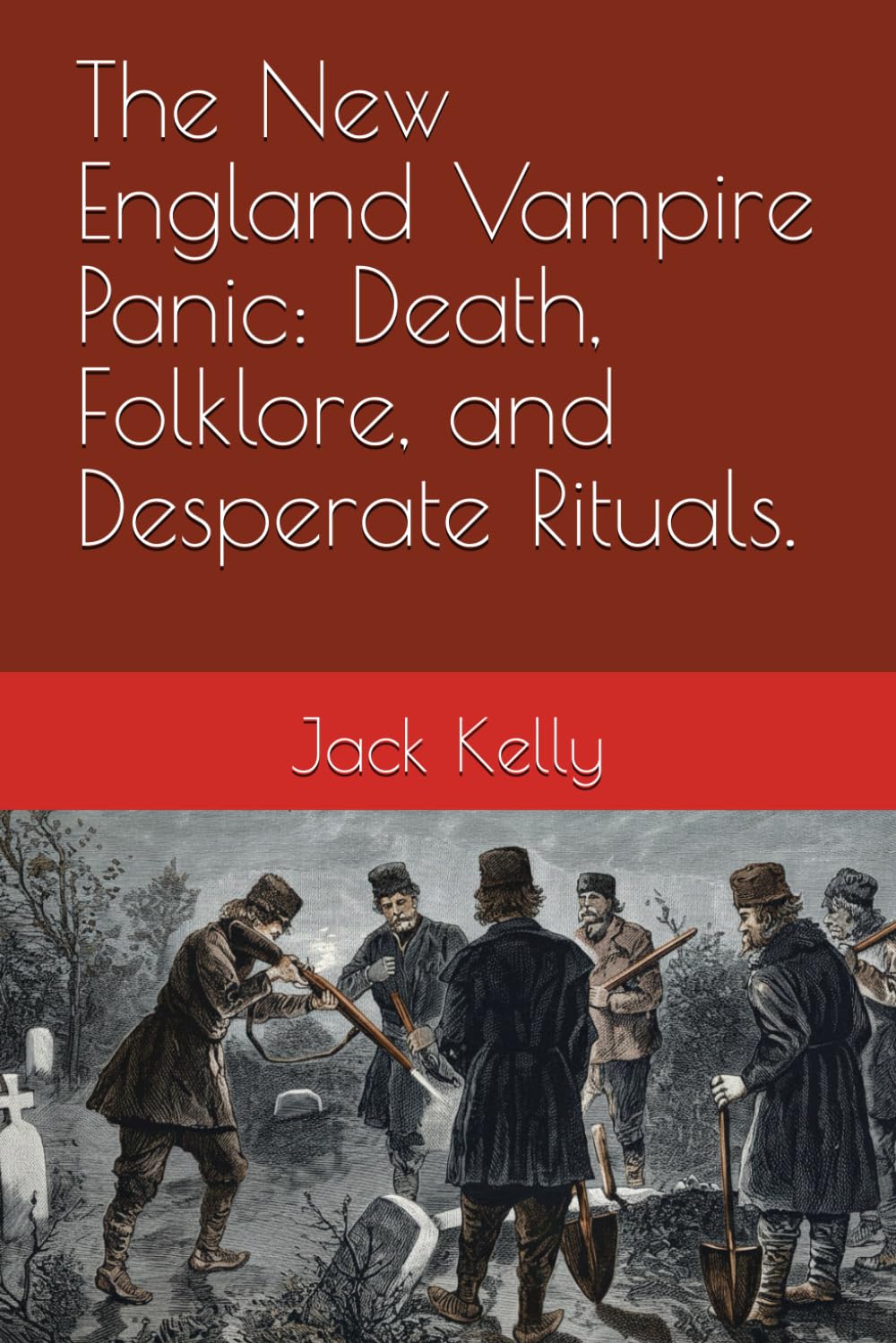
The New England Vampire Panic: Death, Folklore, and Desperate Rituals.
$10.00
by Jack Kelly



The New England Vampire Panic: Death, Folklore, and Desperate Rituals. Between 1784 and 1892, rural New England communities facing devastating tuberculosis epidemics turned to an extraordinary ritual: exhuming the recently dead, examining their corpses for signs of vampirism, and burning their organs to save the living. This comprehensive historical account explores over eighty documented cases where families—including the famous 1892 Mercy Brown incident—opened graves and destroyed their loved ones' hearts in desperate attempts to break what they believed were supernatural curses causing sequential family deaths. Drawing on archival research, medical history, and anthropological analysis, this book reveals how intelligent people using pre-scientific frameworks created coherent explanations for patterns they observed but couldn't understand. The vampire panic wasn't ignorant superstition but rather a sophisticated folk response to invisible bacterial transmission, serving genuine psychological needs for agency, meaning, and hope when medicine offered nothing. The narrative traces the panic from its European origins through its adaptation to American circumstances, examines the geographic and social patterns that shaped vampire belief, explores the scientific revolution that ultimately displaced folk practice, and considers what this nineteenth-century phenomenon teaches us about human responses to epidemic disease—lessons that remain urgently relevant as we face our own public health crises and struggles over competing forms of knowledge and authority.