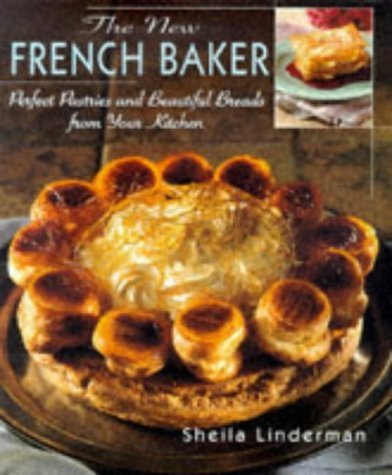
The New French Baker: Perfect Pastries And Beautiful Breads From Your Kitchen
$15.57
by Shelia Linderman



Black and White Creme Brulee. Alsatian Apple Strudel. French Macaroons. Chocolate Eclairs. These are the delicious creations that we never dreamed we could make at home. In The New French Baker, you'll find surprisingly simple yet extraordinarily delicious recipes that re-create the lucious desserts, bakery breads, regional specialties, and eye-popping cakes found in French pastery and bread shops. The 200 recipes are revelations of taste -- try Upside-Down Caramel Custard, Hazelnut Praline Torte, Normandy Sourdough Apple Bread, and Coffee-Walnut Cake. The remarkable thing about these recipes is that anyone can make them. The results are sophisticated enough to please the professional, but the directions can be followed by even the most inexperienced of bakers. With The New French Baker, learn the basic techniques that enable you to make wonderful cookies, puddings, tarts, breads, cakes, pastries, ice creams, and sorbets. Finally, a French baking book adapted to the American kitchen. Although there has been almost an embarrassment of riches in terms of dessert and baking books this season, Linderman's guide to French pastries and breads is a valuable addition to the pack. All the classic desserts are here, from Tarte au Citron and Chocolate Mousse to Gateau Opera and Almond Tile Cookies, along with a chapter of savory pastries and an interesting, though somewhat limited, selection of breads. Linderman's instructions are detailed, well written, and direct, and she includes a good introductory section as well as glossaries of techniques, equipment, and terms. While there are a number of specialized books for professionals on French pastry, Linderman's knowledgeable yet unintimidating text makes this one of the few good resources on the topic for home cooks. Highly recommended. Copyright 1998 Reed Business Information, Inc. Black and White Creme Brulee. Alsatian Apple Strudel. French Macaroons. Chocolate Eclairs. These are the delicious creations that we never dreamed we could make at home. In The New French Baker, you'll find surprisingly simple yet extraordinarily delicious recipes that re-create the lucious desserts, bakery breads, regional specialties, and eye-popping cakes found in French pastery and bread shops. The 200 recipes are revelations of taste -- try Upside-Down Caramel Custard, Hazelnut Praline Torte, Normandy Sourdough Apple Bread, and Coffee-Walnut Cake. The remarkable thing about these recipes is that anyone can make them. The results are sophisticated enough to please the professional, but the directions can be followed by even the most inexperienced of bakers. With The New French Baker, learn the basic techniques that enable you to make wonderful cookies, puddings, tarts, breads, cakes, pastries, ice creams, and sorbets. Finally, a French baking book adapted to the American kitchen. Shelia Linderman is a professional chef, baker, and food writer and has worked in some of France's and California's best bakeries. She lives in Los Angeles. Flaky Pastry Dough This dough, the traditional shell for a quiche, is very fragile. Briser, in fact, means to break or to shatter. In its raw form, however, it has enough body to make working with it easy. Once baked, it is flaky but still gives you something to bite into. It has a lovely, buttery, balanced flavor. Makes about 2 pounds of dough, enough for four 10-inch pastry shells. 3 cups (1 pound) unsifted unbleached all-purpose flour 1 teaspoon salt 1 tablespoon sugar 10 ounces (2-1/2 sticks) cold unsalted butter, cut into 1/2-inch cubes 2 large egg yolks 7 tablespoons cold water 1. Sift the flour; salt, and sugar together into the bowl of an electric mixer or a large mixing bowl. Add the butter. Using the paddle attachment or a pastry blender, mix the ingredients together until no large chunks of butter remain and the mixture resembles coarse cornmeal. 2. Whisk the egg yolks and water together and add to the flour-batter mixture. Mix with the paddle or a heavy wooden spoon only until the dough begins to come together. 3. Turn out the dough onto a lightly floured surface and knead by pushing small pieces of dough away from the rest with the heel of your hand. This will form a second mass of dough pieces. Pull these pieces together and repeat the process, which the French call fraisage. This will yield an evenly mixed but flaky dough. Gather the pieces together and form them into four 7-inch disks, 1 inch thick. Wrap individually in plastic and refrigerate for at least 1 hour or up to 1 week. (The disks may also be frozen for up to 1 month. Thaw in the refrigerator overnight before rolling the dough.) Copyright (c) 1998 Shelia Linderman Used Book in Good Condition