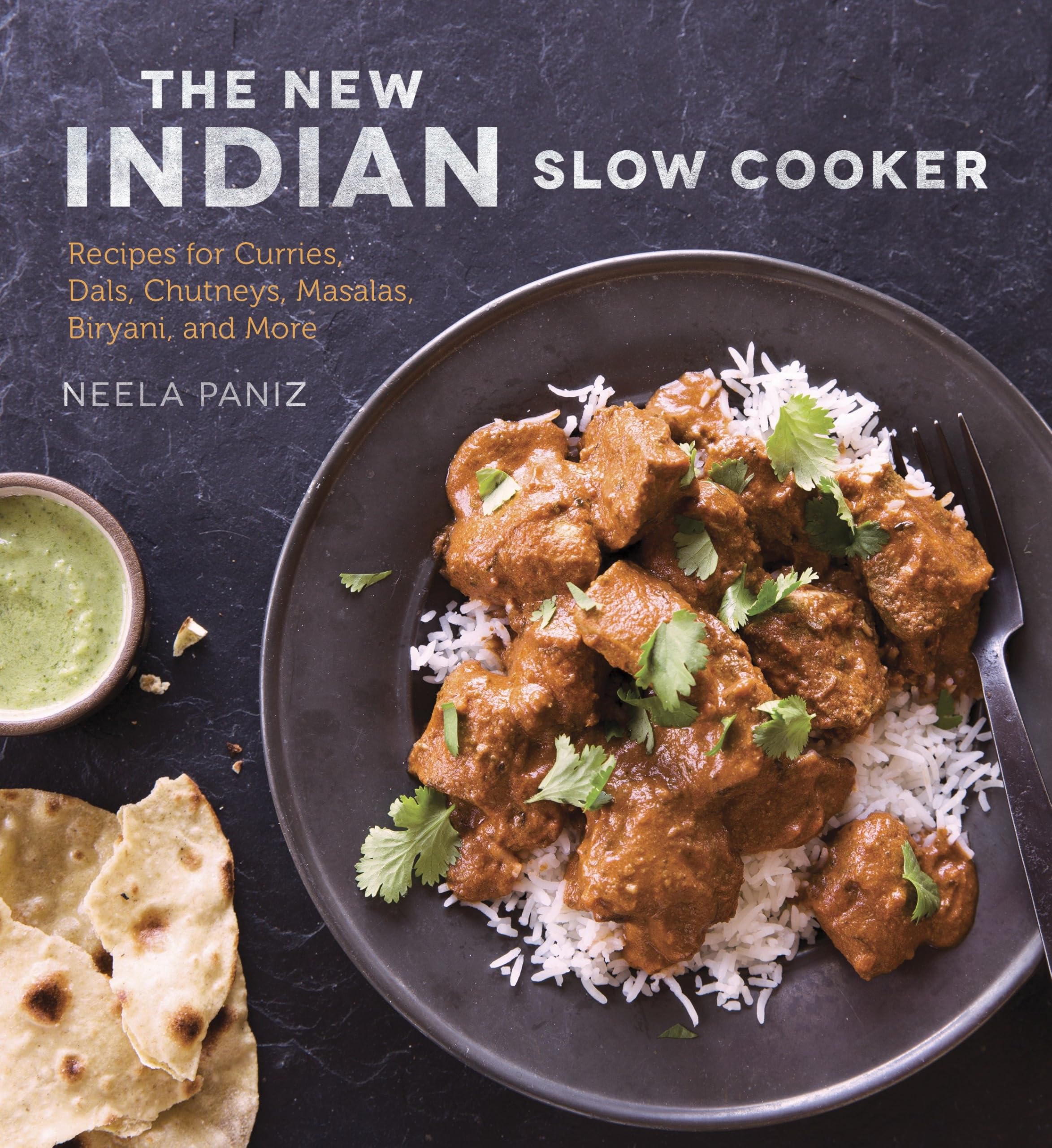
The New Indian Slow Cooker: Recipes for Curries, Dals, Chutneys, Masalas, Biryani, and More [A Cookbook]
$19.99
by Neela Paniz



The newest book in Ten Speed's best-selling slow cooker series, featuring more than 60 fix-it-and-forget-it recipes for Indian favorites. The rich and complex flavors of classic Indian dishes like Lamb Biryani, Palak Paneer, and chicken in a creamy tomato-butter sauce can take hours to develop through such techniques as extended braising and low simmering. In The New Indian Slow Cooker, veteran cooking teacher and chef Neela Paniz revolutionizes the long, slow approach to making Indian cuisine by rethinking its traditional recipes for the slow cooker. She showcases the best regional curries, dals made with lentils and beans, vegetable and rice sides, as well as key accompaniments like chutneys, flatbreads, raita, and fresh Indian cheese. Using this fix-it-and-forget-it approach, you can produce complete and authentic Indian meals that taste like they came from Mumbai, New Delhi, and Bangalore, or your favorite Indian restaurant. Featuring both classic and innovative recipes such as Pork Vindaloo, Kashmiri Potato Curry, Date and Tamarind Chutney, and Curried Chickpeas, these full-flavor, no-fuss dishes are perfect for busy cooks any day of the week. NEELA PANIZ grew up in Bombay, India. After moving to the US, Paniz opened Chutney's Indian take-out and the hugely successful Bombay Cafe in Los Angeles, and a contemporary Indian restaurant, Neela's, in Napa. She is also the author of The Bombay Cafe , which put her on the national map as one of the leading voices of contemporary Indian cuisine. Since selling her restaurants, Paniz has appeared as the winning contestant on Chopped , taught cooking classes, provided recipes for many magazine articles, and been a presenter at The Culinary Institute of America. Introduction When I was asked if I would be interested in writing a book on Indian slow cooking, my immediate thought was that it was not possible to achieve in a slow cooker what one did in a saucepan. Indian food is based on slowly built combinations of spices and aromatics—you patiently brown the onions, fry the spices, roast the vegetables, tending to the pot to keep all moving along without sticking or burning. The slow cooker would be a new route to a crucial destination: the vibrant, deeply satisfying flavors of traditional curries, dals, chutneys, and more. I didn’t know if it could be done. My memories of Chandan, the cook my mother employed for over forty years, helped me decide to take the challenge. Chandan treated us to the most amazing meals full of vibrant flavors. He would buy fresh produce and meats from the market every day, seeking out the best quality and value. You could hear him, busy in the kitchen, butchering or grinding the meat, cleaning the poultry and seafood, and prepping the vegetables. And then there would be the sound of the spices being ground in a stone grinder. The bottom slab of stone had been pounded with small depressions to create a rough surface; the top, smaller stone resembled a thin brick. Chandan would sit on his haunches and grind dry spices between the stones, or make a paste of spices with ginger, garlic, and chiles. In the mid-1970s, on one of my visits home to India, I bought my mother a food processor, and Chandan could not have been more delighted to have this modern method of grinding his spices. Of course, it would never be quite the same as the stone grinder, but it saved his back. As time went on, more modern conveniences made their way into my mother’s kitchen. When Chandan retired and Prem Singh took over the duties of the kitchen, I rarely saw the old pathar (stone) come out of its hiding hole. He was a modern cook, using the food processor, spice grinder, juicer, blender, and pressure cooker. I wager he would have made great use of a slow cooker. I soon realized that since Indian food is slow cooking, the slow cooker makes sense. Dals are perfect in a slow cooker, especially those that need long cooking to break down into a creamy consistency. However, Indian recipes do require some additional steps to achieve the maximum flavor and stay true to the dish. We use many whole spices or seeds that need to be “popped” in hot oil or ghee. Meats, poultry, seafood, and some vegetables are stewed slowly in sauces, or masalas, which are in turn created by roasting spices combined with fresh aromatic ingredients such as ginger, garlic, onions, tomatoes, and coconut milk. For example, the base of many curries—the masala—starts with onions cooked to a deep, dark golden brown so that they may dissolve smoothly into the dish. I was visiting with my family in India during the latter half of my research and recipe testing. I had one slow cooker shipped from the United States and, with much difficulty, located another in a store (as they said, “No one in India uses a slow cooker.”). We borrowed a smaller one from a friend, for testing the chutneys; hers had sat on the top shelf of her kitchen, practically unused. It was interesting to get the reacti