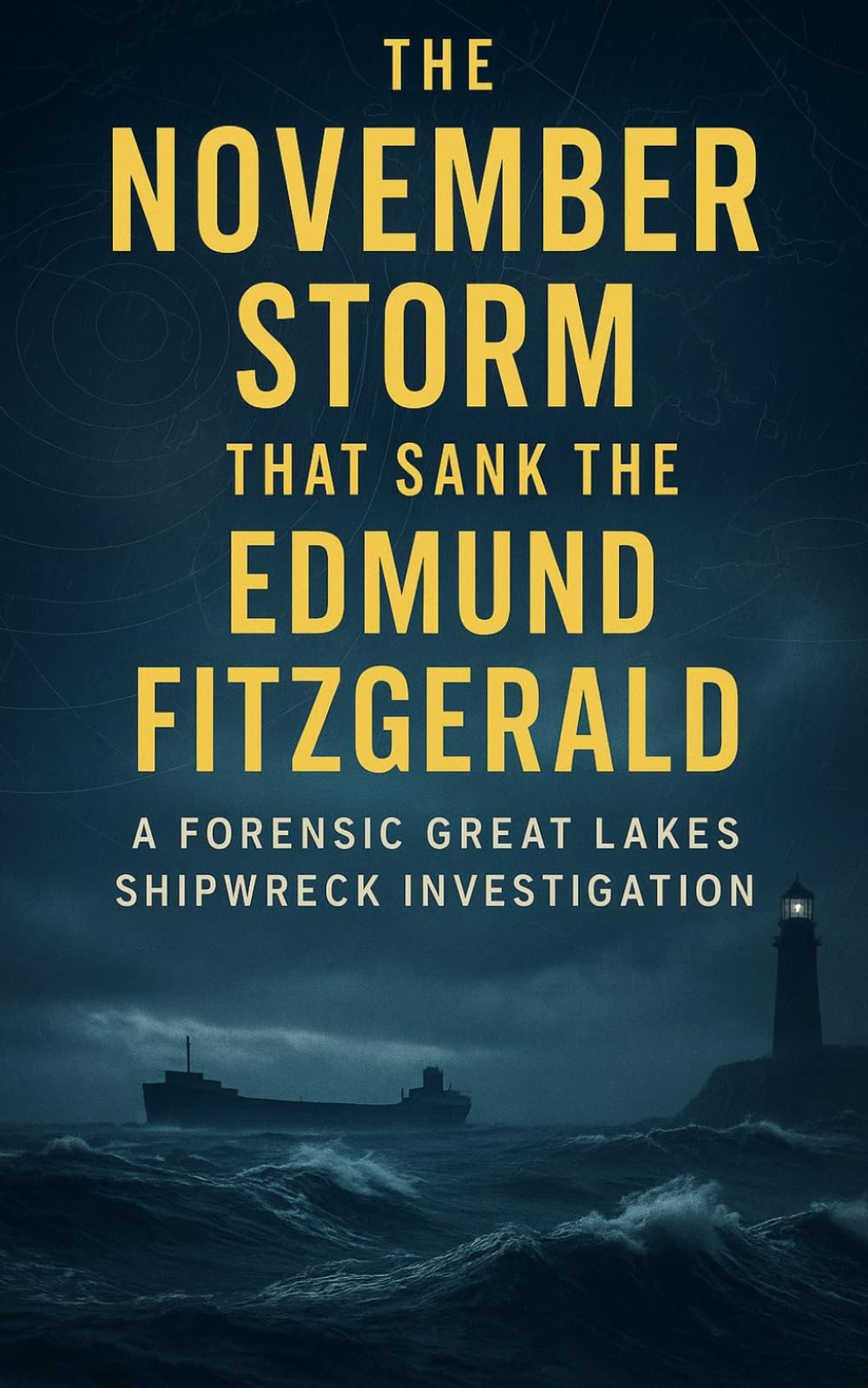
The November Storm That Sank the Edmund Fitzgerald: A Forensic Great Lakes Shipwreck Investigation
$12.99
by Belgin ATAL



The November Storm That Sank the Edmund Fitzgerald: A Forensic Great Lakes Shipwreck Investigation is a clear, respectful, and deeply human account of the 1975 Lake Superior tragedy—told with modern analysis and plain language. This book rebuilds the night hour by hour, translating pressure drops, wave groups, and wind shifts into a story you can feel in your hands and understand in your head. If you want a concise, evidence-based explanation of what happened, why it happened, and what today’s mariners and readers can learn, this is your guide. Inside, you’ll find a practical, step-by-step investigation that turns complex meteorology and naval architecture into everyday concepts. You’ll see how a deep November low tightened the isobars, how veering wind changed wave direction, how shoaling near the coast sharpened wave faces, and how encounter period can amplify roll on a heavy ore carrier. Each chapter connects facts to consequences: storm setup, vessel behavior, navigation under limited visibility, hatch integrity, green-water events, and the hard decisions that crews must make when minutes matter. Designed for clarity and usefulness, this book focuses on what readers value: a trustworthy narrative, careful reasoning, and practical takeaways. There are no hype claims—just disciplined reconstruction using modern weather reanalysis, plain-language wave and wind explanation, and a balanced discussion of competing theories. You will gain a grounded understanding of the Edmund Fitzgerald loss and, more importantly, the safety lessons that still matter on the Great Lakes and beyond. What you’ll learn Great Lakes meteorology, simplified: how autumn cyclones form, deepen, and rotate over Lake Superior, and why wind direction and gust behavior matter at deck level. - Wave mechanics made clear: significant height, peak period, directional spread, groupiness, shoaling, and how those elements translate into slamming, boarding seas, and green water loads. - Vessel dynamics you can visualize: trim, ballast, roll period, encounter period, and how small heading or speed changes can turn punishment into survivable motion. - Navigation under pressure: practical methods for plotting, time-stamping decisions, and reading shoreline effects when radar and visibility are unreliable. - Safety takeaways that travel: inspection priorities, hatch compression discipline, drainage performance, and training habits for crews, students, and informed readers. Who this book is for Mariners and boating enthusiasts seeking plain-language insights to improve storm planning and decision-making. - Students and educators looking for an accessible case study that links science to real-world outcomes. - History and true-disaster readers who want a respectful, evidence-driven narrative that separates myth from mechanism. This description uses reader-friendly, copyright-safe language and avoids claims like “guaranteed results.” It emphasizes education and analysis while honoring the people and vessels involved. The tone is clear and credible, aligning with marketplace guidelines for accurate, helpful content. Why readers are talking about this book Emotion with evidence: a gripping, respectful reconstruction that stays anchored to measurable facts. - Clarity without jargon: technical ideas explained in everyday terms, supported by logical timelines. - Actionable lessons: concrete takeaways for safer routing, clearer communication, and smarter maintenance. Ready to understand the storm that reshaped Great Lakes history—and what it still teaches today? Tap “Look Inside,” add this book to your library, and start reading now.