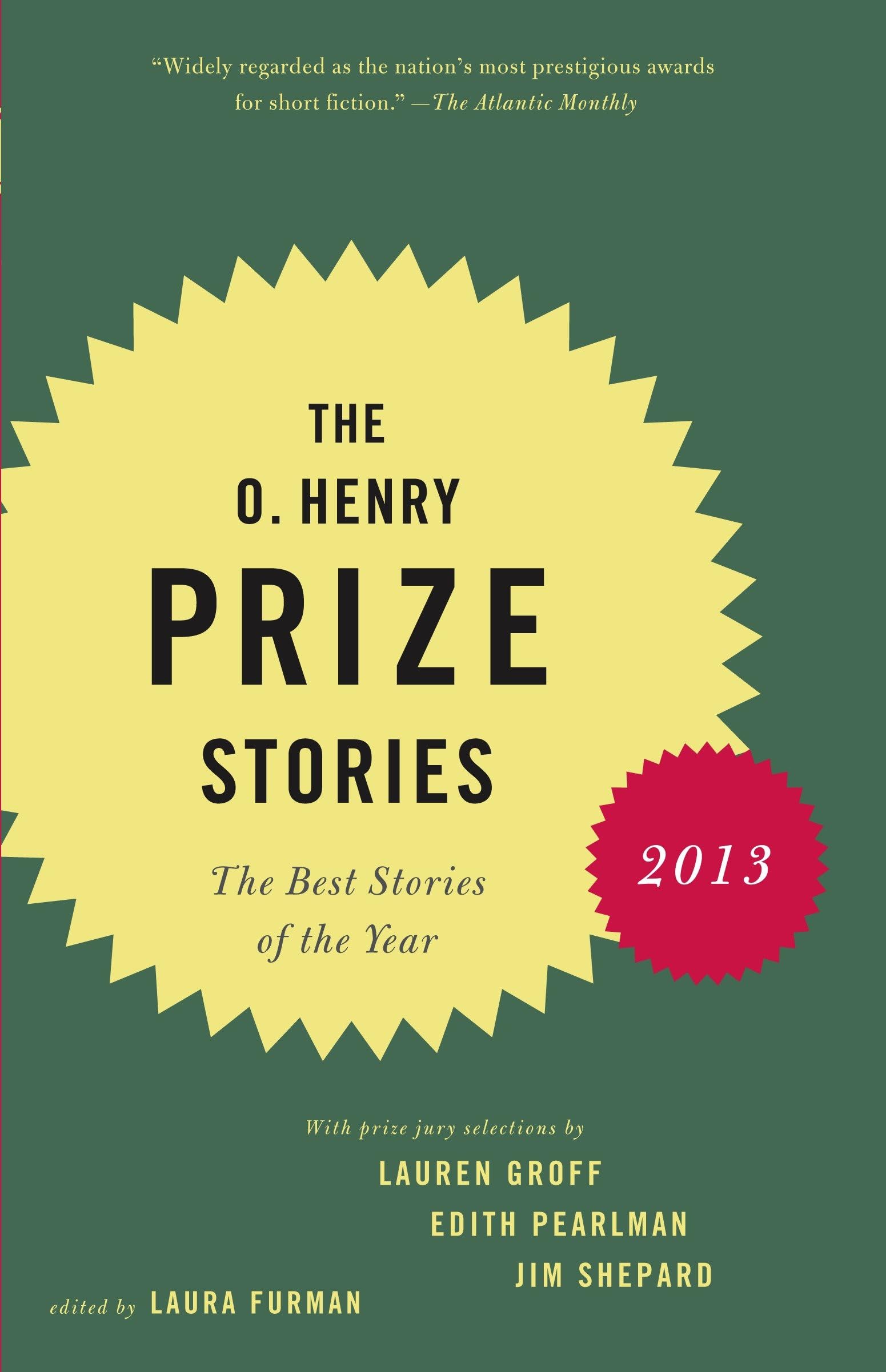
The O. Henry Prize Stories 2013: Including stories by Donald Antrim, Andrea Barrett, Ann Beattie, Deborah Eisenberg, Ruth Prawer Jhabvala, Kelly Link,
$15.41
by Laura Furman



The O. Henry Prize Stories 2013 gathers twenty of the best short stories of the year, selected from thousands published in literary magazines. The winning stories take place in such far-flung locales as a gorgeous sailboat in Hong Kong, a Cuban sugar plantation, the Kenai River in Alaska, a mansion in New Delhi, a ship torpedoed by a German U-boat, and the ghost-haunted rubble of a Turkish girls’ school. Also included are the editor’s introduction, essays from the jurors (Lauren Groff, Edith Pearlman, and Jim Shepard) on their favorite stories, observations from the winners on what inspired them, and an extensive resource list of magazines. "Another installment [of] the esteemed literary award volume, full, as ever, of exemplary short fiction.... Essential for students of contemporary fiction." -- Kirkus Reviews “Widely regarded as the nation’s most prestigious awards for short fiction.” — The Atlantic Monthly Laura Furman, series editor of The O. Henry Prize Stories since 2003, is the winner of fellowships from the Guggenheim Foundation and the National Endowment for the Arts for her fiction. The author of seven books, including her recent story collection The Mother Who Stayed , she taught writing for many years at the University of Texas at Austin. She lives in Central Texas. Excerpted from the Introduction Reading blind is an experience that we as readers most often have with a writer whose work is unknown to us. We feel exhilarated when we find a new writer; it’s like meeting a new friend, sometimes like falling in love. The verb “envy” is the one most often used when we see someone embarking on a first reading of Virginia Woolf or Henry James. Some of the stories in The O. Henry Prize Stories come from established writers, but they are given a chance to be read blind as well. Every year, a panel of three jurors reads a blind manuscript of the pieces selected as O. Henry Prize Stories; neither attribution nor provenance is given, so the jurors don’t know which magazines the stories appeared in or who the authors are. All of the stories are in the same typeface and format. From these, each juror picks a favorite story and writes about it in the section “Reading The O. Henry Prize Stories.” This isn’t to say that jurors don’t on occasion detect a writer’s identity. There can be clues in sentence structure, word choice, or subject matter. The biggest giveaway is what one might call the writer’s presence, which includes all evidence of craft and meaning but goes beyond those elements. Each writer has a unique way of finding details in the material and natural world to create the story. The writer’s presence— the way the writer sees— is as innate as the color of the writer’s eyes. Jim Shepard, a past O. Henry Prize winner and a 2013 juror, chose as his favorite story Andrea Barrett’s “The Particles.” He took note of the narrative’s pacing and what he calls the writer’s restraint. The word is a clue to a special quality of Barrett’s work. Though she often writes about scientists and the past, she uses restraint to hold back an avalanche of extraneous or excessive detail and authorial observation— explanations the reader doesn’t need. She restrains not only the superfluous but also the interesting when its presence would distract from her finely focused narrative. Implicit in her work is the fascination of what she leaves out (more science, more history), but we trust her to go on without it, pulled by the story exactly as she tells it. Her subject matter is often double— the human drama and the scientific. The reader can almost hear Barrett thinking. In “Anecdotes,” Ann Beattie traces the differences between friendship and acquaintanceship. Conversations between her characters, their overt sharing of anecdotes and the push and pull of their unspoken exchanges, are part of the pleasure of Beattie’s writing. Little by little, the narrator of “Anecdotes” pulls away from the complications of what she thinks about a friend’s mother, Lucia, and what the friend’s mother thinks she should think, complications that extend to a choice between annoying involvement and happy disengagement. During this process, Beattie makes use of a minor character passing by in pink Uggs, and the criticism of the fuzzy boots by the cashmere- wearing Lucia. Beattie’s combination of sharpness and humor might seem to add up to satire, but she doesn’t make fun of her characters or reduce them to generalizations. Rather, she shows us that they’re all worth a look, though some are worthier than others. Beattie’s body of work is a testimonial against the unexamined life, and the title of her 1991 story collection Secrets and Surprises gives a clue to what awaits the reader in “Anecdotes.” Tash Aw’s “Sail” is about a man who is isolated, estranged both from his country and his sense of who he is. Like the streamlined, arrow-like sailboat we see at the story’s beginning, Yanzu moves lightly and, it seems, effortlessly. When we