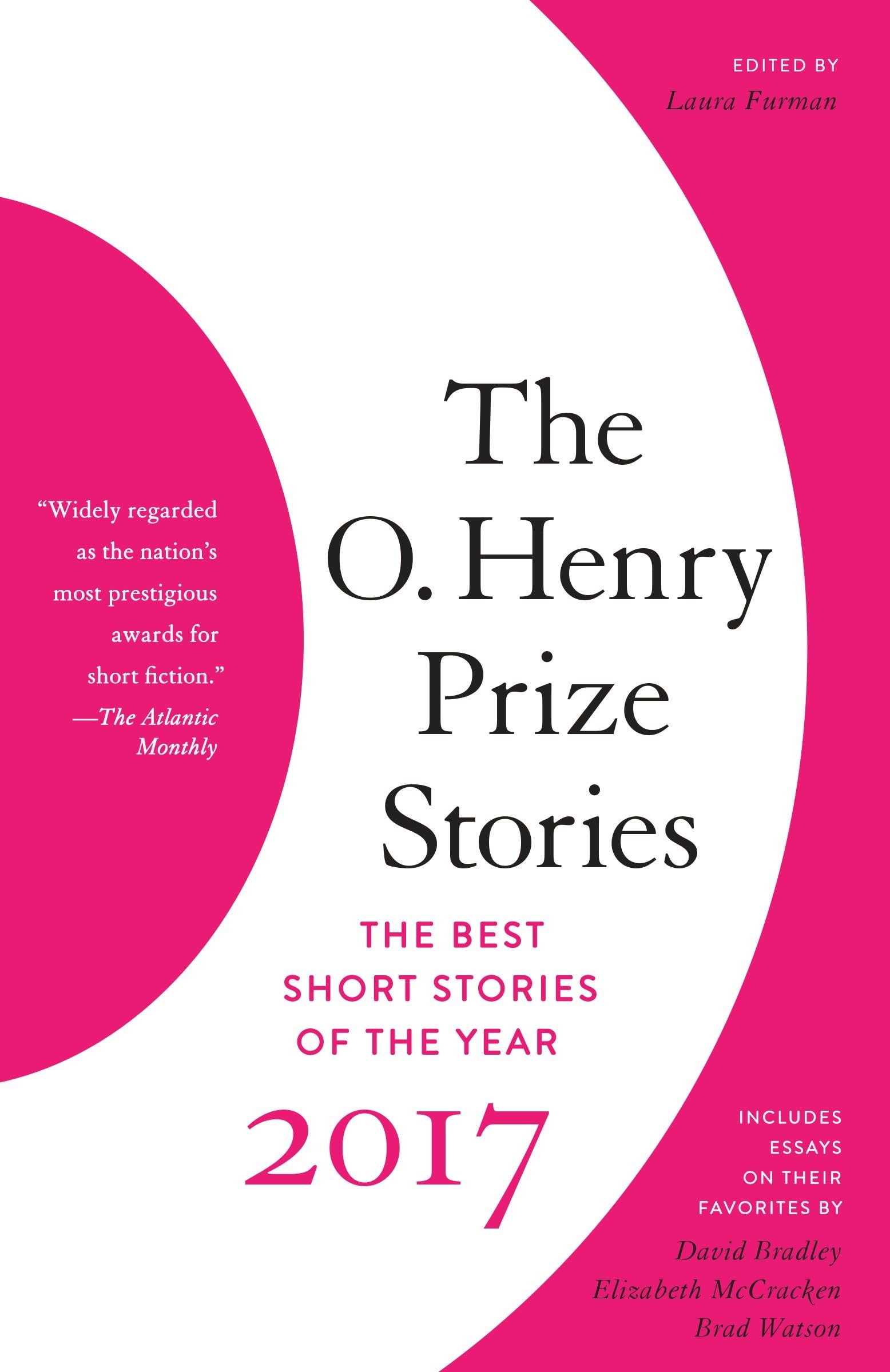



The O. Henry Prize Stories 2017 contains twenty breathtaking stories—by a vibrant mix of established and emerging writers—selected by the series editor from the thousands published in literary magazines over the previous year. The collection includes essays by the three eminent guest jurors on their favorite stories, observations from the winning writers on what inspired them, and a comprehensive resource list of the many magazines and journals, both large and small, that publish short fiction. “Too Good To Be True,” Michelle Huneven “Something for a Young Woman,” Genevieve Plunkett “The Buddhist,” Alan Rossi “Garments,” Tahmima Anam “Protection,” Paola Peroni “Night Garden,” Shruti Swamy “A Cruelty,” Kevin Barry “Floating Garden,” Mary La Chapelle “The Trusted Traveler,” Joseph O’Neill “Blue Dot,” Keith Eisner “Lion,” Wil Weitzel “Paddle to Canada,” Heather Monley “A Small Sacrifice for an Enormous Happiness,” Jai Chakrabarti “The Bride and the Street Party,” Kate Cayley “Secret Lives of the Detainees,” Amit Majmudar “Glory,” Lesley Nneka Arimah “Mercedes Benz,” Martha Cooley “The Reason Is Because,” Manuel Muñoz “The Family Whistle,” Gerard Woodward “Buttony,” Fiona McFarlane The jurors this year are David Bradley, Elizabeth McCracken, and Brad Watson. For author interviews, photos, and more, go to www.ohenryprizestories.com "Widely regarded as the nation's most presitigious awards for short fiction." -- The Atlantic Monthly Series editor LAURA FURMAN's work has appeared in The New Yorker , Vanity Fair , Ploughshares , The Yale Review , and other magazines. She is the founding editor of the highly regarded American Short Fiction (three-time finalist for the American Magazine Award). A former professor at the University of Texas, she lives in Austin. JUROR BIOS: DAVID BRADLEY teaches at the University of Oregon and is the author of The Chaneysville Incident , winner of the PEN/Faulkner Award and a finalist for the National Book Award. ELIZABETH MCCRACKEN, is the author of Thunderstruck and National Book Award finalist The Giant's House . She teaches at the University of Texas, Austin, and has received awards from the American Academy of Arts and Letters and the Guggenheim Foundation. BRAD WATSON teaches at the University of Wyoming, Laramie. His novel The Heaven of Mercury was a finalist for the National Book Award, and his Aliens in the Prime of Their Lives was a finalist for the PEN/Faulkner Award. Introduction by Laura Furman In the summer of 1917, the artist Vanessa Bell read “The Mark on the Wall,” a short story by her sister Virginia Woolf that appeared in the first publication from the Hogarth Press, recently founded by Woolf and her husband, Leonard. “Why don’t you write more short things,” Vanessa wrote to Virginia, suggesting that “there is a kind of completeness about a thing like this that is very satisfactory and that you can hardly get in a novel.” Virginia Woolf sought her older sister’s artistic approval always. Still, I wonder if the future author of a great novel like Mrs. Dalloway really needed to be urged to favor the short story over the novel as better suited to her talents. A novel’s charm can lie in discursiveness and its richness in variety, while taking highways and byways can ruin a story. If you think of the novel and the story as containers holding images, characters, relationships, and settings, what makes a stark novel might be an overstuffed story. So many years after Vanessa Bell’s note to her sister, it remains easier to say what a short story isn’t than what it is: it isn’t an anecdote and it isn’t a section of a novel and it isn’t an essay. Short stories sometimes end ambiguously, but they can’t end indefinitely and still be a complete story. Short-story endings are sometimes a sore point with readers, who feel they’ve been thrown off a cliff. What happened? What’s going to happen next? If these are the reader’s questions at the end, the story might not be right yet. Even when I don’t understand the meaning and stretch of an ending, if I don’t feel the same finality that I do when someone walks out the door, then something’s gone wrong. Short-story beginnings are even more demanding of writer and reader. The reader must be immediately involved. This doesn’t mean that we as readers necessarily understand the beginning. It just means that the writer has succeeded in placing us in the world of the story, and we don’t want to leave until it’s over because we feel involved, curious, and committed. The beginning and the ending of a short story are part of the wonderful secret of the form and why it’s neither a novel nor a novella nor a footnote nor an anecdote. The short story has a formal completeness—Vanessa Bell chose exactly the right word—but one that doesn’t call attention to itself. The story’s present, its ongoing action, and its past—call it background or ghosts—sometimes push against each other. Sometimes the past sneaks in fr