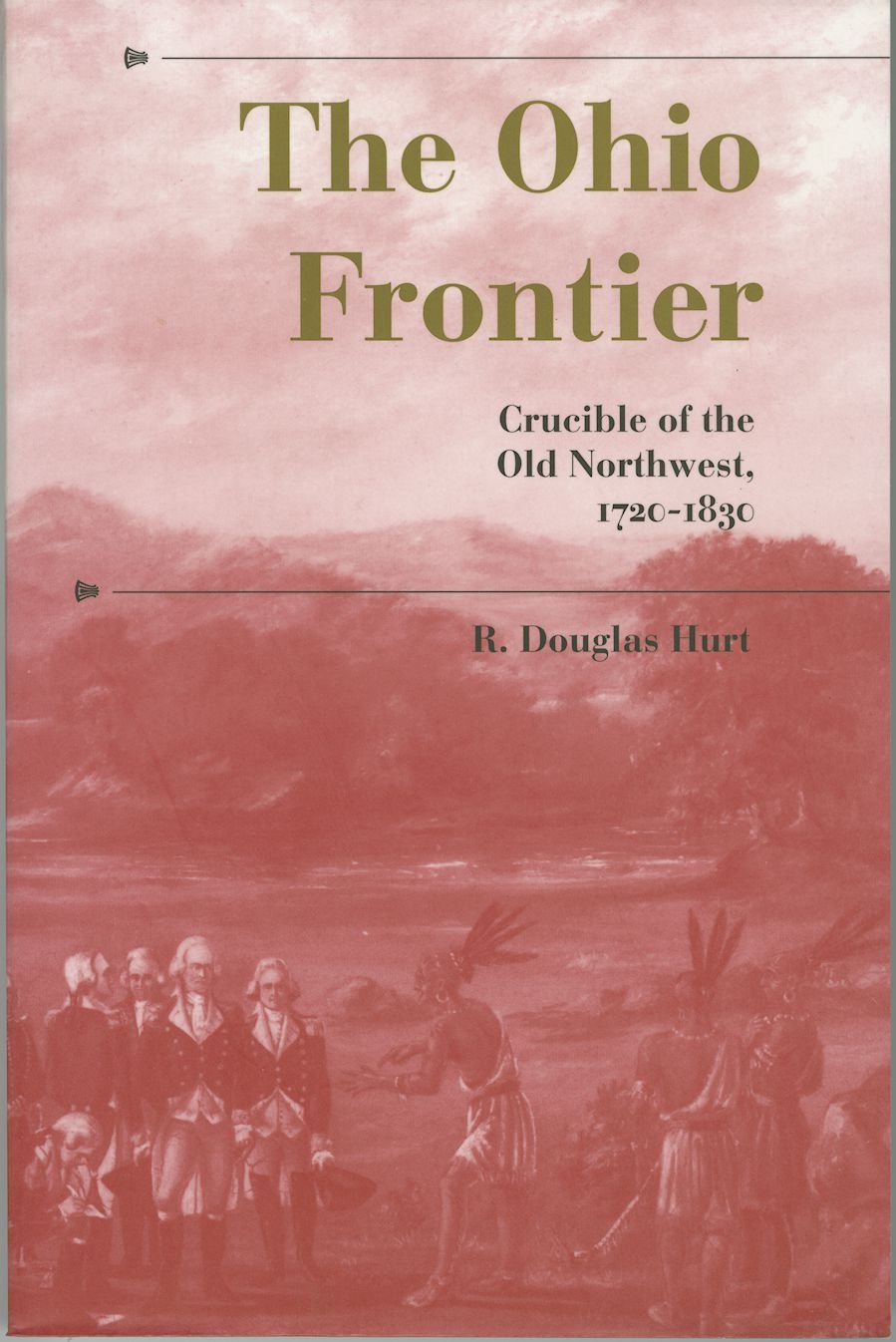
The Ohio Frontier: Crucible of the Old Northwest, 1720–1830 (A History of the Trans-Appalachian Frontier)
$22.10
by R. Douglas Hurt



The Ohio Frontier Crucible of the Old Northwest, 1720–1830 R. Douglas Hurt "This exhaustively researched and well-written book provides a comprehensive history of Ohio from 1720 to 1830." ―Journal of the Early Republic Nowhere on the American frontier was the clash of cultures more violent than in the Ohio country. There, Shawnees, Wyandots, Delawares, and other native peoples fought to preserve their land claims against an army that was incompetent at the beginning but highly trained and disciplined in the end. Sales territory is worldwide A History of the Trans-Appalachian Frontier 1996; 440 pages, 23 b&w photos, 7 maps, bibl. essay, index, 6 x 9 cloth0-253-33210-9$39.95 L / £28.50 paper0-253-21212-X$19.95 t / £14.50 In the first major reassessment of the Ohio frontier period in more than fifty years, R. Douglas Hurt provides a sweeping narrative of the major military, social, economic, and political developments in the region from the arrival of the first Native American settlers to the end of the frontier period. He traces the settlement of the Shawnees, Delawares, and Wyandots among other Native American groups and discusses their culture and adaptation to white society. He also details the military expeditions of Arthur St. Clair, Josiah Harmar, Anthony Wayne, and William Henry Harrison during the bloody conflicts fought to determine which people would control the land north of the Ohio River. Hurt also traces the survey of the Seven Ranges and discusses the settlement of the Ohio Company's lands, the Western Reserve, the Miami Purchase, the Virginia Military Tract, and the French village of Gallipolis. The Ohio frontier also lured those seeking a religious haven. Although many frontier people - such as the Shakers, Quakers, and Zoarites - wanted little more than to believe as they pleased and to be left alone, strong Protestant and utopian sects made Ohio their home. This study also discusses the major political concerns of the territorial and early statehood periods, including the War of 1812 and the presidential elections of 1824 and 1828. R. Douglas Hurt is the editor of Agricultural History and Professor and Director of the Graduate Program in Agricultural History and Rural Studies at Iowa State University. He has written and edited more than a dozen books.