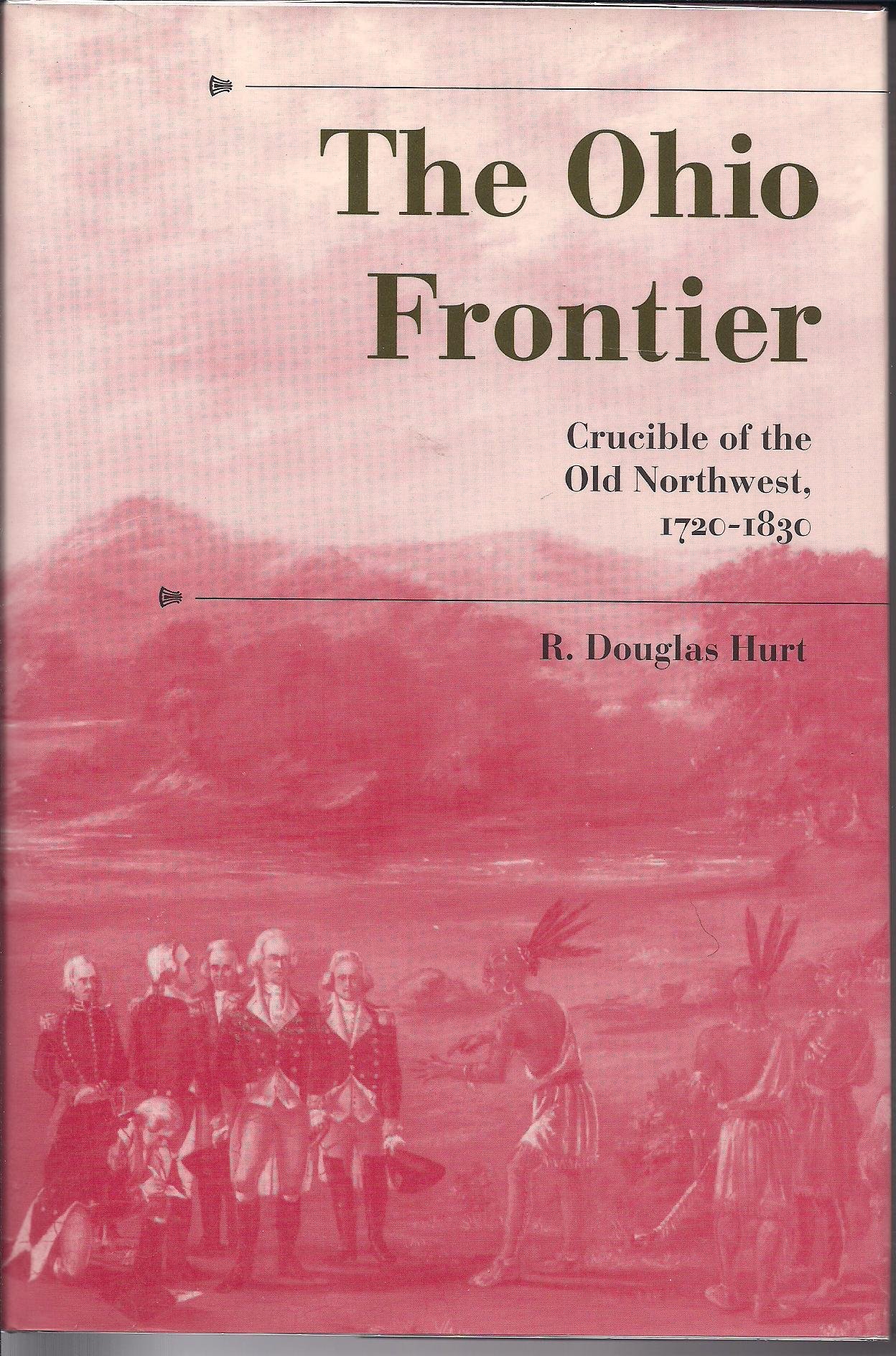
The Ohio Frontier: Crucible of the Old Northwest, 1720-1830 (History of the Trans-Appalachian Frontier)
$22.92
by R. Douglas Hurt



Recounts the arrival in Ohio of Iroquois-speaking Indians, the entry of white fur traders and missionaries, the slaughter and expulsion of the Indians, and settlement by New Englanders and others Hurt has fashioned a vivid panorama of the transitional years when Ohio evolved from a raw frontier territory to an established province of an ever-expanding nation. As the buffer zone separating the colonized East and the uninhabited and unexplored West, Ohio afforded limitless social, economic, and political opportunities for daring and eager adventurers migrating from the eastern seaboard. Unfortunately, this dramatic demographic shift provoked a violent cultural and military clash between Native Americans and white settlers. The formulation and implementation of a harsh Indian policy that inevitably resulted in the removal and relocation of the Native American population from the territory enabled the newcomers to forge a comfortable and prosperous society rooted in agriculture and industry. Compelling regional history. Margaret Flanagan Hurt (Agricultural History and Rural Studies/Iowa State Univ.) draws a plodding timeline in prose, tracing the conquest and settlement of Ohio by Native and then European Americans. Before 1720, Ohio was mostly uninhabited. Only the Erie ``Cat Nation,'' Iroquoian-speaking Indians who lived along Lake Erie, occupied even a small part of the vast territory. When the lucrative and insatiable European appetite for beaver pelt exhausted the supply further east, however, Indian trappers from the Five Iroquois Nations attacked the Erie and gained control of their rich beaver source. The first whites to venture into the area were fur traders and missionaries, the former group plying the Indians with liquor and teaching them English, often swear words, while the missionaries attempted to save the Indians' souls. Many of the Indians did in fact convert to Christianity, although it didn't protect them from the brutality of their white neighbors. In one particularly gruesome incident, Christian Delaware Indians sang hymns as more than 90 men, women, and children were taken in groups of two and three and slaughtered by their American captors. Many broken treaties later, the Ohio territory was settled by an odd mixture of refined New Englanders and rough-and-ready frontiersmen, which made for an unusual--and uneasy--social mix. Eventually, however, the people of Ohio developed into a settled and fairly prosperous group, and the frontier continued westward. This isn't an inherently boring subject; in fact, it is filled with both harrowing and amusing aspects. But Hurt presents it as a litany of names, dates, and places--and sometimes crops, livestock, and diseases--with precious little of either analysis or drama. (20 b&w photos, 5 maps) -- Copyright ©1996, Kirkus Associates, LP. All rights reserved. In the first major reassessment of the Ohio frontier period in more than fifty years, R. Douglas Hurt provides a sweeping narrative of the major military, social, economic, and political developments in the region from the arrival of the first Native American settlers to the end of the frontier period. He traces the settlement of the Shawnees, Delawares, and Wyandots among other Native American groups and discusses their culture and adaptation to white society. He also details the military expeditions of Arthur St. Clair, Josiah Harmar, Anthony Wayne, and William Henry Harrison during the bloody conflicts fought to determine which people would control the land north of the Ohio River. Hurt also traces the survey of the Seven Ranges and discusses the settlement of the Ohio Company's lands, the Western Reserve, the Miami Purchase, the Virginia Military Tract, and the French village of Gallipolis. The Ohio frontier also lured those seeking a religious haven. Although many frontier people - such as the Shakers, Quakers, and Zoarites - wanted little more than to believe as they pleased and to be left alone, strong Protestant and utopian sects made Ohio their home. This study also discusses the major political concerns of the territorial and early statehood periods, including the War of 1812 and the presidential elections of 1824 and 1828.