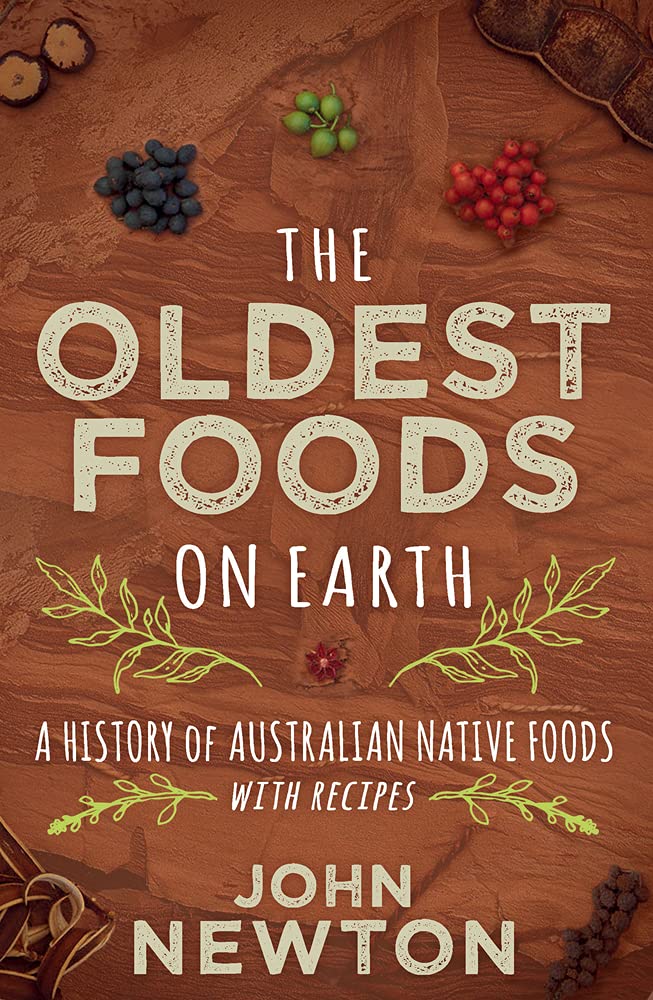
The Oldest Foods on Earth: A History of Australian Native Foods with Recipes
$21.95
by John Newton



Discover the ancient flavors of Australia and its culinary heritage. This is a journey into the unique flora and fauna that nourished Aboriginal peoples for over 50,000 years, a cuisine largely untouched by European influence. John Newton explores the paradox of celebrating global culinary diversity while neglecting the superfoods native to Australia. He argues that to truly connect with this land, we must embrace the foods that have sustained its people for millennia. This book is for chefs, food enthusiasts, and anyone seeking a deeper understanding of Australian cuisine. Oldest Foods on Earth offers more than just recipes; it's a call to culinary responsibility and cultural reconciliation. Learn to use native ingredients in innovative ways, honor the traditions of Aboriginal communities, and discover the flavors that define Australia's true culinary identity. Uncover the history and cultural significance of Australian native foods. - Explore sustainable and culturally sensitive food practices. - Find recipes and information on using native ingredients. "A very forthright and informative guide to Australia’s unique native foods." —Peter Gilmore, executive chef, Quay John Newton is a freelance writer, journalist and novelist. His most recent books are Grazing: The ramblings and recipes of a man who gets paid to eat and A Savage History: Whaling in the Pacific and Southern Oceans . In 2005 he won the Gold Ladle for Best Food Journalist in the World Food Media Awards. The Oldest Foods on Earth A History of Australian Native Foods with Recipes By John Newton University of New South Wales Press Ltd Copyright © 2016 John Newton All rights reserved. ISBN: 978-1-74223-437-3 Contents INTRODUCTION, 1 BEFORE THE BOATS, 2 HOME-GROWN MARVELS, 3 A DISASTROUS CHANGE OF DIET, 4 THEY BROUGHT THEIR OWN, 5 FROM BANDICOOT CURRY TO VEGEMITE, 6 GREEN SHOOTS, 7 THE PRODUCERS, 8 WILD ANIMALS AND GAME BIRDS, 9 CULTURAL CONUNDRUMS, 10 THE CHEFS: PIONEERS AND CONVERTS, 11 WALKING TOGETHER, EATING TOGETHER, APPENDIX:, A list of Australian edible plants, animals and grains, Useful contacts, Bibliography, Acknowledgments, Index, CHAPTER 1 BEFORE THE BOATS They were the most healthy people I have ever seen ... they were literally glowing with health – not an ounce of superfluous fat. They were extremely fit . Founding doctor of the Pintupi Homelands Health Service Dr David Scrimgeour on seeing the last of the Pintupi people walk out of the desert in 1984 In 1688, William Dampier was the first Englishman to explore parts of Australia, to have contact with the Indigenous people and to write about the experience. On his return to England in 1691, he wrote a book, New Voyage Around the World, which was published in 1697. He was less than kind – or accurate – in his judgement of the people he had come across there: 'The Inhabitants of this Country are the miserablest People in the World ... setting aside their Humane Shape, they differ but little from Brutes.' As for their diet, he wrote: 'There is neither herb, root, pulse, nor any sort of grain for them to eat that we saw; nor any sort of bird or beast that they can catch, having no instruments wherewithal to do so.' Dampier was the first but certainly not the last to overlook the intricate patchwork of farming and land-care techniques of the original inhabitants of this land. Neither he nor most of those who followed him saw evidence of farming in the European sense – or rather, as we will see, some did but suppressed what they saw – so they surmised that these people were 'ignorant savages'. Dampier had an excuse – he wasn't here for long – but Darwin should have known better, when he called them 'a set of harmless savages wandering about without knowing where they shall sleep at night, and gaining their livelihood by hunting in the woods'. While conceding that a group of Aboriginal people that he had encountered were 'good humoured and pleasant' and that several of their remarks 'manifested considerable acuteness', Darwin deplored the fact that 'They will not ... cultivate the ground, or build houses and remain stationary, or even take the trouble of tending a flock of sheep when given to them.' Historian William Gammage comments that 'the people of 1788 spent more time each year managing land than Darwin [did] in a lifetime.' We have learnt, thanks to the work of historians and authorslike Gammage, Eric Rolls and Bruce Pascoe, that the entire country was carefully and thoroughly farmed in a manner that left the land and its bounty in balance and abundance for at least 50 000 years. They reared possums, emus, dingos and cassowaries; they penned young pelican chicks and let parent birds fatten them. They carried fish and crayfish stock across the country. There were duck nets on the rivers with sinkers and floats, and fishing nets of European quality, with the mesh and knot varied to suit their prey, placed in the right waters.