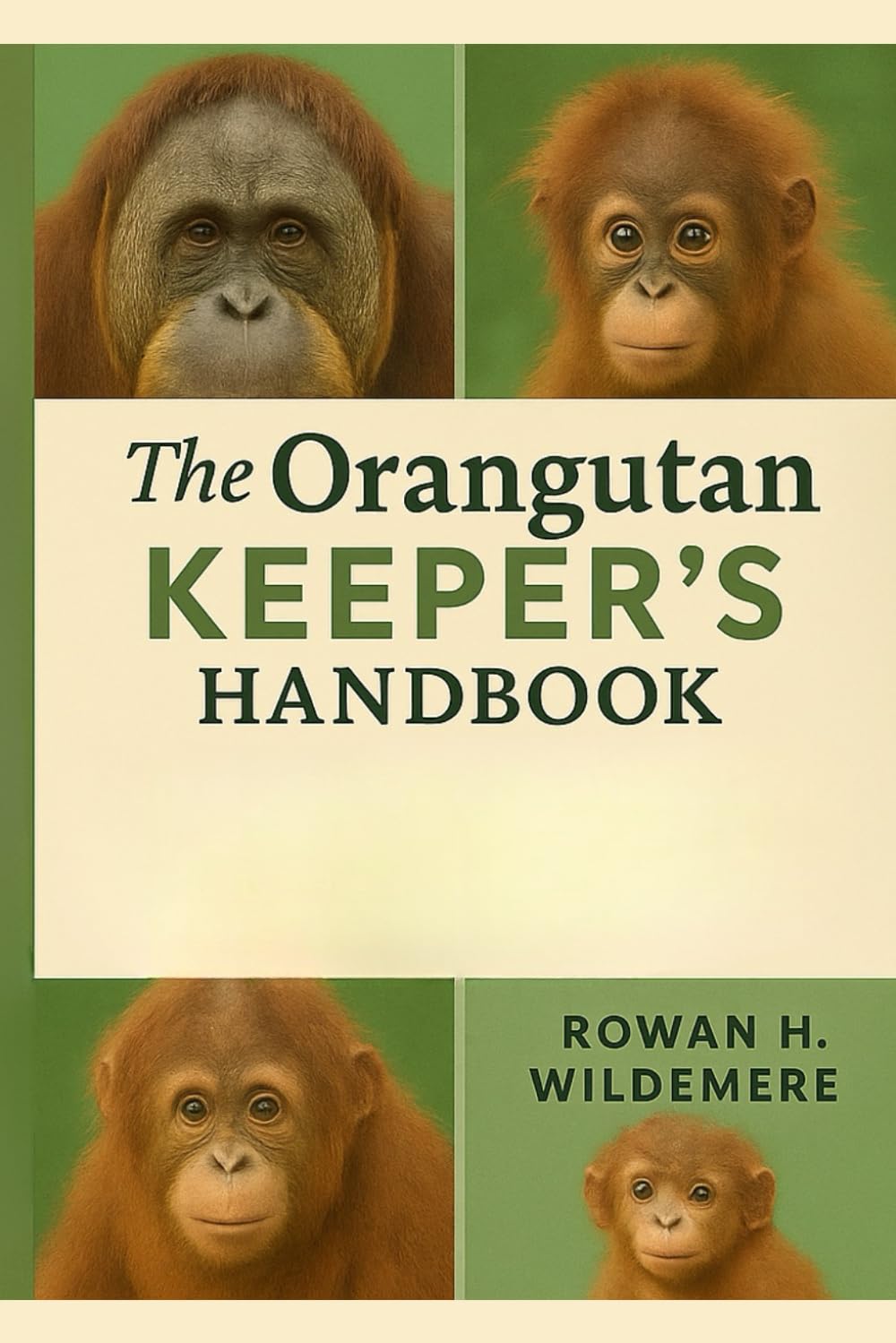
The Orangutan Keeper’s Handbook: A Practical Guide to Housing, Feeding, Behaviour and Health Care for Orangutans in Zoos, Sanctuaries and
$18.00
by ROWAN H. WILDEMERE



Orangutan Keeper’s Handbook is a welfare-first, real-world guide for professionals and trainees who work with orangutans in accredited zoos, sanctuaries, rescue centres, rehabilitation programs, and other licensed institutions. It is not a book about private ownership. Throughout, orangutans are treated as what they are: highly intelligent, emotionally complex great apes whose wellbeing depends on expert teams, rigorous safety systems, and environments built around choice, privacy, and meaningful challenge. Orangutans are problem-solvers with long memories, strong preferences, and a deep need for control over their space. They can thrive in human care when daily life supports natural climbing, foraging, nesting, learning, and social opportunities that fit individual history and temperament. When care is inconsistent or environments are overly restrictive, stress and behavioural decline can follow. This handbook helps teams translate wild orangutan biology into practical decisions that protect welfare while supporting safe, professional operations. Inside Orangutan Keeper’s Handbook , you will discover: - Natural history with direct husbandry value – ecology, movement, feeding strategies, cognition, and what these mean for enclosure design and daily routines. - Facility and habitat planning – vertical space, climbing networks, nest-building materials, visual barriers, retreat areas, shifting systems, and keeper-safe service routes. - Nutrition and feeding enrichment – building diets that support long-term health, encouraging foraging, managing weight, and reducing conflict around food. - Behaviour, welfare and enrichment programs – creating structured enrichment that challenges minds and bodies, measuring outcomes, and adapting to individuals. - Training and cooperative care – protected-contact principles, stationing, voluntary participation in exams and treatments, transport preparation, and humane boundaries. - Health and veterinary partnership – prevention, early warning signs, quarantine and biosecurity, ageing care, and practical collaboration with experienced vet teams. - Social management and life-stage planning – introductions, group dynamics, maternal care, hand-rearing considerations, transfers, and long-term placement decisions. - Ethics, safety and public responsibility – risk management, emergency readiness, and honest education that respects both people and apes. Written in clear, professional language, Orangutan Keeper’s Handbook provides a shared framework for keepers, veterinary staff, managers, educators, and students. Whether you are building a new habitat, refining an established program, or training the next generation of staff, this book keeps one priority at the centre of every chapter: protecting the long-term physical and psychological welfare of the orangutans entrusted to human care.