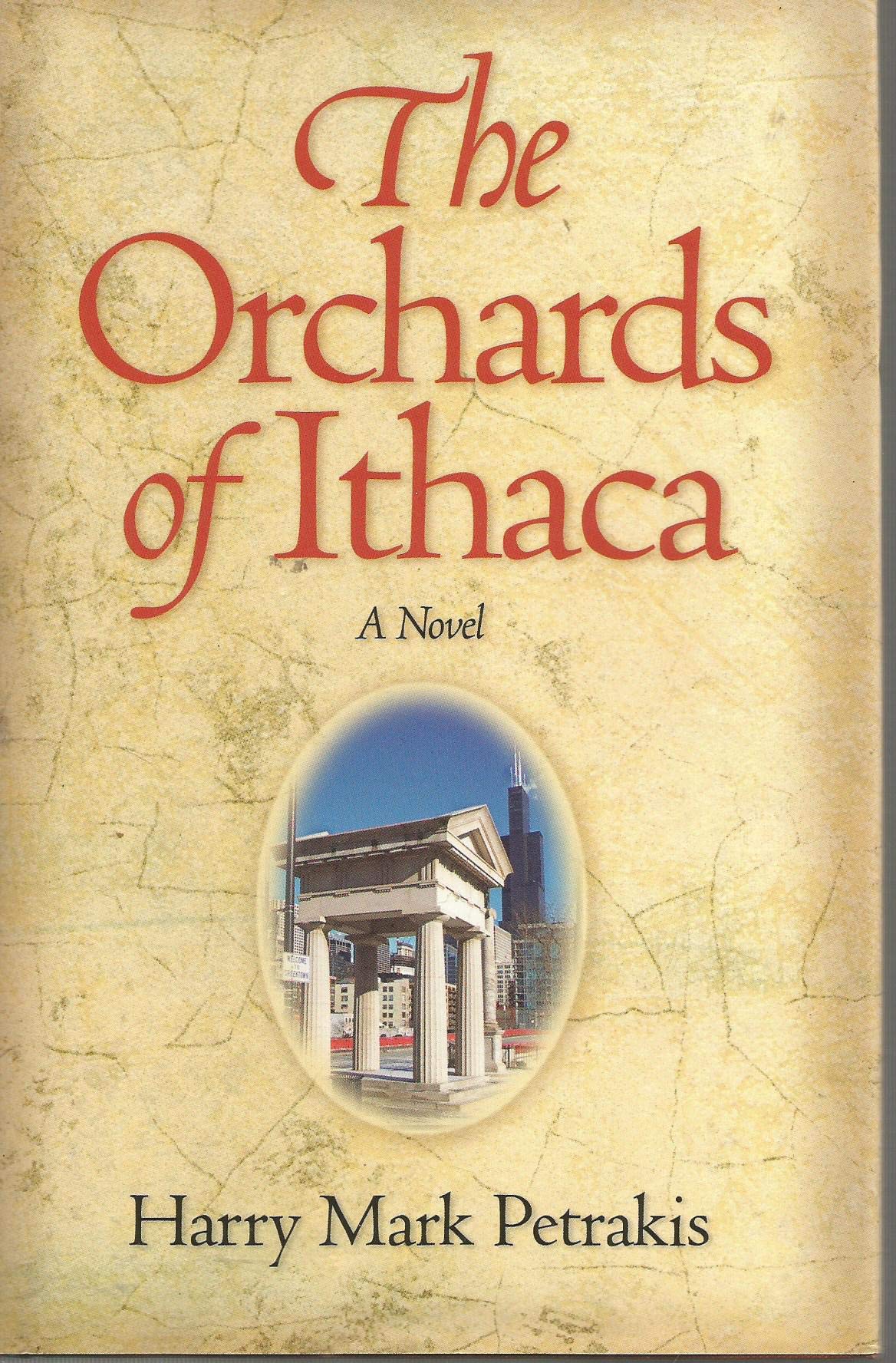



In his tenth novel, The Orchards of Ithaca, celebrated Chicago storyteller Harry Mark Petrakis enhances his vigorous naturalism with humor, charm, and revelation. From the street level vantage point of Orestes Panos, a prosperous restaurateur on the eve of his fiftieth year and the coming millennium, Petrakis personalizes humankind’s epic struggle between the unresolved guilt and sins of our shared past and the potential of a still untainted future. Friend and host to the pantheon of Chicago political and sports celebrities, from Ditka to Daley, Jordan to Kup, Orestes is a respected member of his Halsted Street neighborhood. Unbeknownst to his peers, he privately wars with the consequences of a near-fatal childhood illness and the insecurities foisted upon him by his late, brutal father. Orestes finds security and comfort in his twenty-three-year marriage to the loving Dessie, without knowing that she harbors stark secrets of her own. Oblivious to these unvoiced burdens of their parents are the Panos children: a son forced into a hasty wedlock when he impregnated a mafioso’s daughter, and a teenaged daughter who seeks salvation in designer fashions. Orestes must also endure the barbs of his shrewish mother-in-law, an avid Tom Selleck admirer who openly scorns her son-in-law for lacking the machismo of her screen idol. As Y2K, Oval Office infidelity, the casualties of Columbine, and millennium fever loom over them, the Greek Town community is not without its own disruptions. When his parish priest is accused of child molestation, Orestes becomes the young cleric’s orator and advocate in the court of public opinion. He also must contend with a young, golden-haired temptress who seeks to draw him into her fantasy of a dead poet and his muse. But these crises of faith and fealty pale in the face of the contest of character arising when family tragedy sparks confession in the Panos household, forcing Orestes and Dessie to reveal long-concealed truths that threaten their sacred union. With their reality torn asunder, Orestes and Dessie confront the same choices posed to a conflicted globe: to enter this fresh millennium still imprisoned by the terrors and obsessions of individual pasts or to find the wisdom and compassion to move forward as liberated and deeply loving human beings. Orestes Panos, the owner of an upscale Greek restaurant on Halsted Street in Chicago, has just turned 50, a personal milestone rendered all the more significant by the impending turn of the millennium. He is moved to take stock and reflects on his 23-year marriage, their son's inner turmoil, their teenage daughter's passion for shopping, the viciousness of his live-in mother-in-law, and his waning enthusiasm. Saddled with a mythically loaded name and psychic wounds associated with a cruel father, Petrakis' protagonist is ripe for catharsis. Accordingly, he becomes infatuated with a lovely young woman he meets in the library. Meanwhile, Father Anton fails to give communion to a dying parishioner because he stops by the restaurant and joins the vociferous group of regulars as they argue about modern Greek poetry. As always, master storyteller Petrakis is keenly attuned to the intermingling of the mundane and the momentous, and fascinated by the different forms heroism takes. Candid and penetrating in its psychology and spiritual inquiry, Petrakis' tenth novel, following the powerful Twilight of the Ice (2003), is vital and moving. Donna Seaman Copyright © American Library Association. All rights reserved “As always, master storyteller Petrakis is keenly attuned to the intermingling of the mundane and the momentous, and fascinated by the different forms heroism takes. Candid and penetrating in its psychology and spiritual inquiry, Petrakis’s tenth novel . . . is vital and moving.” ― Booklist “With humor, drama, and a dash of classical mythology, fifty-year-old Halsted Street restaurant owner Orestes Panos stumbles toward the dawn of the millennium. Thwarting his aspirations to live as heroically as his mythic namesake are a delusional young beauty and the problems of a dysfunctional family. In Petrakis’s suspenseful and moving narrative, Chicago’s streets, landmarks, Greek restaurants, and weather come stunningly alive.” ―Martin Northway, founder of the Chicago arts magazine Strong Coffee “In The Orchards of Ithaca, Harry Mark Petrakis is back at what he does best, chronicling the tragic and comic peaks and valleys of life among Chicago’s Greek Americans. The mythic Hellenic past of his characters is engagingly reflected in the comic flair of dialogue and the heroic posturing that marks their contemporary American lives.” ―Edward Lueders, author of The Clam Lake Papers A longtime Chicago resident and the son of a Greek Orthodox priest, Harry Mark Petrakis has authored twenty books, including A Dream of Kings, which was made into a major motion picture starring Anthony Quinn, and his most recent publ