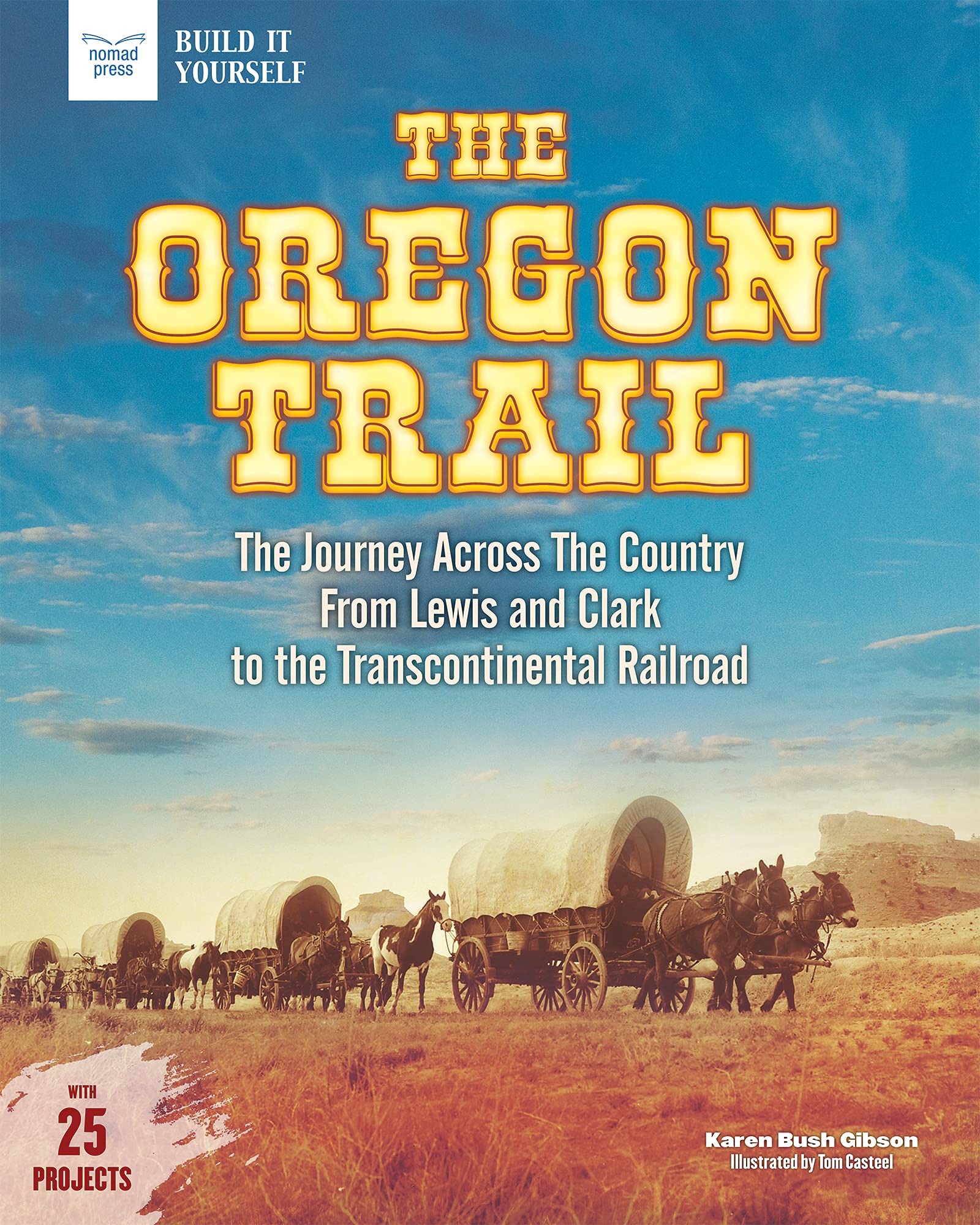
The Oregon Trail: The Journey Across the Country From Lewis and Clark to the Transcontinental Railroad With 25 Projects (Build It Yourself)
$17.95
by Karen Bush Gibson



Westward ho! If you travel across certain parts of the United States, you can still see wagon wheel ruts where people crossed the west in search of more opportunity and better lives more than 200 years ago! The Oregon Trail: The Journey Across the Country from Lewis and Clark to the Transcontinental Railroad offers readers ages 9 to 12 a fascinating look at the explorers and settlers who traveled this route during the westward expansion of the United States. When America received its independence in 1776, the new country was made up of 13 colonies that became the United States of America. European immigrants continued to arrive in the new country, eager to make new lives for themselves and their families. By 1803, there were 17 states and a need for even more space. The United States doubled its land area with the Louisiana Purchase in 1803. President Thomas Jefferson commissioned the Corps of Discovery to explore and map a territory that had only been seen by fur trappers and the Native Americans who lived there. The expedition into the American west, more popularly known as the Lewis and Clark expedition, left from Independence, Missouri for more than two years of exploration that produced a route for American settlers to take. The route was the Oregon Trail, also known as the Oregon and California Trail. In The Oregon Trail: The Journey Across the Country from Lewis and Clark to the Transcontinental Railroad , readers ages 9 to 12 can delve into the explorations of Meriwether Lewis and William Clark and other explorers. They can learn about the more than half a million people who followed during the nineteenth century. What challenges did these pioneers face on the 2,170-mile journey? How were Native American tribes and nations affected by this mass migration? Primary sources allow readers to feel like a part of the Oregon Trail experience while biographical sidebars will introduce the compelling people who were part of this time in U.S. history. Investigative, hands-on projects and critical thinking activities such as writing a treaty and researching artistic impressions of the Oregon Trail invite readers to further their understanding of life on the trail, early towns and forts, and the Transcontinental Railroad that followed the wagons into new lands and territories that would eventually become states. Nomad Press books in the Build It Yourself series integrate content with participation. Common Core State Standards, the Next Generation Science Standards, and STEM Education all place project-based learning as key building blocks in education. Combining content with inquiry-based projects stimulates learning and makes it active and alive. Nomad’s unique approach simultaneously grounds kids in factual knowledge while allowing them the space to be curious, creative, and critical thinkers. This interactive survey of 19th-century American history focuses on westward expansion from early exploration to the realities of life on the Oregon Trail to the effects on native peoples and the building of the Transcontinental Railroad. Amply illustrated with cartoons and photographs, the text is kid-friendly with helpful insets that define new vocabulary as it occurs. Other insets provide supplemental information including passages from letters and journals, accounts of real families, essential questions to ponder, and QR codes that link to relevant web pages, many of them containing primary sources. Each chapter ends with activities that invite readers to delve deeper into the material or to put themselves in the shoes of early Americans. The language of some of the primary documents will be difficult for elementary schoolers and some things could use further explanation. Overall, however, the activities are thought-provoking and web links enrich the material covered. While not necessarily a book children will read from cover to cover, this is a valuable springboard for classroom teachers looking to bring immediacy to American history units and research projects. Additional Resources. Glossary. Index. Recommended Reviews for other titles in the series: Great Pioneer Projects: You Can Build Yourself. Learning Magazine, Teachers’ Choice Edition: “What was it like to be an American pioneer during the 1800s? More than 25 projects and activities in this book give students and first-hand look.” Children's Literature Review "Beginning with a color map of the Trail and a timeline of its history, the introduction informs readers that Americans were always eager to move westward, though in the early nineteenth century the West was still unknown to colonists. Readers experience growth and increasing use of the Trail, starting with the explorations by Lewis and Clark, the effects on the prairies and native inhabitants, and the building of transcontinental railways that finally replaced the Oregon Trail. . . . Each chapter includes QR codes for Internet information, an Essential Question to consider, and numerous