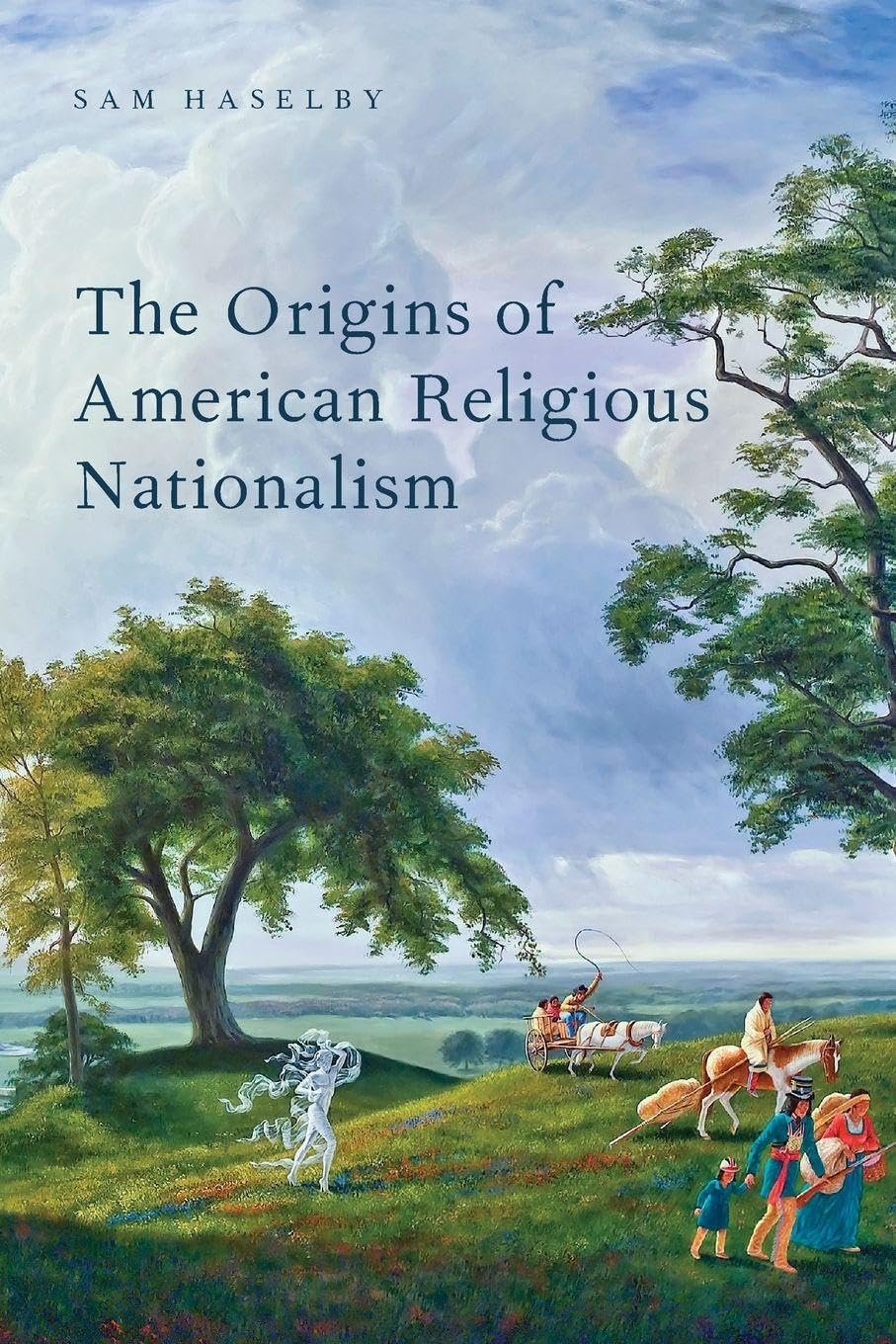



Sam Haselby offers a new and persuasive account of the role of religion in the formation of American nationality, showing how a contest within Protestantism reshaped American political culture and led to the creation of an enduring religious nationalism. Following U.S. independence, the new republic faced vital challenges, including a vast and unique continental colonization project undertaken without, in the centuries-old European senses of the terms, either "a church" or "a state." Amid this crisis, two distinct Protestant movements arose: a popular and rambunctious frontier revivalism; and a nationalist, corporate missionary movement dominated by Northeastern elites. The former heralded the birth of popular American Protestantism, while the latter marked the advent of systematic Protestant missionary activity in the West. The explosive economic and territorial growth in the early American republic, and the complexity of its political life, gave both movements opportunities for innovation and influence. This book explores the competition between them in relation to major contemporary developments-political democratization, large-scale immigration and unruly migration, fears of political disintegration, the rise of American capitalism and American slavery, and the need to nationalize the frontier. Haselby traces these developments from before the American Revolution to the rise of Andrew Jackson. His approach illuminates important changes in American history, including the decline of religious distinctions and the rise of racial ones, how and why "Indian removal" happened when it did, and with Andrew Jackson, the appearance of the first full-blown expression of American religious nationalism. "ambitious and thought-provoking book that challenges common understandings of the earliest stages of American nationalism." -- Carl C. Creason, Reading Religion "Haselby's elaboration of the meaningful conflict between popular frontier evangelicalism and the elite, northeastern missionizing establishment is an important contribution." -- Seth Perry, Princeton University, The Journal of Religion "Although Haselby's story is most relevant to nineteenth-century U.S. history, the legacy of his story--again with Trump in mind--is far from finished.... Haselby may hold the key to explaining what so far has escaped most scholars and pundits who are still scratching their heads about the 2016 presidential contest--namely, Trump's appeal to evangelical voters for whom his flagrant flaunting of Christian morality should be repugnant."-- Foreign Policy Research Institute "Haselby's work [integrates] a vast literature on nationalism, print culture, immigration and migration, technological change, and race... [and] has placed religion at the centre of the story of nation-building during the tumultuous years between Jefferson and Jackson. Scholars of American religion in general, and the early national era in particular, will not want to ignore this book."-- Journal of Religious History " The Origins of American Religious Nationalism is also well timed. Haselby completed his study before the current presidential campaign, but his stress on a populist, white nationalism developing in the first decades after the American Revolution will now be read in the context of Black Lives Matter and Donald Trump. Haselby's argument is crisply stated."-- Los Angeles Review of Books "Exactly 50 years ago, in the summer of 1966, sociologist Robert Bellah composed what would become one of the most cited scholarly essays of the postwar era. The title, 'Civil Religion in America,' was unprepossessing, but the timing was superb....Sam Haselby's The Origins of American Religious Nationalism is also well timed. Haselby completed his study before the current presidential campaign, but his stress on a populist, white nationalism developing in the first decades after the American Revolution will now be read in the context of Black Lives Matter and Donald Trump."--John T. McGreevy, Los Angeles Review of Books "His research is meticulous, and the argument is compelling...In Haselby's careful hands... [Andrew] Jackson represents... a new Protestant nationalism that would conquer the West and soon to rise to imperialist notions of manifest destiny."-- American Historical Review " The Origins of American Nationalism is a thoughtful book. It will spur further research on regionalism, nationalism, frontier religion, and northeastern missions efforts."-- Journal of American History "A historian's history executed with tremendous concrete specificity about the gradual emergence of American national identity."-- Journal of American Academy of Religion "[A] very fine, fresh reinterpretation...of protestant and kindred movements across the fast growing new nation... it recalls other sweeping narratives... a subtitle of 'an intellectual history'...would describe well the richness of his assessment. This is a very important and readable volume." --