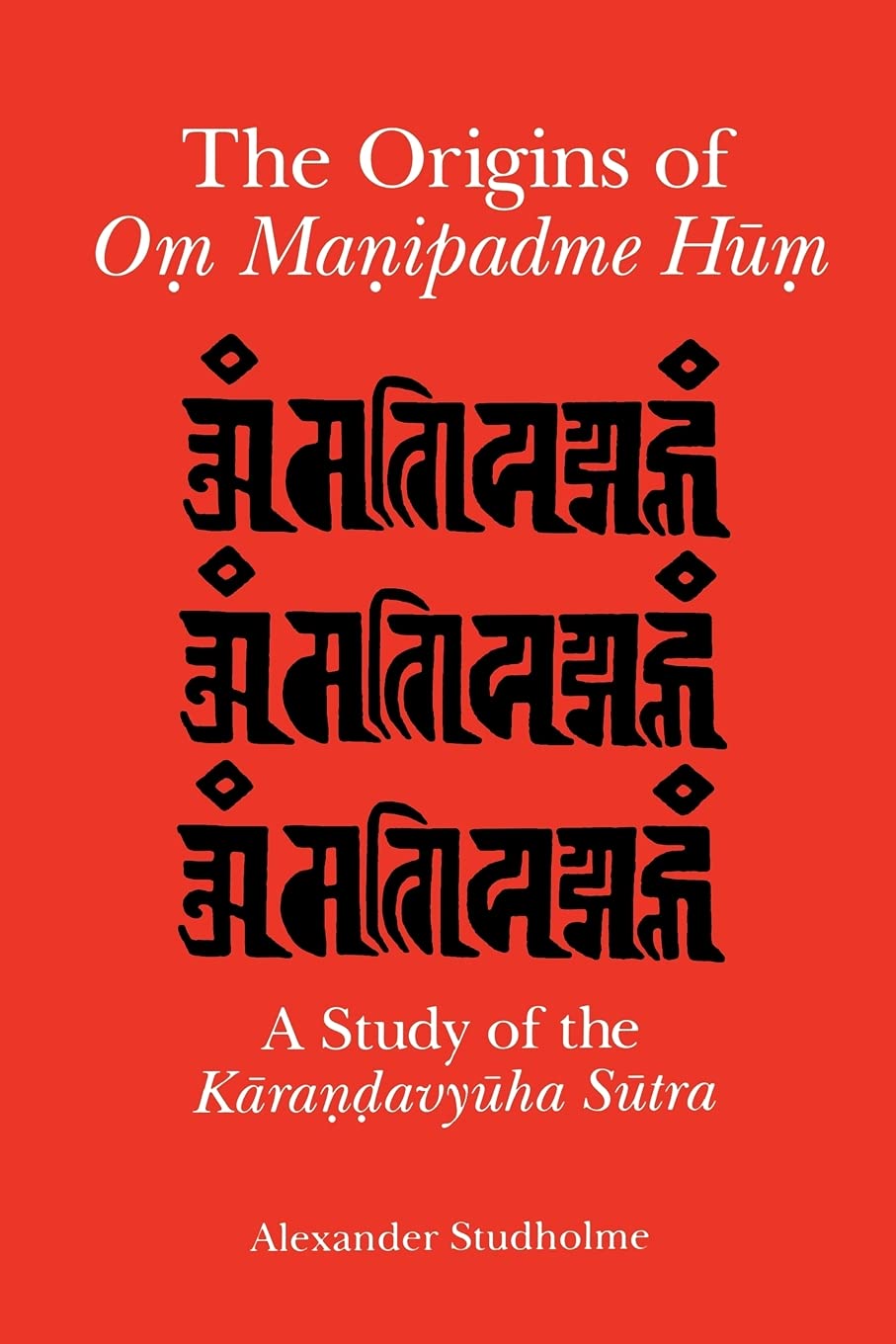
The Origins of O Maṇipadme Hū: A Study of the Kāraṇavyūha Sūtra
$34.95
by Alexander Studholme



Sets out a history of the famous Buddhist mantra, Om Manipadme Hum, and offers new insights on its meaning. O Maipadme Hū , perhaps the most well-known of all Buddhist mantras, lies at the heart of the Tibetan system and is cherished by both layman and lama alike. This book documents the origins of the mantra, and presents a new interpretation of the meaning of O Maipadme Hū , and includes a detailed, annotated precis of the Kāraavyūha Sūtra , opening up this important Mahayana Buddhist work to a wider audience. The Kāraavyūha - the earliest textual source for O Maipadme Hū -which describes both the compassionate activity of Avalokiteśvara, the bodhisattva whose power the mantra invokes, and the mythical tale of the search for and discovery of the mantra. Through a detailed analysis of this sutra, Studholme explores the historical and doctrinal forces behind the appearance of O Maipadme Hū in India at around the middle of the first millennium C.E. He argues that the Kāraavyūha has close affinities to non-Buddhist puranic literature, and that the conception of Avalokiteśvara and his six-syllable mantra is informed by the conception of the Hindu deity Śiva and his five-syllable mantra Nama Śivāya . The sutra reflects an historical situation in which the Buddhist monastic establishment was coming into contact with Buddhist tantric practitioners, themselves influenced by Saivite practitioners. "This compact volume will be immediately accessible, and of great benefit, to both Tibetologists and Tibetophiles alike." ― Journal of the International Association of Tibetan Studies "This book provides a very good example of the phenomenon of religious integration, and clearly shows how Buddhism managed to integrate ideas and practices from another spiritual tradition." ― Francis Brassard, author of The Concept of Bodhicitta in Santideva's Bodhicaryavatara "It was fascinating to read the author's brilliant insights into the syncretic construction of early tantric Mahayana Buddhist materials like the Karandavyuha." ― John J. Makransky, author of Buddhahood Embodied: Sources of Controversy in India and Tibet Om Manipadme Hum, perhaps the most well-known and most widely used of all Buddhist mantras, lies at the heart of the Tibetan system and is cherished by both laymen and lama alike. This book presents a new interpretation of the meaning of Om Manipadme Hum, and includes a detailed, annotated precis of Karandavyuha Sutra, opening up this important work to a wider audience. The earliest textual source is the Karandavyuha Sutra, which describes both the compassion of Avalokitesvara, the bodhisattva whole power the mantra invokes, and the mythical tale of the search and discovery of the mantra. Through a detailed analysis of this sutra, Studholme explores the historical and doctrinal forces behind the appearance of Om Manipadme Hum in India at around the middle of the first millennium c.e. He argues that the Karandavyuha Sutra has close affinities to non-Buddhist puranic literature, and that the conception of Avalokitesvara and his six-syllable mantra is influenced by the conception of the Hindu deity Siva and his five-syllable mantra Namah Sivaya. The Karandavyuha Sutra reflects historical situation in which the Buddhist monastic establishment was coming into contact with Buddhist tantric practitioners, themselves influenced by Saivite practitioners. Alexander Studholme received a Ph.D. from the Centre for Buddhist Studies, Bristol University, England. Used Book in Good Condition