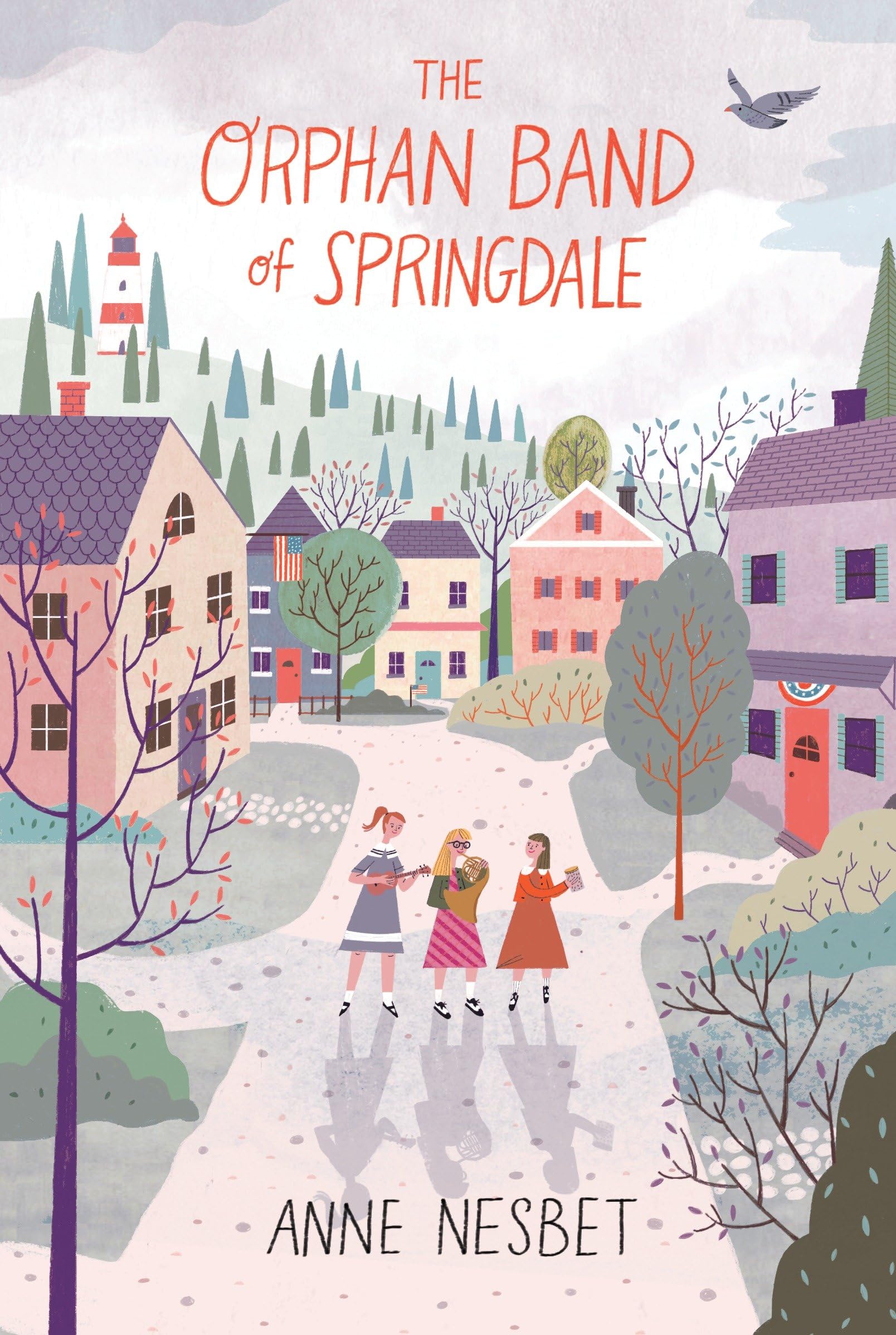



With the United States on the verge of World War II, eleven-year-old Gusta is sent from New York City to Maine, where she discovers small-town prejudices — and a huge family secret. It’s 1941, and tensions are rising in the United States as the Second World War rages in Europe. Eleven-year-old Gusta’s life, like the world around her, is about to change. Her father, a foreign-born labor organizer, has had to flee the country, and Gusta has been sent to live in an orphanage run by her grandmother. Nearsighted, snaggletoothed Gusta arrives in Springdale, Maine, lugging her one precious possession: a beloved old French horn, her sole memento of her father. But in a family that’s long on troubles and short on money, how can a girl hang on to something so valuable and yet so useless when Gusta’s mill-worker uncle needs surgery to fix his mangled hand, with no union to help him pay? Inspired by her mother’s fanciful stories, Gusta secretly hopes to find the coin-like “Wish” that her sea-captain grandfather supposedly left hidden somewhere. Meanwhile, even as Gusta gets to know the rambunctious orphans at the home, she feels like an outsider at her new school — and finds herself facing patriotism turned to prejudice, alien registration drives, and a family secret likely to turn the small town upside down. Gr 4–6—Gusta Neubronner arrives at her grandmother Hoopes's house in Springdale, ME, with a suitcase, a letter from her mother, and her French horn. Her pro-union father left her at the bus station while fleeing government agents. The anxieties of 1941 plague Gusta in her temporary home. School children mock her poor vision which oculist Mr. Bertmann corrects in exchange for Gusta's help with his carrier pigeons. Xenophobia and poverty threaten the orphans Gramma Hoopes shelters even as Gusta, orphan Josie, and cousin Bess form a band of female solidarity. As troubles mount, Gusta seeks her great grandfather's legendary wishing coin. Images of small-town Maine in a swiftly changing era fill Nesbet's story with a warm coziness, despite Gusta's struggles. Magical forest walks, collecting and cleaning eggs for sale, and visits to the family graveyard make Springdale seem like Brigadoon. The startling change Gusta experiences when she can see objects around her helps readers view every detail of Springdale with Gusta's newfound clarity. The dialogue is catchy, and Gusta's internal monologues share her tremendous curiosity and friendliness with readers. This is a good pairing for Kimberly Brubaker Bradley's The War that Saved My Life, both for the time period and its sense of pathos. At some points, one does feel Nesbet juggles too many topics—a small-town scandal, unionization, immigration, poverty, and school squabbles. Each one could use a bit more attention. VERDICT Solid historical fiction with a memorable heroine.—Caitlin Augusta, Stratford Library Association, CT In this uplifting, multifaceted historical novel set in 1941, Nesbet ( Cloud and Wallfish ) creates an arrestingly strong and sympathetic character in nearsighted 11-year-old Augusta “Gusta” Hoopes Neubronner...Nesbet deftly weaves disparate elements—music, orphans, labor unions, carrier pigeons, and a magic wish—into a richly developed story set during a pivotal era in American history. —Publishers Weekly (starred review) The narrative style is deeply satisfying: unexpected flourishes of drollery grace the text; the theme of Gusta’s new spectacles-enhanced vision gracefully serves as plot point and metaphor; and an ex- amination of folkloric Wishes respects both believers and doubters. Sometimes kids just need a book to cozy up with in an overstuffed chair, a secluded treehouse, or a nest of pillows. This is exactly that book. —Bulletin of the Center for Children's Books (starred review) The dialogue is catchy, and Gusta’s internal monologues share her tremendous curiosity and friendliness with readers. This is a good pairing for Kimberly Brubaker Bradley’s The War that Saved My Life, both for the time period and its sense of pathos...Solid historical fiction with a memorable heroine. —School Library Journal She's believably caught between her desire to do what's right, fighting back against growing prejudice against foreigners and unfair treatment of workers, and her need for comfort and security in an alien, sometimes-threatening new environment...this effort nicely captures the myriad faces of prejudice. Sometimes suspenseful and always engaging, this snapshot of determined Gusta and life before the war is sure to captivate readers. —Kirkus Reviews Nesbet’s narrative has a lilting quality that makes her storytelling both unique and attractive, and young readers will appreciate her well-rounded characters as well as a small but highly engaging group of antagonists. Nesbet also incorporates factual information of the era to highlight relevant themes of injustice, immigration and the labor movement. The Orphan Band of Springdale is a heartwarmi