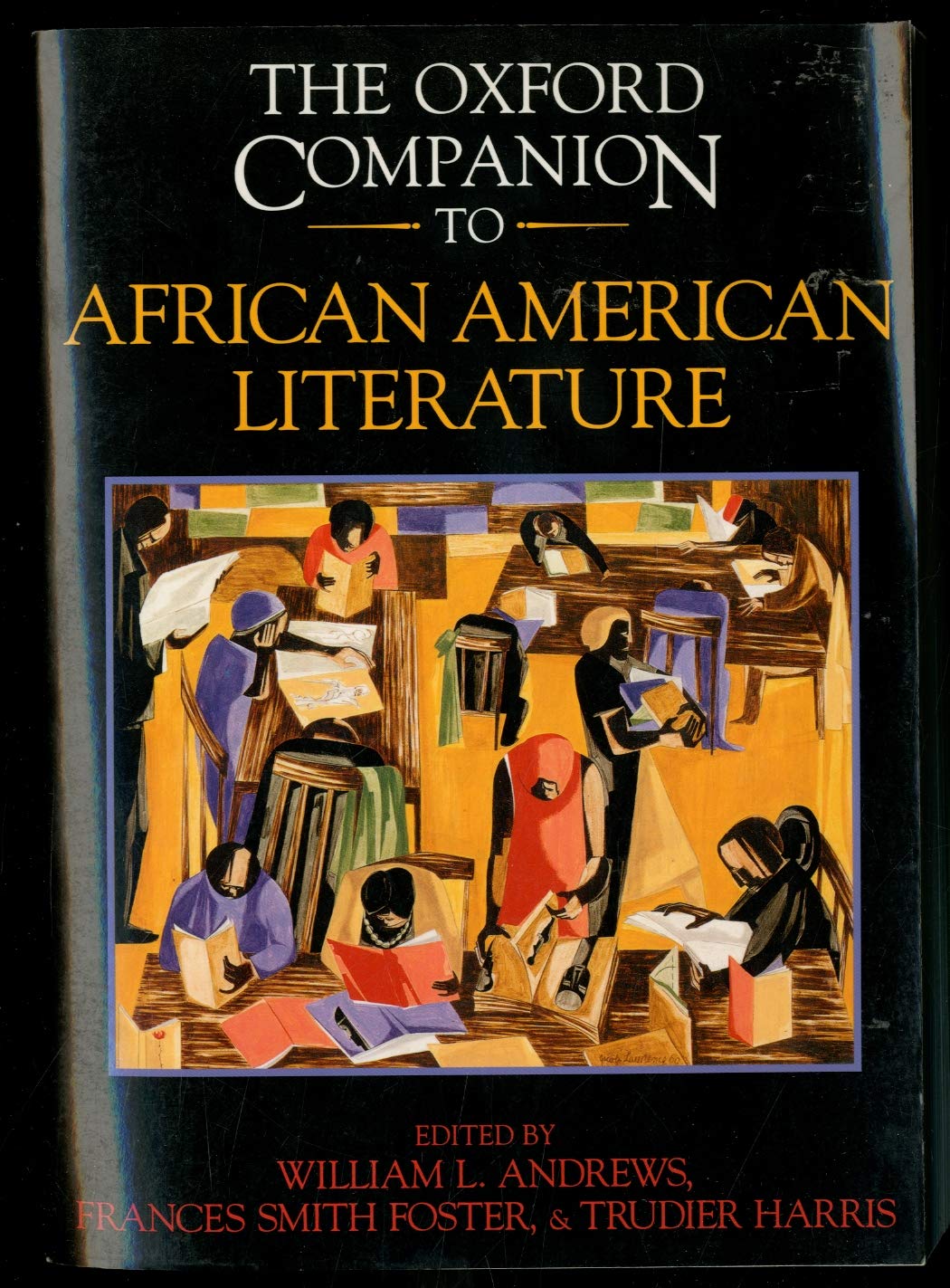



Here indeed is the pantheon of African American writers--Phillis Wheatley and Sojourner Truth, Frederick Douglass and W. E. B. Du Bois, Gwendolyn Brooks and Zora Neale Hurston, Langston Hughes and Countee Cullen, James Baldwin and Ralph Ellison, Toni Morrison and Alice Walker, John Edgar Wideman and August Wilson, Jamaica Kincaid and Gloria Naylor, Stanley Crouch and Cornel West, and hundreds more. Moreover, the Companion includes entries on 150 major works of African American literature (including synopses of novels), from Harriet Jacobs's Incidents in the Life of a Slave Girl , Richard Wright's Native Son , to Lorraine Hansberry's A Raisin in the Sun ; on literary characters, ranging from Bigger Thomas, to Coffin Ed Johnson, Kunta Kinte, Sula Peace; on character types, such as Aunt Jemima, Brer Rabbit, John Henry, Stackolee, and the trickster; and on such icons of black culture as Muhammad Ali, John Coltrane, Marcus Garvey, Jackie Robinson, John Brown, and Harriet Tubman. Here, too, are general articles on the traditional literary genres, such as poetry, fiction, and drama; on genres of special import in African American letters, such as autobiography, slave narratives, Sunday School literature, and oratory; and on a wide spectrum of related topics, including journalism, the black periodical press, major libraries and research centers, religion, literary societies, women's clubs, and various publishing enterprises. This important sourcebook for information about black writers and their craft is a welcome companion to the recently issued Norton Anthology of African American Literature . More to the point, it shows how much black literature, once relegated to the margins, has become mainstream. Here are brief biographies of more than 400 black writers, entries on some 150 works, and a host of entries on characters from novels, stories, and plays. In addition, there are entries on topics such as Afrocentricity (as well as on topics of more general interest, such as the novel), that make this essential for anyone who cares about black literature. The focus of previous reference works on African American literature has been narrow: the Harlem Renaissance, biography, women writers, etc. Editor Andrews (Classic Fiction of the Harlem Renaissance, LJ 4/1/94) here provides an Oxford companion that covers virtually all "the writers and writings that have made African American literature valuable and distinctive." There are many essays on such topics and genres as television and the novel; a 15-page overview of the whole of African American literary history; some 400 biographical entries, including figures such as Jackie Robinson, whose literary influence has been significant; digests of hundreds of novels, poems, and essays; and sketches of fictional characters, character types ("Uncle Tom"), and occupations. The signed, well-written, and authoritative entries include helpful bibliographies and extensive cross references. A vital reference tool for both general readers and scholars, this outstanding book belongs in every academic, public, and school library. (Index not seen.)?Peter A. Dollard, Alma Coll. Lib., Mich. Copyright 1997 Reed Business Information, Inc. In his foreword, Henry Louis Gates Jr. writes, "The publication of The Oxford Companion to African American Literature within months of the appearance of The Norton Anthology of African American Literature (1996) and The Encyclopedia of African American Culture and History (1996) makes this a signal moment in the history of the discipline of African American Studies." The publication of this Oxford Companion means that the field has matured as an academic discipline to the point that its literary canon can be defined. Edited by literature professors from the University of North Carolina and Emory University, it has more than 300 contributors, including Molefi Asante from Temple University and Arnold Rampersad from Princeton. The format of entries is similar to other titles in the series, with bibliographies concluding each entry. The largest number of entries are devoted to 400 authors, ranging from Phillis Wheatley and Charles Chesnutt to Walter Mosley and Gwendolyn Brooks. Though some of them are covered in other Oxford Companions, all the entries here are new. There are also entries for African Americans, such as Richard Allen and Marian Anderson, known for their influence on black culture, although their acheivements are in fields other than literature. Entries for 150 specific books provide plot summaries. Specific characters and character types (e.g., barbers) are covered, as are African American magazines and newspapers, publishers, libraries, and literary clubs. Influences on African American literature, such as the Bible, the civil rights movement, the plantation tradition, and music, are discussed, and there are entries on black contributions to genres such as crime and mystery writing and speculative fiction. The lengthiest articles co