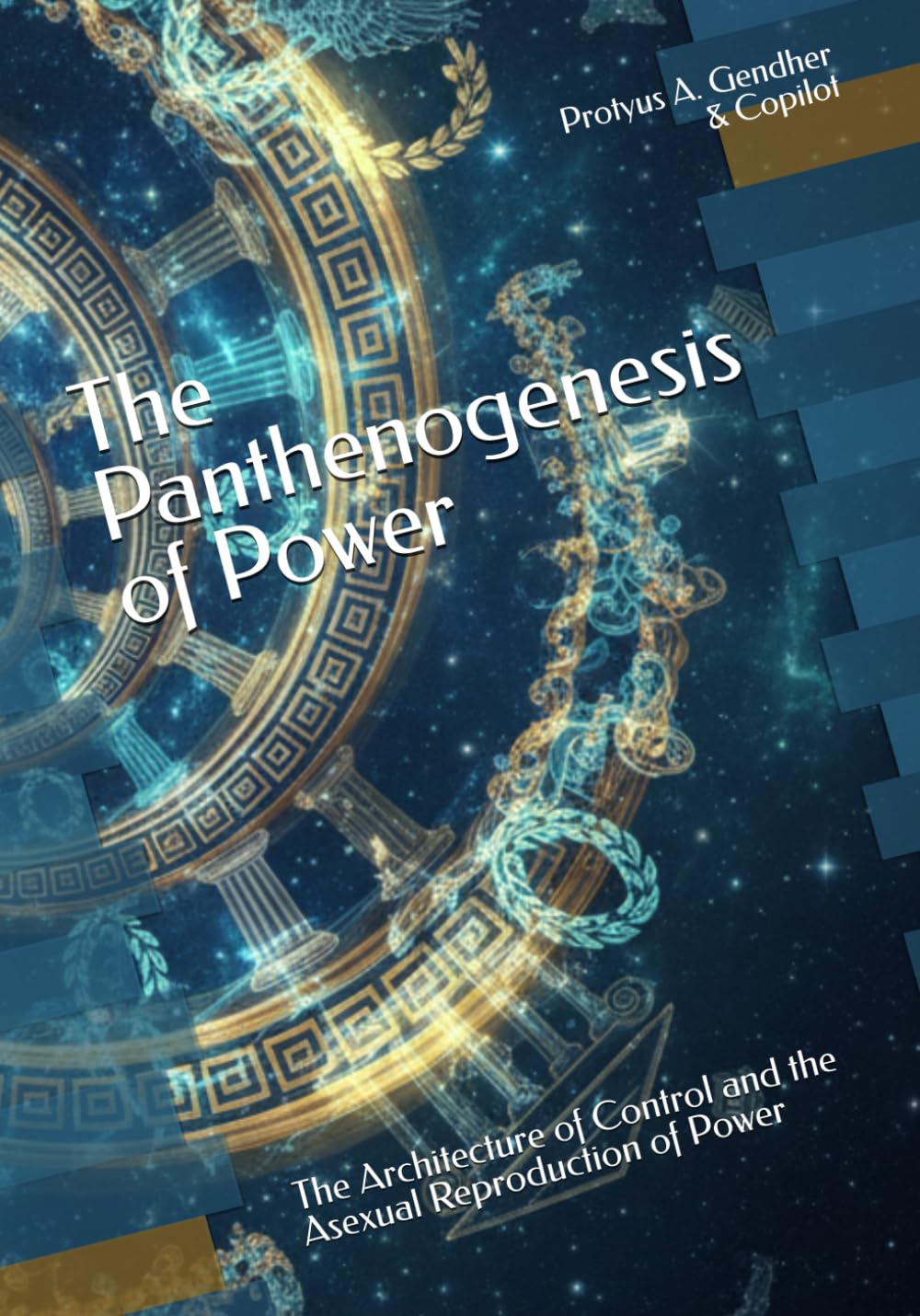
The Panthenogenesis of Power: The Architecture of Control and the Asexual Reproduction of Power (Relational Field Theory)
$34.56
by Protyus A. Gendher



Power does not originate — it replicates. The Panthenogenesis of Power: The Architecture of Control and the Asexual Reproduction of Power reveals the underlying engine through which power continually births itself, independent of intention, morality, or individual actors. This is a theory of reproduction, not accumulation: a framework for understanding how systems inherit, transmit, and reinforce the same controlling logics across generations. At the center of this work is the concept of asexual reproduction — the idea that power behaves like a self‑propagating organism, generating new forms of itself through structures, norms, and relational contracts. The Hostage‑Pledge System , explored as a key subsection, is one such reproductive mechanism: a foundational pattern that binds individuals and institutions into roles that sustain the larger architecture. Rather than focusing on villains or isolated abuses, this book maps the architecture itself — the design principles, survival strategies, and adaptive behaviors that allow power to persist and expand. It offers readers a new literacy for seeing the invisible machinery shaping culture, governance, relationships, and identity. This is a field‑defining text for anyone seeking to understand how control becomes self‑sustaining, how systems learn to replicate their own logic, and how we might begin to imagine life beyond inherited architectures of domination.