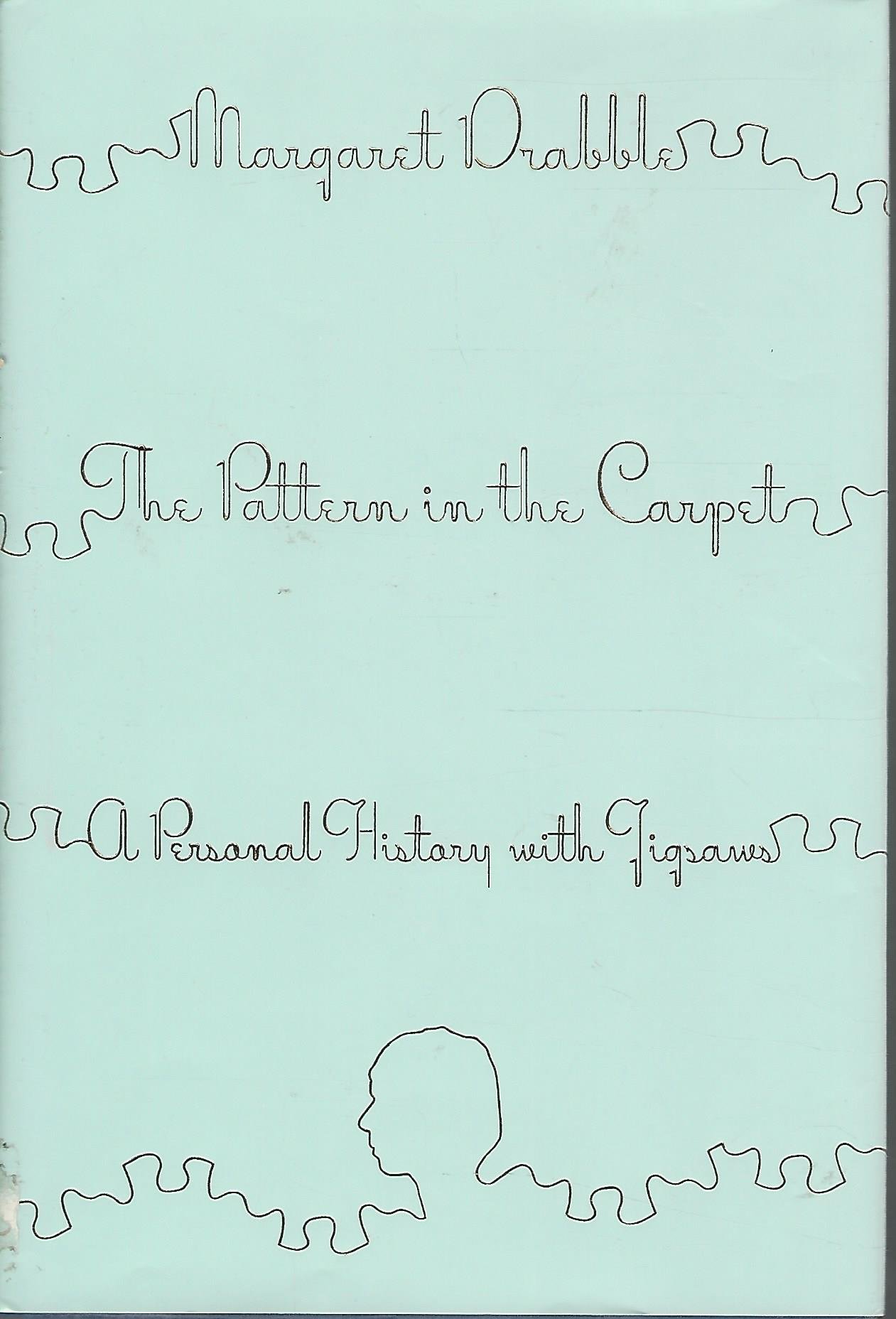



The Pattern in the Carpet: A Personal History with Jigsaws is an original and brilliant work. Margaret Drabble weaves her own story into a history of games, in particular jigsaws, which have offered her and many others relief from melancholy and depression. Alongside curious facts and discoveries about jigsaw puzzles — did you know that the 1929 stock market crash was followed by a boom in puzzle sales? — Drabble introduces us to her beloved Auntie Phyl, and describes childhood visits to the house in Long Bennington on the Great North Road, their first trip to London together, the books they read, the jigsaws they completed. She offers penetrating sketches of her parents, her siblings, and her children; she shares her thoughts on the importance of childhood play, on art and writing, on aging and memory. And she does so with her customary intelligence, energy, and wit. This is a memoir like no other. "Reading Margaret Drabble's novels has become something of a rite of passage...Sharply observed, exquisitely companionable tales of women of a certain age and class, educated, egocentric, strong, unlucky in love." ( Washington Post ) "Margaret Drabble will have done for late twentieth-century London what Dickens did for Victorian London." ( New York Times ) "Drabble's fiction has achieved a panoramic vision of contemporary life." ( Chicago Tribune ) Margaret Drabble is the author of The Sea Lady, The Seven Sisters, The Peppered Moth, and The Needle's Eye, among other novels. She has written biographies of Arnold Bennett and Angus Wilson, and she is the editor of the fifth and sixth editions of The Oxford Companion to English Literature. For her contributions to contemporary English literature, she was made a Dame of the British Empire in 2008. From The Washington Post's Book World/washingtonpost.com Reviewed by Sara Sklaroff If you're the kind of person who likes to do puzzles, especially complicated ones -- 3,000-plus-piece jigsaws of abstract paintings, say, or complicated cryptics from London newspapers -- please don't tell the others. Non-puzzlers will either be amazed and slightly horrified by your mental acuity, or amazed and more than horrified that you would bother to do them at all. Either way, it's probably better to keep this particular character flaw to yourself. A roommate once became indignant about my daily habit of working the crossword, which she declared a total waste of time. I calmly waited out her diatribe and then returned to my puzzling, thinking that she actually had it right: Yes, when we spend time on puzzles, we waste time or, more terribly, kill time, but that is absolutely the point. The English novelist and scholar Margaret Drabble, a longtime jigsaw puzzler, comes clean about her own habit in "The Pattern in the Carpet." Part history, part memoir, it is at times frustrating, confounding and even, indeed, puzzling, but I won't make the obvious comparison. She doesn't give us the completionist satisfaction of a jigsaw, for one thing, nor do all the pieces quite fit together in the end. But the book offers readers the pleasing intimacy of following the meanderings of a gifted mind. The memoir portion focuses on Auntie Phyl, a never-married, retired teacher who taught Drabble to complete the edge of the puzzle frame first, spoke "philosophically on the topic of the 'missing piece,' " and was a reliable puzzling companion over many years. Phyl was quite literally an old-school aunt, who Drabble recalls "taught us to peg rugs, and to sew, and to do French knitting, and to make lavender bags, and to thread bead necklaces, and to bake rock cakes and coconut fingers, and to play patience" -- most of these lost (or at least misplaced) arts that became satisfying pursuits for young Maggie during what was otherwise not a particularly happy childhood. The rest of the book delves into the history of the jigsaw puzzle itself (she dates it back to 18th-century English "dissected maps"), along with examinations of related pastimes such as like board games (starting with the Royal Game of the Goose, invented, perhaps by a Medici, during the Renaissance), card games, children's books and even mosaics. Reviewing the various types of images chosen for jigsaws takes her into the realm of kitsch and authenticity. Comparing puzzles to other pursuits brings her to utilitarianism. Can anything so meaningless be said to be edifying? Drabble investigates two arguments in favor: that the study of great masters can be enhanced by close examination of reproductions of their paintings in puzzle form, and that educational toys like the dissected maps could be used to teach geography. That's fine as far as it goes, but for most of us, such educational ideals miss the point. The Sudoku craze proves as much: Those puzzles lack content but are extremely satisfying when the numbers come out right. Drabble says her plan was to write a straightforward history of jigsaw puzzles, the kind of inoffensive litt