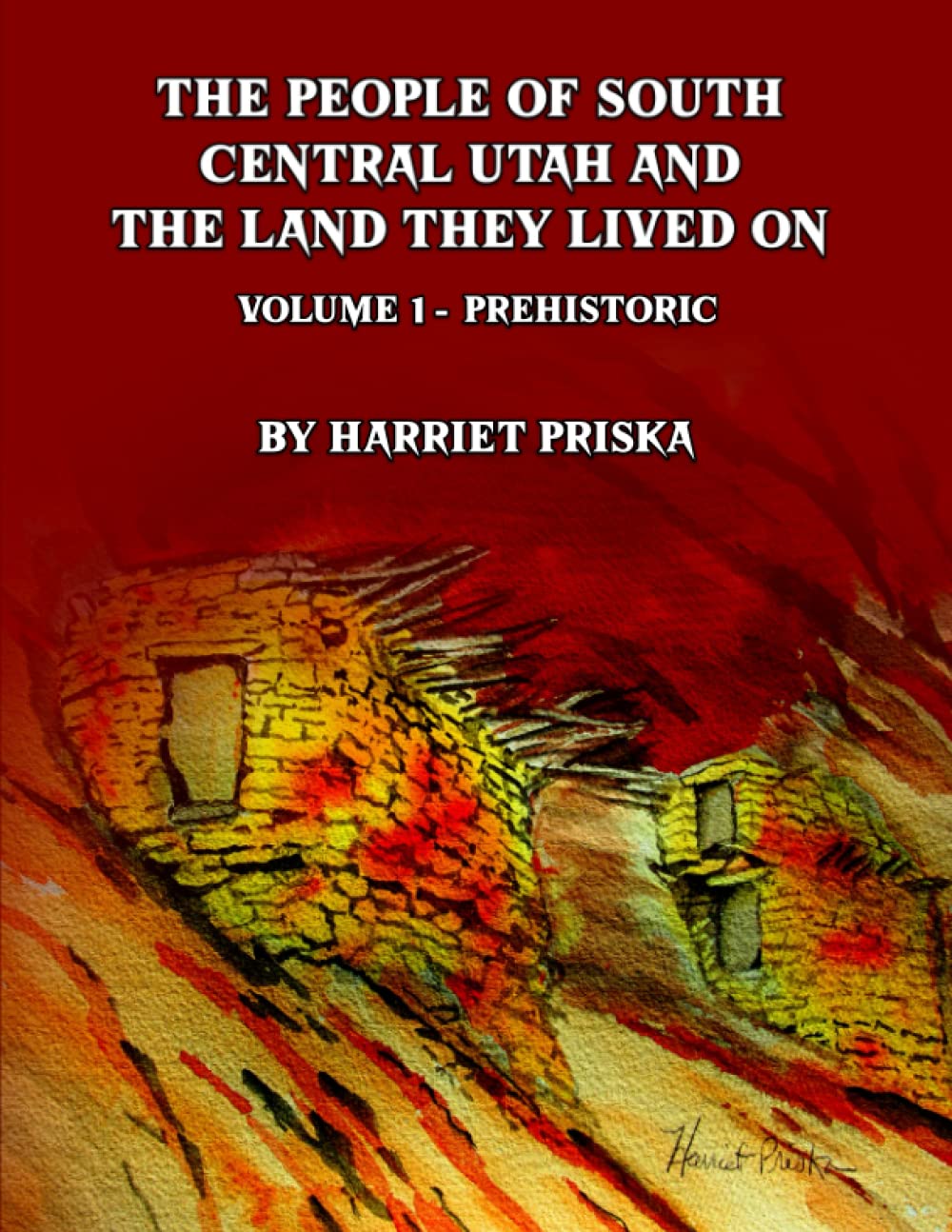
The People of South Central Utah and The Land they lived on: Volume 1 – Prehistoric
$40.00
by Harriet Priska



“Muckwich” is the term today’s Paiute people of Utah refer to their ancestors who lived in this area in times past. Evidence of their lives here left on the rocks of this rugged landscape the Paiute refer to as “Storied Rocks.” Rock storage structures called “Granaries” tucked high in alcoves above riverbeds in the canyons are illusive to see by the untrained eye. Some pottery has been found and three major archeological sites have been discovered in recent years in South Central Utah. Watercolor Artist, Harriet Priska, who lives in Escalante, Utah, has painstakingly recreated the evidence of lives left by the “Muckwich” so that people today can see what they may never know any other way. “Archaic” is the archeological term for peoples of the past before 300 AD. A few of the “Archaic Muckwich Storied Rocks” in South Central Utah, are illustrated here. The “Muckwich Formative Period” until 1280 AD is the time covered by Harriet Priska’s Watercolor paintings, carefully illustrating the “Muckwich” petroglyphs, pictographs, pottery, and ruins at the Fremont Indian Museum on Interstate 70 in Utah and at the Anasazi State Park Museum in Boulder, Utah on Highway 12. Other locations of the “Muckwich Storied Rocks” and ruins on the Grand Staircase escalante National Monument in Utah are not identified unless they are easily seen by the public.