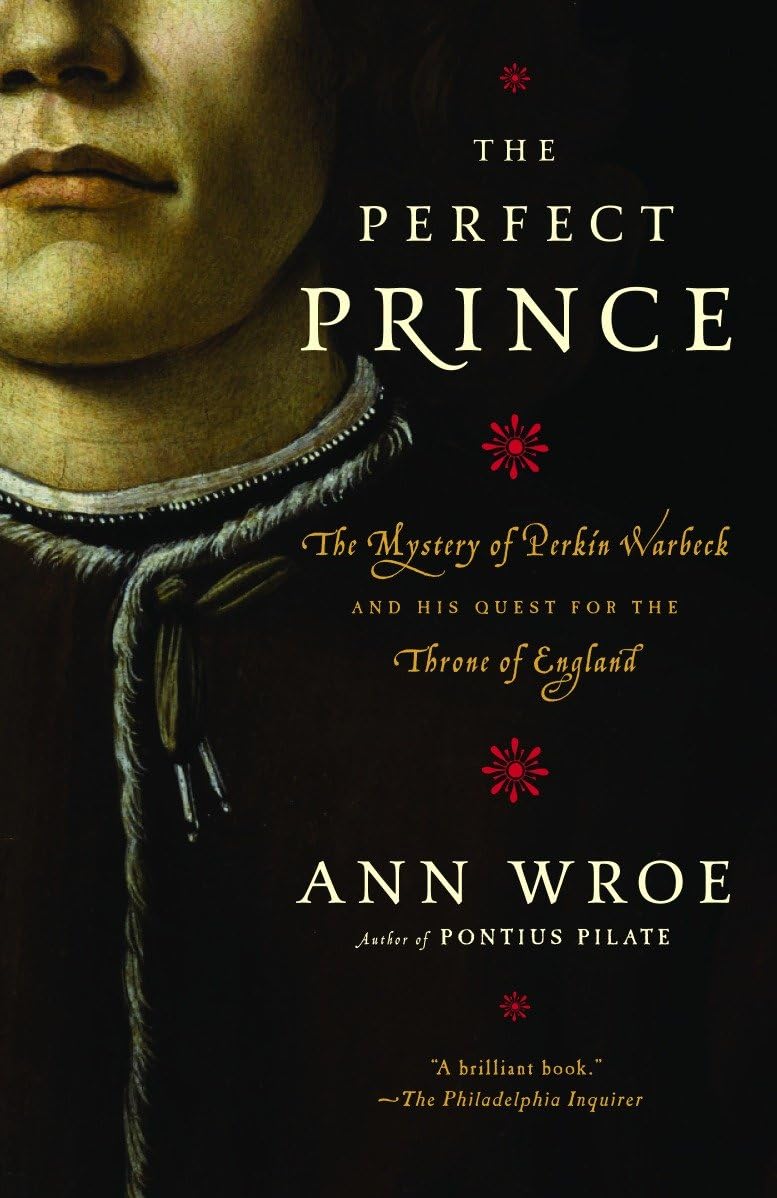



In 1491, as Machiavelli advised popes and princes and Leonardo da Vinci astonished the art world, a young man boarded a ship in Portugal bound for Ireland. He would be greeted upon arrival as the rightful heir to the throne of England. The trouble was, England already had a king. The most intriguing and ambitious pretender in history, this elegant young man was celebrated throughout Europe as the prince he claimed to be: Richard, Duke of York, the younger of the “Princes in the Tower” who were presumed to have been murdered almost a decade earlier. Handsome, well-mannered, and charismatic, he behaved like the perfect prince, and many believed he was one. The greatest European rulers of the age—among them the emperor Maximilian, Ferdinand and Isabella of Spain, and Charles VIII of France—used him as a diplomatic pawn to their own advantage. As such, he tormented Henry VII for eight years, attempting to invade England three times. Eventually, defeated and captured, he admitted to being Perkin Warbeck, the son of a common boatman from Flanders. But was this really the truth? Ann Wroe, a historian and storyteller of the first rank, delves into the secret corners of the late medieval world to explore both the elusive nature of identity and the human propensity for deception. In uncovering the mystery of Perkin Warbeck, Wroe illuminates not only a life but an entire world trembling on the verge of discovery. Machiavelli advised popes and princes and Leonardo da Vinci astonished the art world, a young man boarded a ship in Portugal bound for Ireland. He would be greeted upon arrival as the rightful heir to the throne of England. The trouble was, England already had a king. The most intriguing and ambitious pretender in history, this elegant young man was celebrated throughout Europe as the prince he claimed to be: Richard, Duke of York, the younger of the Princes in the Tower who were presumed to have been murdered almost a decade earlier. Handsome, well-mannered, and charismatic, he behaved like the perfect prince, and many believed he was one. The greatest European rulers of the age among them the emperor Maximilian, Ferdinand and Isabella of Spain, and Charles VIII of France used him as a diplomatic pawn to their own advantage. As such, he tormented Henry VII for eight years, attempting to invade England three times. Eventually, defeated and captured, he admitted In 1491, as Machiavelli advised popes and princes and Leonardo da Vinci astonished the art world, a young man boarded a ship in Portugal bound for Ireland. He would be greeted upon arrival as the rightful heir to the throne of England. The trouble was, England already had a king. The most intriguing and ambitious pretender in history, this elegant young man was celebrated throughout Europe as the prince he claimed to be: Richard, Duke of York, the younger of the "Princes in the Tower" who were presumed to have been murdered almost a decade earlier. Handsome, well-mannered, and charismatic, he behaved like the perfect prince, and many believed he was one. The greatest European rulers of the age--among them the emperor Maximilian, Ferdinand and Isabella of Spain, and Charles VIII of France--used him as a diplomatic pawn to their own advantage. As such, he tormented Henry VII for eight years, attempting to invade England three times. Eventually, defeated and captured, he admitted to being Perkin Warbeck, the son of a common boatman from Flanders. But was this really the truth? Ann Wroe, a historian and storyteller of the first rank, delves into the secret corners of the late medieval world to explore both the elusive nature of identity and the human propensity for deception. In uncovering the mystery of Perkin Warbeck, Wroe illuminates not only a life but an entire world trembling on the verge of discovery. "From the Hardcover edition. Ann Wroe is the author of Pontius Pilate, a finalist for the Samuel Johnson Prize, and A Fool and His Money, the acclaimed story of a scandal in a small French town during the Hundred Years War. She received her doctorate in medieval history from Oxford and is a senior editor at The Economist. She lives in London with her husband and their three sons. Chapter One Into Adventure The beginnings of his story, as he told it, lay deep in the turmoil of the recent history of England. For three decades, to the astonishment of foreigners, the crown had been wrestled back and forth between the Houses of Lancaster and York. Henry V, the glory of Lancaster and the victor of Agincourt, had been followed in 1422 by a child-king, Henry VI, who grew into a saintly fool at the mercy of his scheming lords. England quickly descended into factional warfare, with extraordinary slaughter of the nobility on both sides. In 1460 Richard, Duke of York, claiming descent from Edward III, tried to proclaim himself king but was rebuffed and, in short order, killed. The next year, his son defeated Henry in battle and was crowned as Edward IV a