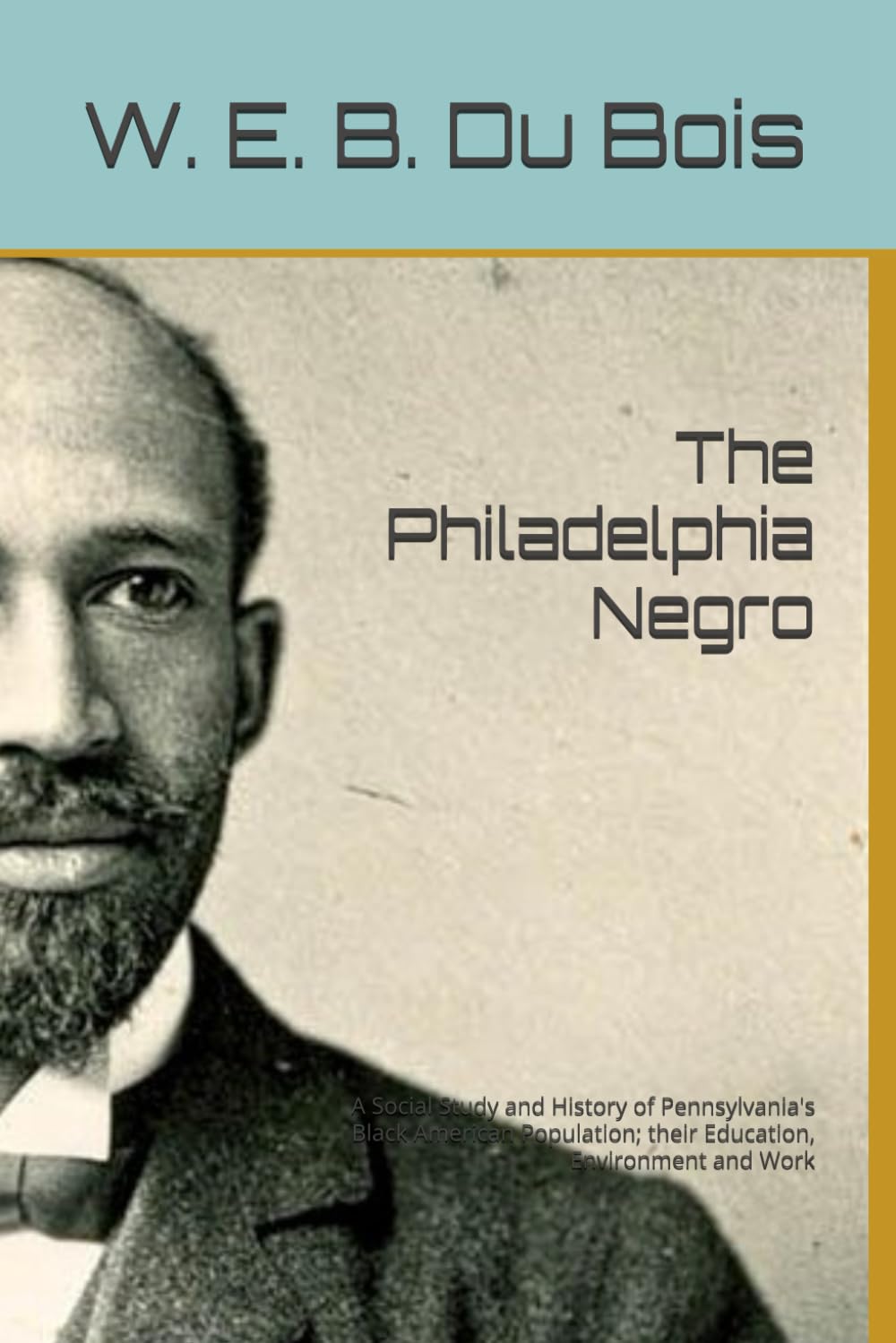
The Philadelphia Negro: A Social Study and History of Pennsylvania's Black American Population; their Education, Environment and Work
$18.90
by W. E. B. Du Bois



A groundbreaking work in American sociology, The Philadelphia Negro by W. E. B. Du Bois remains a landmark study of race, class, and community in the United States. First published in 1899, this pioneering volume offers an unflinching look at the lives of Black Americans living in Philadelphia’s Seventh Ward at the turn of the 20th century—an in-depth examination of their struggles, resilience, and contributions in the face of entrenched systemic inequality. Du Bois meticulously documents the economic, social, and political realities of African Americans, analyzing their access to education, housing, employment, and public life. Through empirical research and personal interviews, he challenges the racist assumptions of his era and offers profound insight into how urban Black communities adapted and survived under oppressive conditions. Not only a critical sociological text, The Philadelphia Negro is also a historical chronicle that traces the evolution of Pennsylvania's Black population from enslavement through emancipation to post-Reconstruction urban life. Du Bois's visionary work laid the foundation for future civil rights advocacy and remains an essential text in African American studies, urban sociology, and American history. Whether you're a scholar, student, or general reader seeking to understand the origins of racial inequality and the enduring strength of Black communities, this powerful and scholarly account continues to resonate more than a century after its publication.