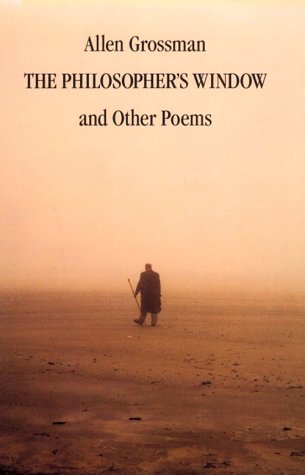



The speaker of The Philosopher's Window and Other Poems , Allen Grossman tells us, is "an old man compelled by the insistent questioning of the children to explain himself"―and in this way, the world. He begins with creation ("The Great Work Farm Elegy"), recalls the romantic quest of youth ("The Philosopher's Window"), returns to reality ("The Snowfall" and "Whoever Builds"). His tales told, the old man wakes in a stormy springtime ("June, June"), "when the lilacs are gone." Grossman's allegory of life's journey, at once sonorous and antic, takes in the high and the low in these new visionary songs of innocence and experience. Allen Grossman is Andrew W. Mellon Professor of the Humanities at The Johns Hopkins University. He counts among his many honors and awards MacArthur, Guggenheim, and NEA fellowships, the Witter Bynner Prize for Poetry, and the PEN-Sheaffer/New England Award for Literary Distinction. The Philosopher's Window is his eighth book of poetry. His previous collection, The Ether Dome & Other Poems New and Selected (1991), was a National Book Critics Circle Award nominee. Grossman's allegory of a life journey is a tale of perception, recollection, and explanation. The book makes several blatant references: to the imagery (fire, water, light) and rhetorical stance of the Bible; to the often embellished, hyperbolic language and fable form inherent in oral tradition; and to great epics, such as Rimbaud's and Virgil's. Although the first section of the book ( The Great Farm Works Elegy ) has some beautiful, highly charged verse, it is rather abstract, not allowing the reader to gain early access to the text, and more basically, to locate the speaker within the poem. The main bulk of the book ("The Philosopher's Window" ) interweaves philosophic discourse, rough and earthy observation, and romantic notions. Grossman reveals the self as a fluid entity. Knowledge about life is gained through the self's flexible perception, the ability to "step into another's shoes," so to speak. Grossman sets out on a course of epic proportions in this book, and although his aim is ambitious, his success will inevitably be measured by time. Janet St. John At Bristol The Delay Of The Answering Glance Entertainment On Deck The Gate Of Night The Great Work Farm Elegy The Invisible Circus The Island Off-shore The Ivory Hunters June, June The Labyrinth Launching The Great Eastern No Ship Returns The Parrot's Story The Patience Of Trees The Philosopher's Window The Shipwreck A Short Walk To The Human End Song Of The Breakaing Of Clocks And Scales Song Of The Constant Nymph Song Of The Key Song Of The Kiss The Song Of The Swineherd The Sovereign Stanzas On The Snowfall Weeping Birds What White Bread Whoever Builds The Work -- Table of Poems from Poem Finder® The speaker of The Philosopher's Window and Other Poems, Allen Grossman tells us, is "an old man compelled by the insistent questioning of the children to explain himself" - and in this way, the world. He begins with creation ("The Great Work Farm Elegy"), recalls the romantic quest of youth ("The Philosopher's Window"), returns to reality ("The Snowfall" and "Whoever Builds"). His tales told, the old man wakes in a stormy springtime ("June, June"), "when the lilacs are gone". Grossman's allegory of life's journey, at once sonorous and antic, takes in the high and the low in these new visionary songs of innocence and experience. Allen Grossman was born in 1932 in Minneapolis, Minnesota. His awards and honors include a Guggenheim Fellowship, the Witter Brynner Prize for Poetry, and a MacArthur Fellowship. He was professor of English at Brandeis University and the Andrew W. Mellon Professor of the Humanities at the Johns Hopkins University. Used Book in Good Condition