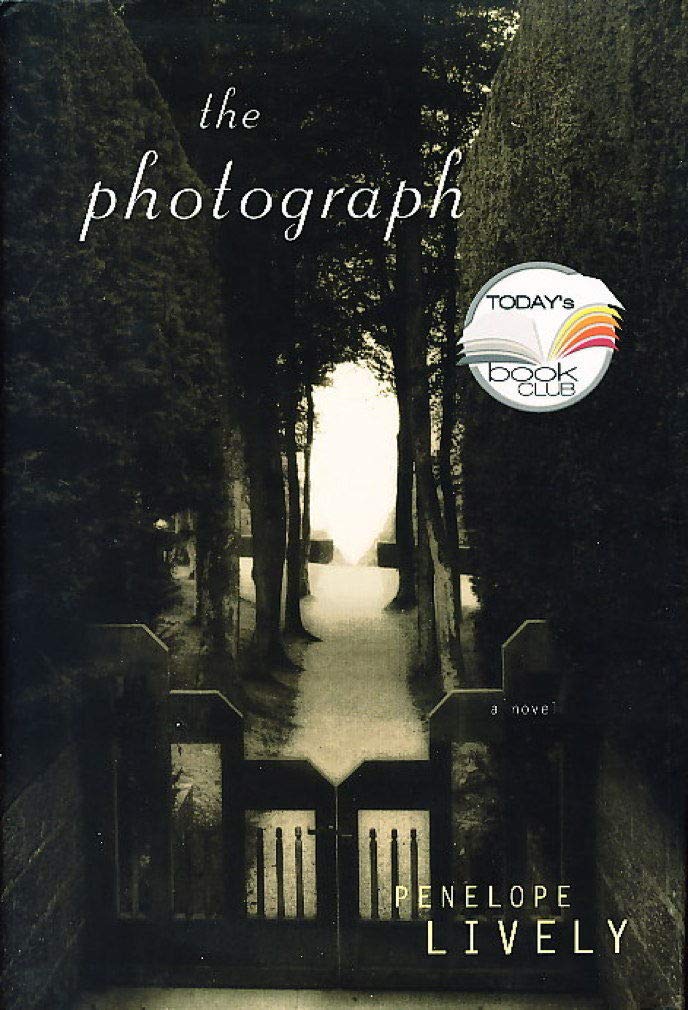



Penelope Lively is a grande dame of British letters whose novels have attracted readers of Ian McEwan and Iris Murdoch-as well as those enthralled by her insight into relationships and family. The Photograph brings her talents into a whole new page-turning realm. It opens with a snapshot: a young woman, Kath, at an unknown gathering, hands clasped with a man not her husband, their backs to the camera. Its envelope is marked DO NOT OPEN-DESTROY. But Kath's husband, Glyn, does not heed the warning. The mystery of the photograph, and of Kath herself and her recent death, propels him on a journey of discovery that sends shock waves through the lives of her family and friends. The elfin Kath-with her mesmerizing looks and casual ways-moves like an insistent ghost through the thoughts and memories of everyone who knew her: self-centered Glyn, past his lusty, passionate professorial prime; her remorselessly competent sister Elaine, a doyenne garden designer married to feckless ne'er-do-well Nick; and their daughter Polly, beloved of Kath, who oscillates between home and family and the tumultuous new era she inhabits. The Photograph , with Lively's signature mastery of narrative and psychology, explores issues that extend far beyond its London suburban setting: a woman's beauty and its collision with her own happiness, sisters' rivalry and lovers' cooling, a marriage in supreme crisis, and the cost of professional "success" as life unfolds. It is Penelope Lively at her very best, the dazzling and intriguing climax to all she has written before. *Starred Review* In Booker Prize winner Lively's stunning novels, the past and present form a yin-yang-like balance, and her keen and agitated characters fall into two camps. One, comprising dogged professionals, is obsessed with imposing order on life, and is driven mad by the other, which consists of more sensitive and improvisatory souls, such as Kath, the dead woman at the center of this elegant yet electrifying tale. As the reader wonders about the nature of Kath's death, Lively, a master of the whip-crack phrase and arch and dissecting humor, craftily reveals the culpability of Kath's survivors: her ambitious husband, Glyn, a renowned landscape historian who can discern subtle evidence of ancient forts yet remains oblivious to his wife's emotions; Kath's frosty older sister, Elaine, a hugely successful garden designer; and Elaine's once "beguiling" now "exasperating" husband, Nick. Kath returns to haunt these smug souls after Glyn finds an incendiary photograph that calls into question everything this little coterie thought they knew about themselves and each other. As lovely but lonely Kath comes into ever sharper focus through the lens of each character's increasingly stressed consciousness, Lively offers provocative musings on work, obsession, the burden of beauty, alienation of affections, and the endless longing for love. Donna Seaman Copyright © American Library Association. All rights reserved "An amazing novel..." -- The San Francisco Chronicle , May 12, 2003 Penelope Lively grew up in Egypt but settled in England after the war and took a degree in history at St Anne's College, Oxford. She is a Fellow of the Royal Society of Literature, and a member of PEN and the Society of Authors. She was married to the late Professor Jack Lively, has a daughter, a son and four grandchildren, and lives in Oxfordshire and London. Penelope Lively is the author of many prize-winning novels and short story collections for both adults and children. She has twice been shortlisted for the Booker Prize; once in 1977 for her first novel, The Road to Lichfield , and again in 1984 for According to Mark . She later won the 1987 Booker Prize for her highly acclaimed novel Moon Tiger . Her novels include Passing On , shortlisted for the 1989 Sunday Express Book of the Year Award, City of the Mind , Cleopatra's Sister and Heat Wave . Penelope Lively has also written radio and television scripts and has acted as presenter for a BBC Radio 4 program on children's literature. She is a popular writer for children and has won both the Carnegie Medal and the Whitbread Award. Used Book in Good Condition