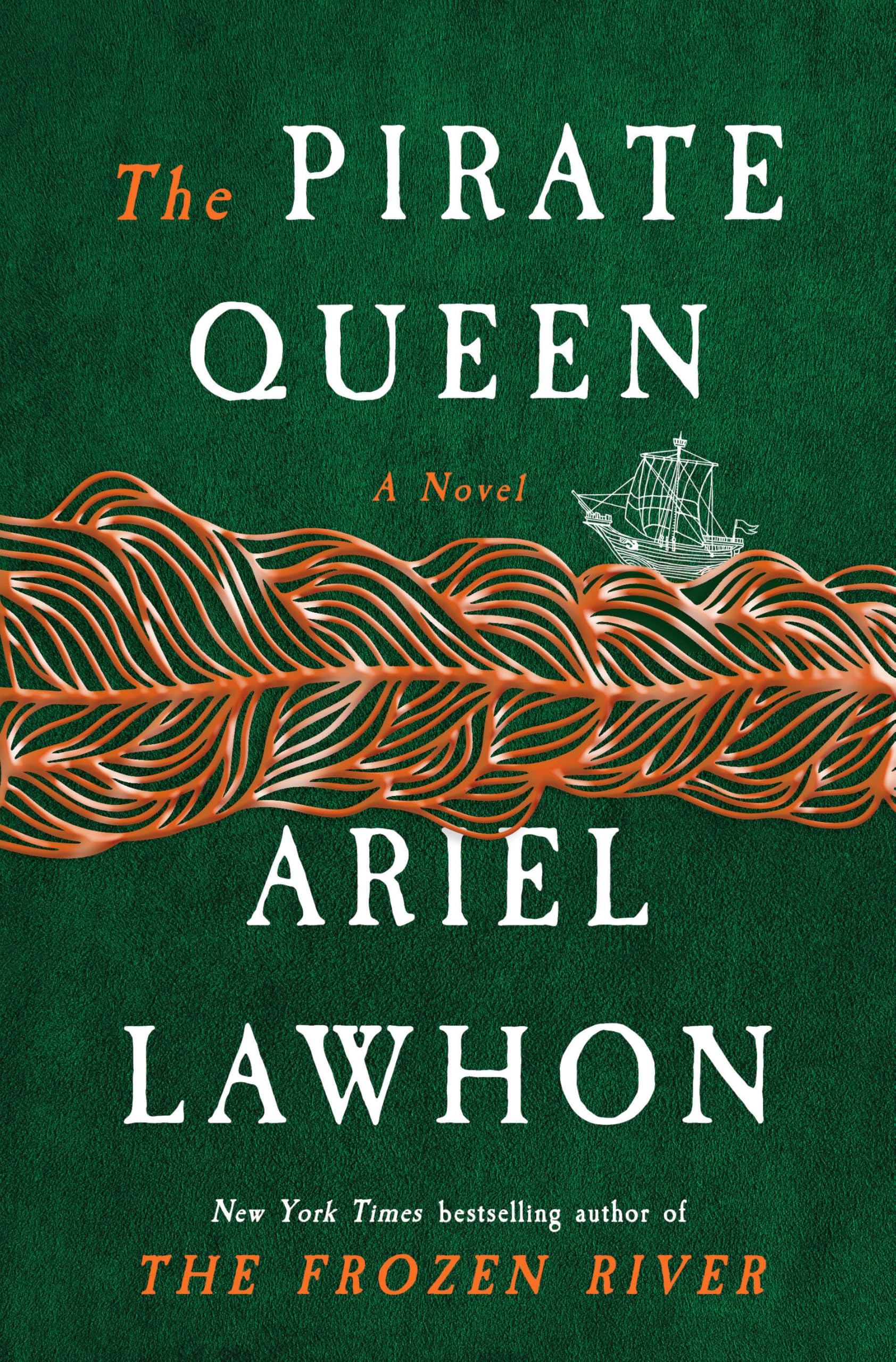



A sweeping historical adventure inspired by the life of Grace O’Malley, the legendary Irish folk heroine who risked everything to defend her people. Venture onto the high seas with the thrilling latest from the New York Times bestselling author of The Frozen River and I Was Anastasia . Grace O’Malley was born to be a sea captain. But despite her natural skill on the water, Grace learns early that her dreams of a life at the helm are not compatible with the expectations of her noble family. As the only daughter of a powerful chieftain, her role is to secure a strong alliance and bear children. But when she’s sent to foster with a nearby clan, Grace falls for a clever and open-minded second son—a man she cannot have. Married off against her will to a brutal warrior, Grace performs her duty, all the while gathering followers loyal to her, and consolidating her husband’s power, only to be ousted from his lands. But this betrayal offers Grace the opportunity to return to sea, finally leading clan O’Malley’s mighty fleet. Just as she finds true independence, Queen Elizabeth’s incursions into Ireland grow bolder and Grace must fight to defend her land, her ships, and the people she loves most against the cruel and power-hungry English deputies, who will stop at nothing to check her power. Keenly observed and fiercely written, Ariel Lawhon's new action-packed novel channels the untamed beauty and harsh realities of sixteenth-century Ireland, as seen through the eyes of an unforgettable heroine who rightly became “the Pirate Queen of Ireland.” ARIEL LAWHON is an award-winning, critically acclaimed, New York Times bestselling author of historical fiction. Her books have been translated into over forty languages and have been Good Morning America and One Book One County selections. She lives in the rolling hills outside Nashville, Tennessee, with her husband and four sons. Ariel splits her time between the grocery store and the baseball field. 1535 “Storm Born” Five years old The girl lifts a knife and, with one trembling swipe, severs her braid. In all fairness, the steel is sharp. Cook put it to the whetstone just this morning. But still, it is a shock to see the limp, dead thing in her hand. Like some rock pipit with threadbare wings. Or a clump of wilted flowers. Yet she shakes it in her father’s face and hopes that her fear looks like anger instead. He lurches forward a step. Eyes round and horrified. A hand outstretched as though to stop her. “What have you done, bird?” “Now my hair won’t get caught in the ropes,” she says. “Now I’ll be going with you.” He shakes his head. “That’s not what I meant. That’s not what I—” “It’s what you said .” He lied. They both know it. But now she’s called him out—in front of his crew, no less—and she can see the storm building in his eyes. To plead with her father in private is one thing. She has done so every day for a year. But to challenge him here, while he has one foot on shore and the other on deck, is a mutinous sin. “ Gráinne ,” he warns, his voice now clipped and threatening. Grace shifts back and forth on bare feet. It is summer, but the dock is cool and damp, the dark gray stone a balm against the jagged cut on the arch of her left foot—an injury from when she ran through the rock pools at low tide last week, looking for anemones. Grace loves the soft, red-hued creatures, how they glisten like bloody mushrooms when closed, then, once submerged again, bloom with a tentacled crown. Such a strange child, her mother says, always running barefoot, cursing the rocks. Grace feels the sting of salt water in the cut. Ignores it, afraid to break her father’s gaze. Knows that if she blinks, he will send her back to the tower house, to her mother. The galley bobs beside the quay, sails furled tight against the masts. It looks antsy, like a child bouncing on the balls of its feet, ready to leave. There are ninety men at oars, looking elsewhere, suddenly curious about the sky and the cliffs and the dirt beneath their fingernails. But their ears are tuned to the chieftain and his daughter. Telltale signs. Those bent heads and furrowed brows. The only one who dares to watch the spectacle is a boy of nine. Donal. He is four years older than Grace and dark, like their father. Grace has heard her mother complain that the boy should look more like Aisling, like his own mother, that Eóin O’Malley shouldn’t have re-created himself quite so well in the bastard he made with that village girl. She thinks it would be easier to look at Donal if he didn’t wear her husband’s face. But all Grace sees when she looks at her half brother is a boy who would happily trade places with her. She knows the sea is no friend to Donal, that he returns from every voyage green around the gills. And yet, Eóin tries. With Donal , he tries. “Take me with you.” It’s a tiny whisper, nearly lost in the wind and spray rushing into the harbor. “No,” Eóin says, and he is angry now. Or perhaps a