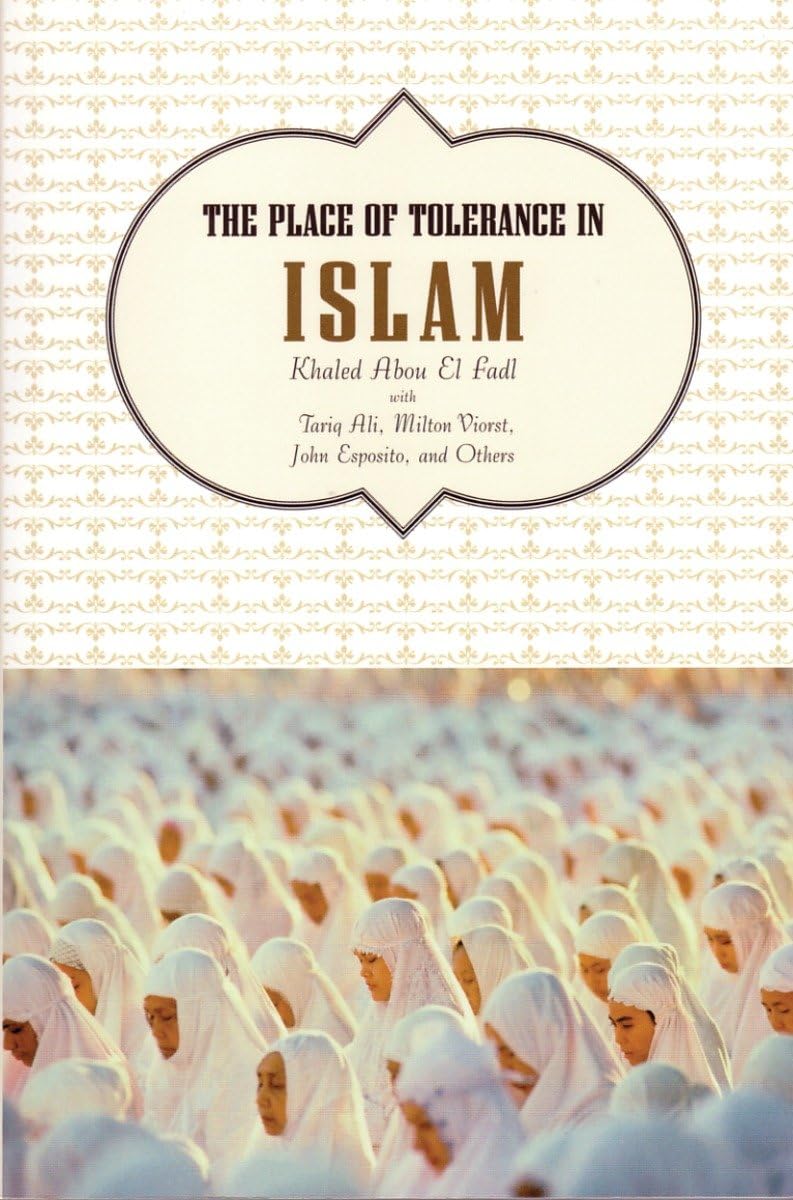



Khaled Abou El Fadl, a prominent critic of Islamic puritanism, leads off this lively debate by arguing that Islam is a deeply tolerant religion. Injunctions to violence against nonbelievers stem from misreadings of the Qur'an, he claims, and even jihad, or so-called holy war, has no basis in Qur'anic text or Muslim theology but instead grew out of social and political conflict. Many of Abou El Fadl's respondents think differently. Some contend that his brand of Islam will only appeal to Westerners and students in "liberal divinity schools" and that serious religious dialogue in the Muslim world requires dramatic political reforms. Other respondents argue that theological debates are irrelevant and that our focus should be on Western sabotage of such reforms. Still others argue that calls for Islamic "tolerance" betray the Qur'anic injunction for Muslims to struggle against their oppressors. The debate underscores an enduring challenge posed by religious morality in a pluralistic age: how can we preserve deep religious conviction while participating in what Abou El Fadl calls "a collective enterprise of goodness" that cuts across confessional differences? With contributions from Tariq Ali, Milton Viorst, and John Esposito, and others. To Islamic legal expert Abou El Fadl's argument that the Qur'an favors a conception of Islam as pacific and tolerant, especially when viewed with contemporary eyes rather than a gaze frozen in earlier times and circumstances, 11 well-qualified respondents reply with varying degrees of skepticism. One, a resident American academic like Abou El Fadl, says such liberal interpretation may be attractive in the West, but it doesn't fly in Islam's Middle East heartland. The harshest two suggest, one more strongly than the other, that Western intolerance of Islam is a much greater problem than Islamic intolerance. A warmer critic insists that stable democracy in Islamic nations must precede Islamic tolerance. Tariq Ali cogently argues that secular political change, not liberal theology, is what the Islamic world needs. Altogether the book is an excellent place to start grappling with the problems of contemporary Islam vis-a-vis the West, though its leftist orientation begs for good right-wing complementation: try Serge Trifkovic's Sword of Islam [BKL O 1 02]. Ray Olson Copyright © American Library Association. All rights reserved "This brief book is elegant and surprising. . . .The overall effect of the three sections is quite unexpected; the reader becomes engages in a dialogue with each writer, realizing with each essay the complexity of the problems facing modern Muslims. . . .Most of the responses are very innovative and represent a step forward in Islamic theological analysis. This lively debate makes for a quick and informative read." Khaled Abou El Fadl is the Omar and Azmeralda Alfi Distinguished Fellow in Islamic Law at UCLA and author of Rebellion and Violence in Islamic Law. Editor's Preface Joshua Cohen and Ian Lague Since September 11, Western discussions of Islam have typically been conducted through a contest of caricatures. Some analysts present Islamic extremism as a product of a "clash of civilizations" that pits Eastern despotism against Western individualism. Others see such extremism as a grim "blowback" of America's cold-war foreign policy. Engagement with Muslim faith commonly takes the form of simplistic pronouncements about "essence" of Islam: Osama bin Laden either represents the true message of the Prophet or corrupts a "religion of peace." As Khaled Abou El Fadl points out, these discussions are driven more by Western concerns—"are Muslims dangerous or not?"—than by a serious effort to understand Islam and the place of toleration and moral decency in its conception of a proper human life. In his lead essay for this volume, Abou El Fadl opens such a conversation. A professor at UCLA, theorist of Islamic law, and prominent critic of Islamic puritanism, Abou El Fadl works to reclaim the "moral trust" of Islam by recovering the Qur'an's universal principles from the historical and social context in which the text was received. He interprets Qur'anic verses about the treatment of women and non-Muslims in light of scriptural passages that call for mercy, kindness, and justice, and that emphasize the essentially plural nature of the human community. Abou El Fadl's engagement with these theological issues is enriched by a broad historical perspective. He points out that intolerant sects have traditionally been marginalized by Islamic civilization. But Islam, he argues, currently faces a crisis of religious authority owing to the political exploitation of Islamic symbols and the stagnation of civic and economic life in Muslim societies. That crisis has facilitated the rise of puritanical sects who interpret the Qur'an literally and ahistorically. Abou El Fadl acknowledges that the Qur'an itself, like other ancient religious texts