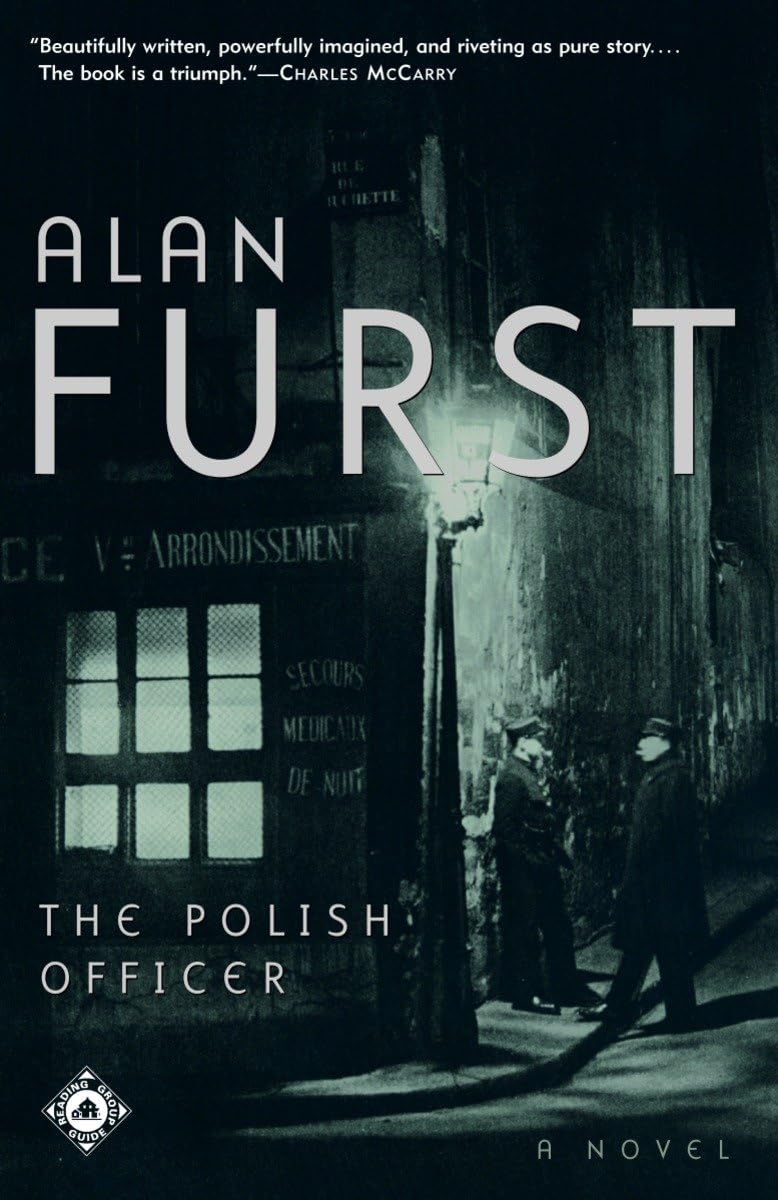



September 1939. As Warsaw falls to Hitler’s Wehrmacht, Captain Alexander de Milja is recruited by the intelligence service of the Polish underground. His mission: to transport the national gold reserve to safety, hidden on a refugee train to Bucharest. Then, in the back alleys and black-market bistros of Paris, in the tenements of Warsaw, with partizan guerrillas in the frozen forests of the Ukraine, and at Calais Harbor during an attack by British bombers, de Milja fights in the war of the shadows in a world without rules, a world of danger, treachery, and betrayal. "Beautifully written, powerfully imagined, and riveting as pure story....The book is a triumph." --Charles McCarry "Brilliantly imagined, vividly drawn, rich with incident and detail....The Polish Officer portrays ordinary men and women caught out on the sharp edge of military intelligence operations in wartime: the partisans, saboteurs, resistance fighters and idealistic volunteers risking their lives in causes that seem lost." --Robert Chatain, Chicago Tribune "[A] riveting ‘pure’ story...wonderfully exact...transcends the spy novel while delivering everything any fan of le Carré could ask for." --Robin Winks, The Boston Globe September 1939. As Warsaw falls to Hitler?s Wehrmacht, Captain Alexander de Milja is recruited by the intelligence service of the Polish underground. His mission: to transport the national gold reserve to safety, hidden on a refugee train to Bucharest. Then, in the back alleys and black-market bistros of Paris, in the tenements of Warsaw, with partizan guerrillas in the frozen forests of the Ukraine, and at Calais Harbor during an attack by British bombers, de Milja fights in the war of the shadows in a world without rules, a world of danger, treachery, and betrayal. September 1939. As Warsaw falls to Hitler's Wehrmacht, Captain Alexander de Milja is recruited by the intelligence service of the Polish underground. His mission: to transport the national gold reserve to safety, hidden on a refugee train to Bucharest. Then, in the back alleys and black-market bistros of Paris, in the tenements of Warsaw, with partizan guerrillas in the frozen forests of the Ukraine, and at Calais Harbor during an attack by British bombers, de Milja fights in the war of the shadows in a world without rules, a world of danger, treachery, and betrayal. Alan Furst, an acknowledged master of the European espionage thriller, has produced a stunning achievement in The Polish Officer : dark, evocative, authentic, and taut with suspense. The Pilava Local In Poland, on the night of 11 September 1939, Wehrmacht scout and commando units–elements of Kuechler’s Third Army Corps–moved silently around the defenses of Novy Dvor, crossed the Vistula over the partly demolished Jablonka Bridge, and attempted to capture the Warsaw Telephone Exchange at the northern edge of the city. Meeting unexpected, and stubborn, resistance, they retreated along Sowacki Street and established positions on the roof and in the lobby of the Hotel Franconia, called for dive-bomber attacks on the exchange building, and settled in to wait for the light of dawn. Mr. Felix Malek, proprietor of the Franconia, put on his best blue suit, and, accompanied by a room-service waiter, personally served cognac to the German soldiers at their mortar and machine-gun positions. He then descended to the wine cellar, opened the concealed door to an underground passage originally dug during the Prussian attack of 1795, hurried down Sowacki Street to the telephone exchange, and asked to see “the gentleman in charge.” He was taken up a marble staircase to the director’s office on the fifth floor and there, beneath a somber portrait of the director–pince-nez and brushed whiskers–presented to the officer in command, a captain. The captain was an excellent listener, and the questions he asked inspired Mr. Malek to talk for a long time. Arms, unit size, insignia, the location of positions–he was surprised at how much he knew. When he was done, they gave him tea. He asked if he might remain at the exchange, it would be an honor to fight the Germans. No, they said, perhaps another day. So Mr. Malek made his way through the night to his sister’s apartment in the Ochota district. “And what,” she asked, “were they like?” Mr. Malek thought a moment. “Educated,” he said. “Quite the better class of people.” Mr. Malek had not been thirty years an innkeeper for nothing: the defenders of the Warsaw Telephone Exchange, hastily recruited amidst the chaos of the German invasion, were officers of Polish Military Intelligence, known, in imitation of the French custom, as the Deuxième Bureau. The Breda machine gun at the casement window was served by a lieutenant from the cryptographic service, a pair of spectacles folded carefully in his breast pocket. The spidery fellow reloading ammunition belts was, in vocational life, a connoisseur of the senior civil service of the U.S.S.R., while the commander of th